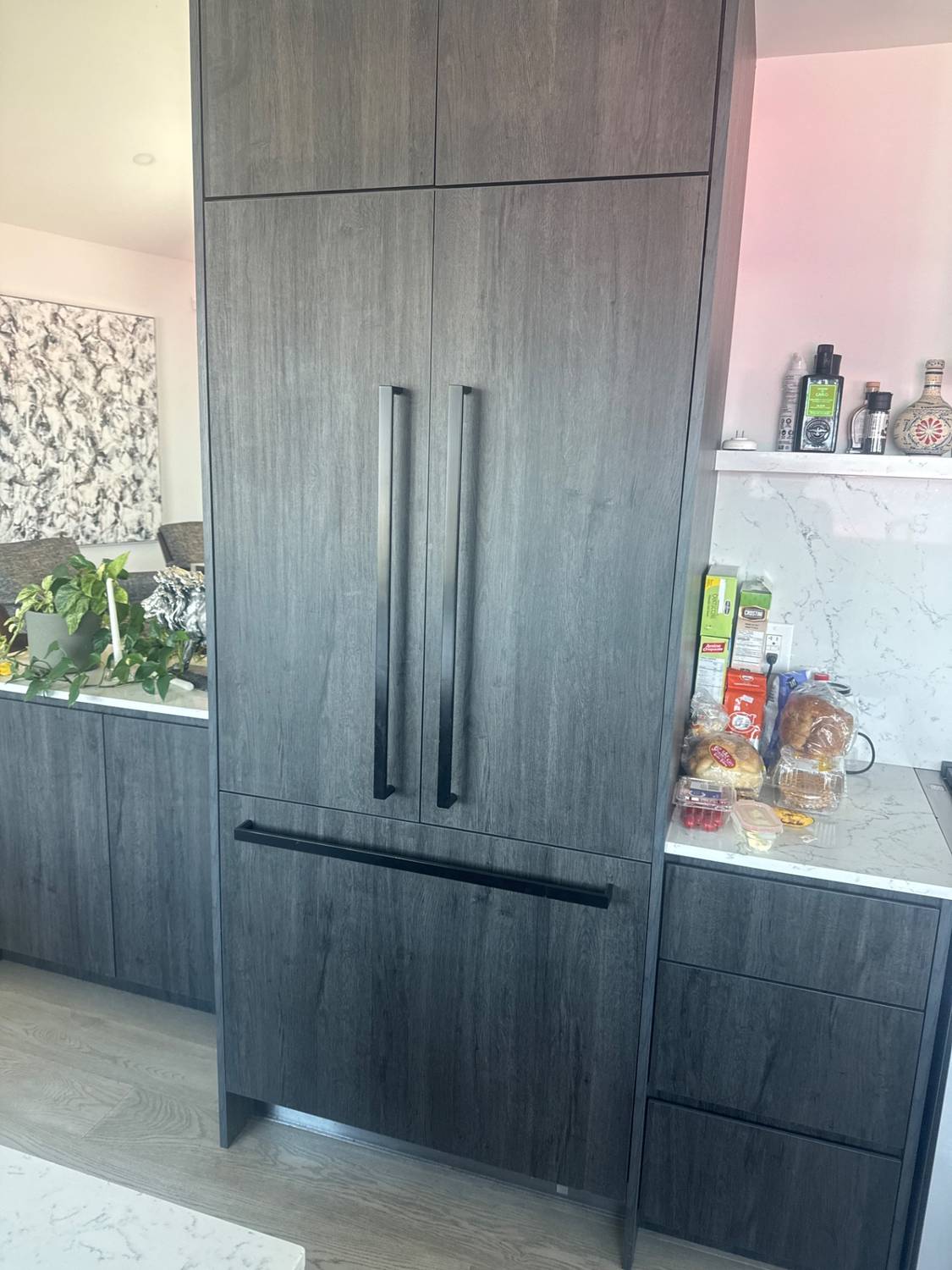


Some faults give themselves up in ten minutes. This one took two and a half hours, including an approach that did not work, and it is a better case study for exactly that reason.
The call
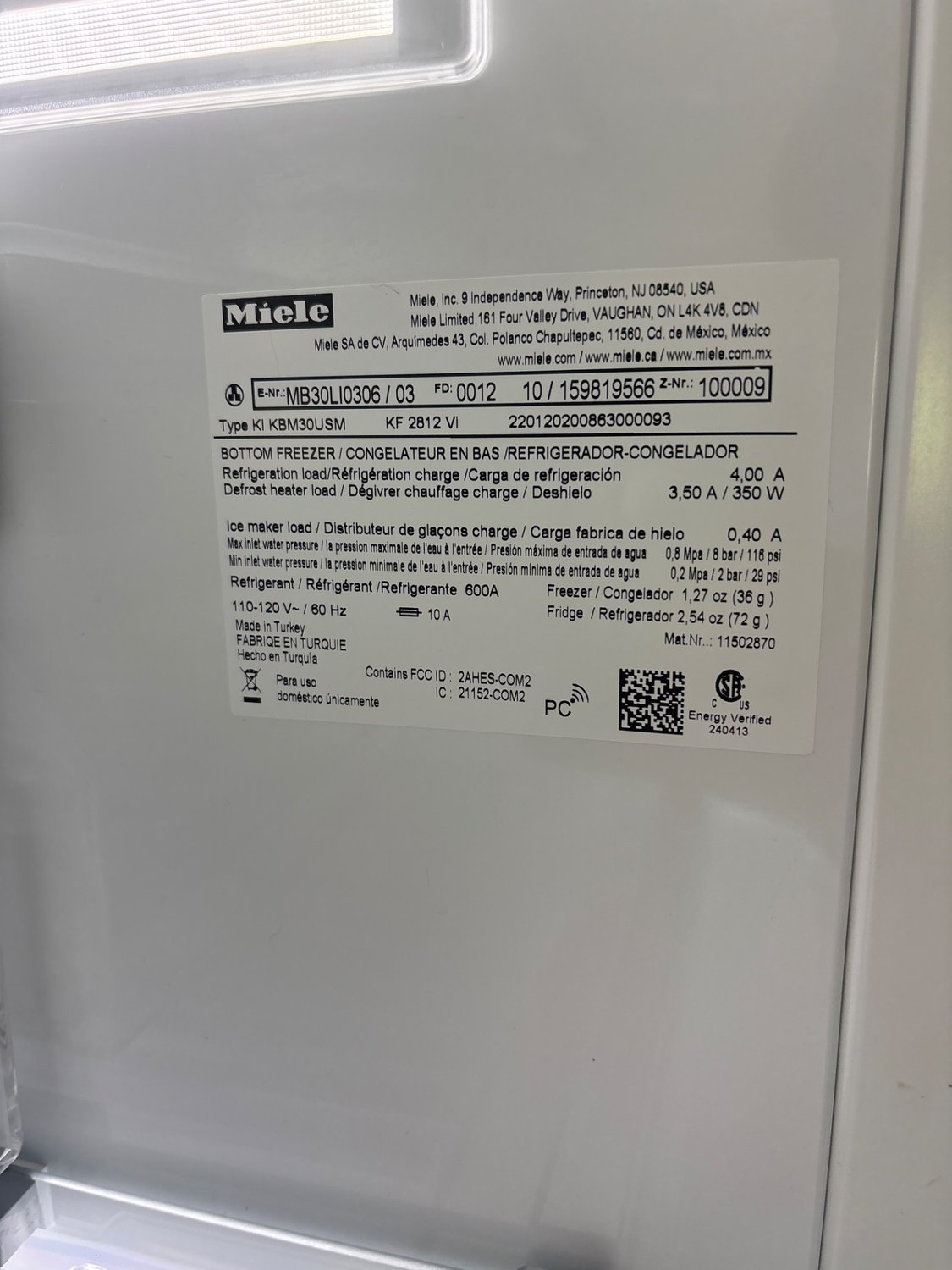
A rural Alberta homeowner reported a lighting problem on their five-year-old Miele built-in refrigerator: “One side of lights is flickering and out sometimes.”
Intermittent is the difficult word in that sentence. A component that has failed outright can be found with a meter. A component that works, then does not, then works again, has to be caught in the act or reasoned about from how the circuit is built.
TechVill technician Oleksandr attended.
Arriving at the unit
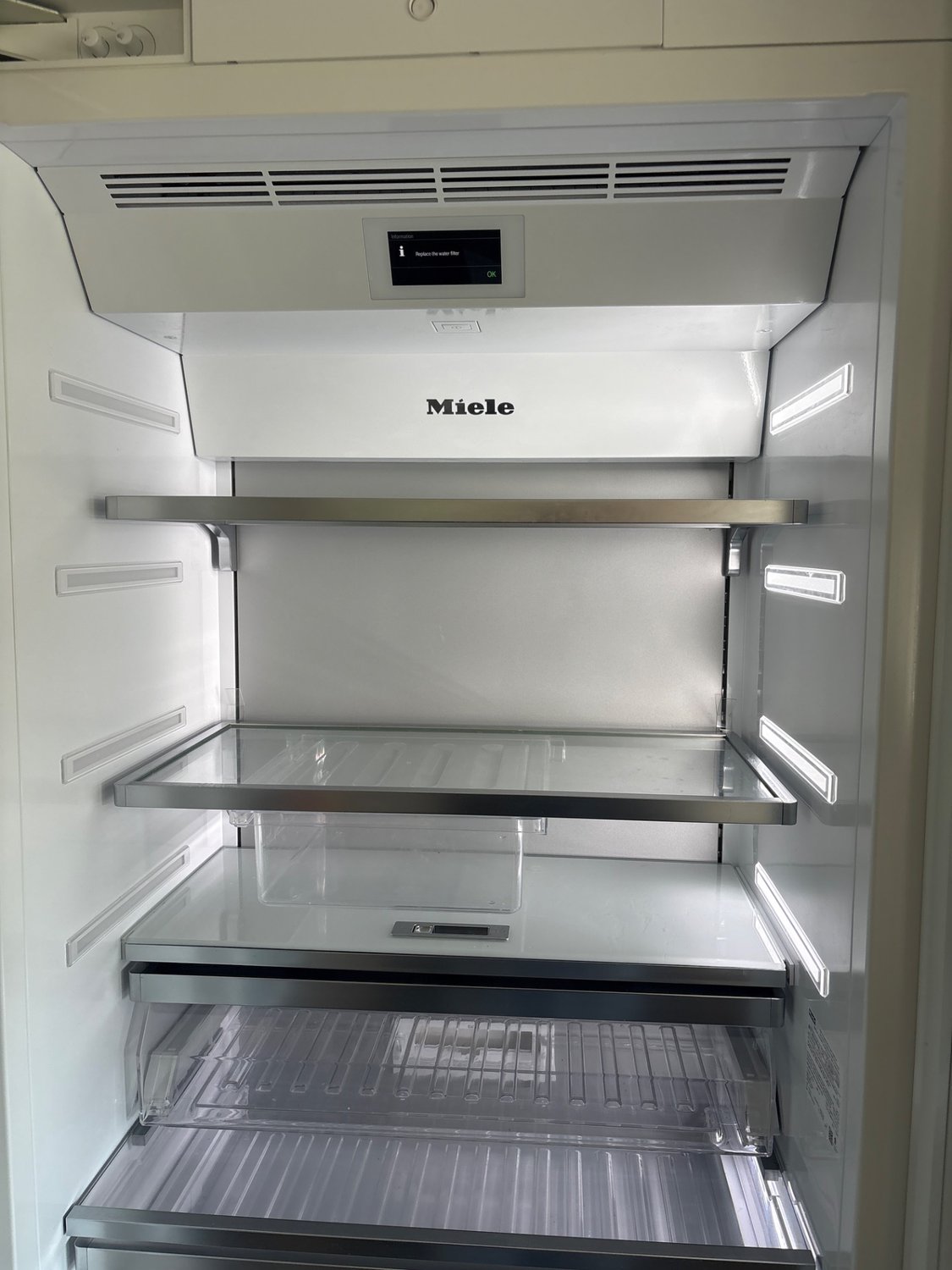
The fresh food compartment is lit by slim LED strips recessed into the cabinet walls. On arrival the behaviour was more specific than the booking note suggested: the left-side LED was no longer glowing at all — it had progressed from intermittent to dead, rather than continuing to flicker. The right side was completely unaffected.
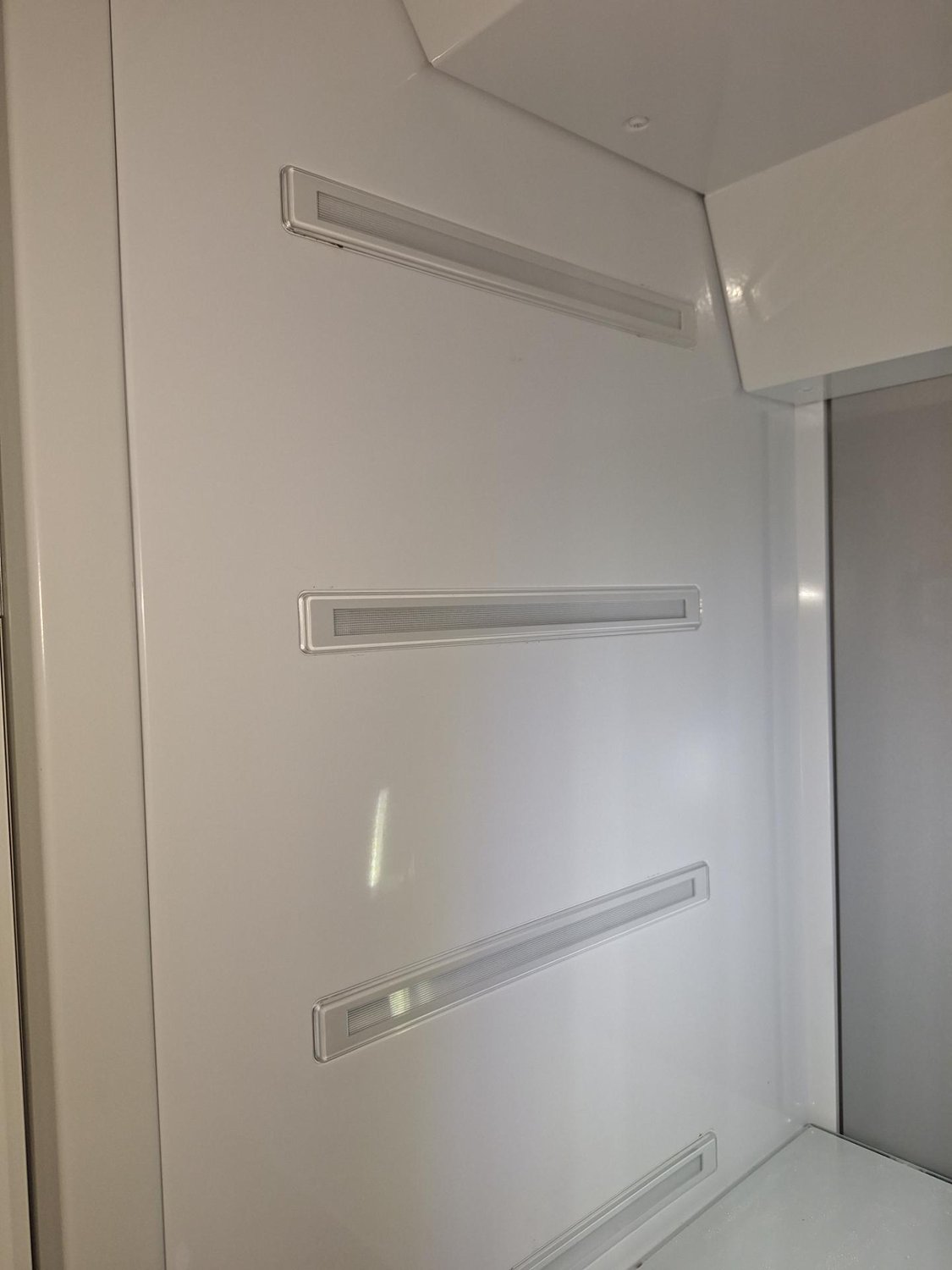
Oleksandr checked the door reed switch — the sensor that tells the appliance a door has opened and to bring the lights up — and it was working correctly. The instruction to illuminate was arriving; one side was not acting on it.
The detail that shaped the diagnosis
The LEDs on this unit are wired in series.
That is not a trivia point. In a series string, current has one path through every element in turn. A single degraded junction anywhere along that path affects the entire string downstream of it — which is why a fault can present as one whole side dimming and dropping out rather than as a single lamp failing on its own. It also explains the progression the homeowner watched over time: an intermittent connection that finally stopped making contact.
The attempt that did not work
Oleksandr tried replacing a lamp inside one of the shelves, following a repair approach documented online for this style of unit.
It did not resolve the issue.
That attempt is in the record because it happened, and because it is a fair picture of how a stubborn intermittent electrical fault actually gets worked. A tidier version of this story would skip it. The tidier version would also be less useful to anyone deciding whether their own flickering fridge light is worth a call.
The manufacturer consultation
With the obvious replacement ruled out, Oleksandr contacted Miele’s technical support for the model.
One practical constraint had already become clear on site: the covers protecting the LED lamps are fragile and break easily when disturbed. Miele’s technical support confirmed the sensible course — go in with new covers on hand, so that any that break during the work can be replaced immediately rather than leaving the customer with an opened lighting channel and a second visit to arrange.
The homeowner agreed to that plan, and TechVill will return with the covers to complete the repair.
Component on order:
- LED light cover (part #11061940, ×2) — the protective lens covers over the recessed LED strips, replaced as a pair because the originals are brittle enough that removal alone can destroy them
Parts require prepayment and are on a lead time of up to three to four weeks, which is normal for Miele service components in a remote service area.
The invoice
The quote for the repair is $336 in parts, a $30 parts handling fee and $260 labour — $626 plus GST — with $317.10 prepaid against the parts.
Here is the part worth stating plainly. The visit took 150 minutes. The work order specifies that only one hour of labour is to be charged.
More than two hours went into that diagnosis: the initial testing, the lamp replacement that led nowhere, the manufacturer consultation, and the reasoning about how a series circuit fails. The customer is being billed for one of them.
That was not negotiated. It was a decision made on TechVill’s side about which of those hours the customer should reasonably pay for, and which belong to the cost of doing the work properly. Time spent on an approach that turned out to be wrong is time spent learning the machine — that is our expense, not the homeowner’s.
Where the job stands
The lighting fault is understood, the correct parts are ordered, and the return visit is scheduled around parts arrival. The refrigerator is fully functional in every other respect — this was never a cooling or a food-safety problem.
TechVill services Miele built-in refrigeration across Alberta, including rural and acreage properties well outside the city. Our technicians arrive with the test equipment to work a circuit rather than guess at it, and with access to genuine OEM parts through authorized supplier networks.
Book online to schedule a Miele refrigerator diagnostic with our team.