

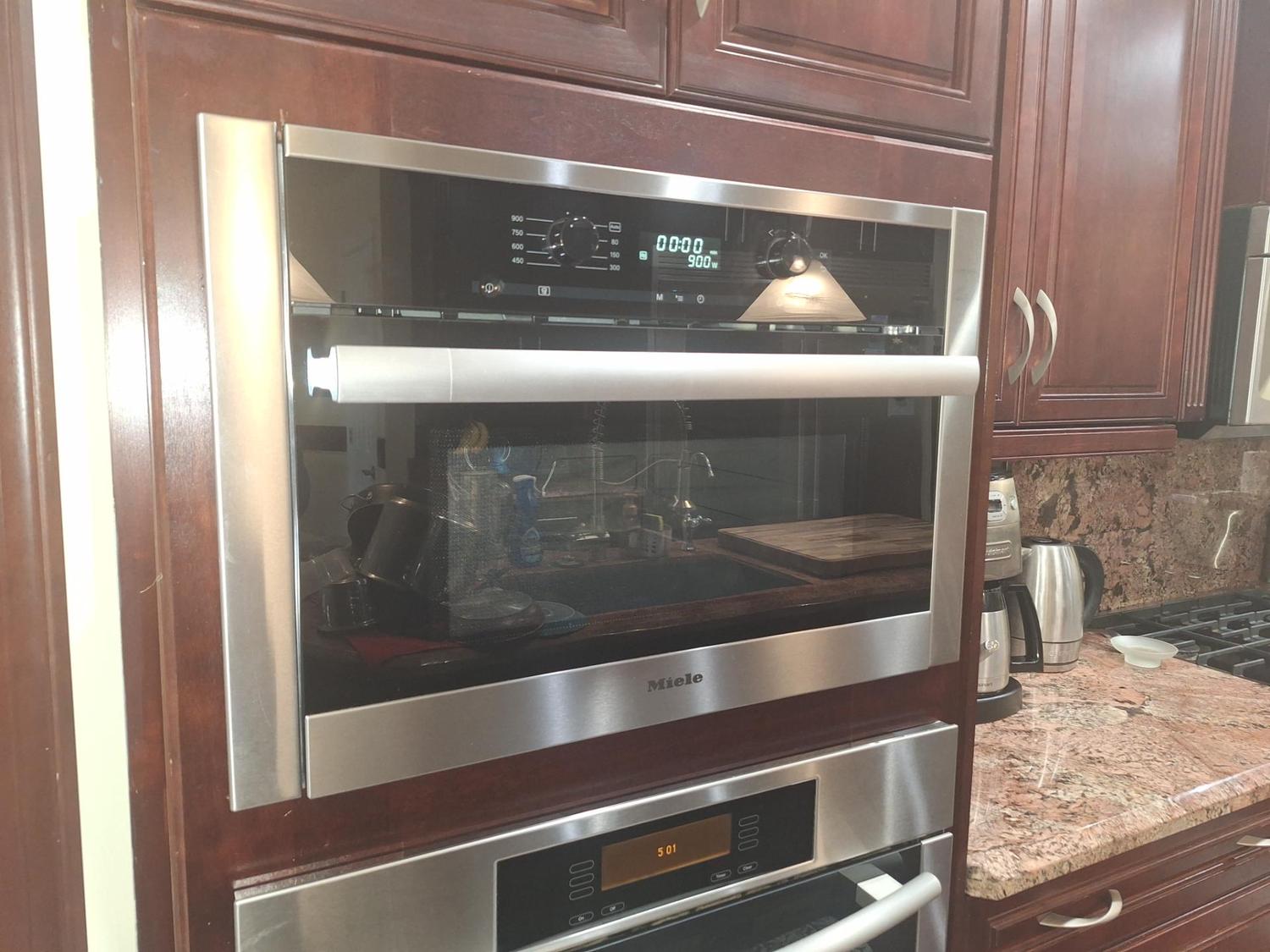
When a control knob starts misbehaving, the failure is rarely all-or-nothing. It shows up as an asymmetry: fine one way, unreliable the other; fine when you turn it slowly, dropped inputs when you turn it quickly. That pattern is a fingerprint, and it points at a specific component. A homeowner in Pump Hill, SW Calgary saw exactly this on their built-in Miele M6160 microwave, and it makes a good illustration of how a rotary control actually fails.
What the owner reported
The right-hand selection knob worked normally when turned counterclockwise, but not clockwise. And it worked when turned slowly, yet failed when turned quickly. The owner had noticed both halves of the pattern — the direction dependence and the speed dependence — which is a genuinely precise observation to bring to a diagnostic.
Why that pattern points at the encoder
A knob like this sits on top of two cooperating parts. A mechanical selector switch gives the knob its detents — the tactile clicks that mark each position. Behind it, a rotary encoder translates the physical rotation into electrical pulses the control board can count. As you turn the shaft, the encoder’s internal contacts open and close in a sequence; the board reads that sequence to know both how far and in which direction you turned.
Encoders wear one contact set before the other. When the contacts on one side degrade, the board starts missing pulses — but only under the conditions that stress the weak side. Turn slowly, and the board still has time to register each faltering pulse. Turn quickly, and the pulses arrive too fast for a degraded contact to keep up, so inputs get dropped. Turn in the direction that leans on the healthy contacts, and it behaves; turn the other way, and it stumbles. Direction dependence plus speed dependence is close to a textbook signature of a worn rotary encoder. TechVill technician Oleksandr identified the selector switch and encoder as the parts to renew.
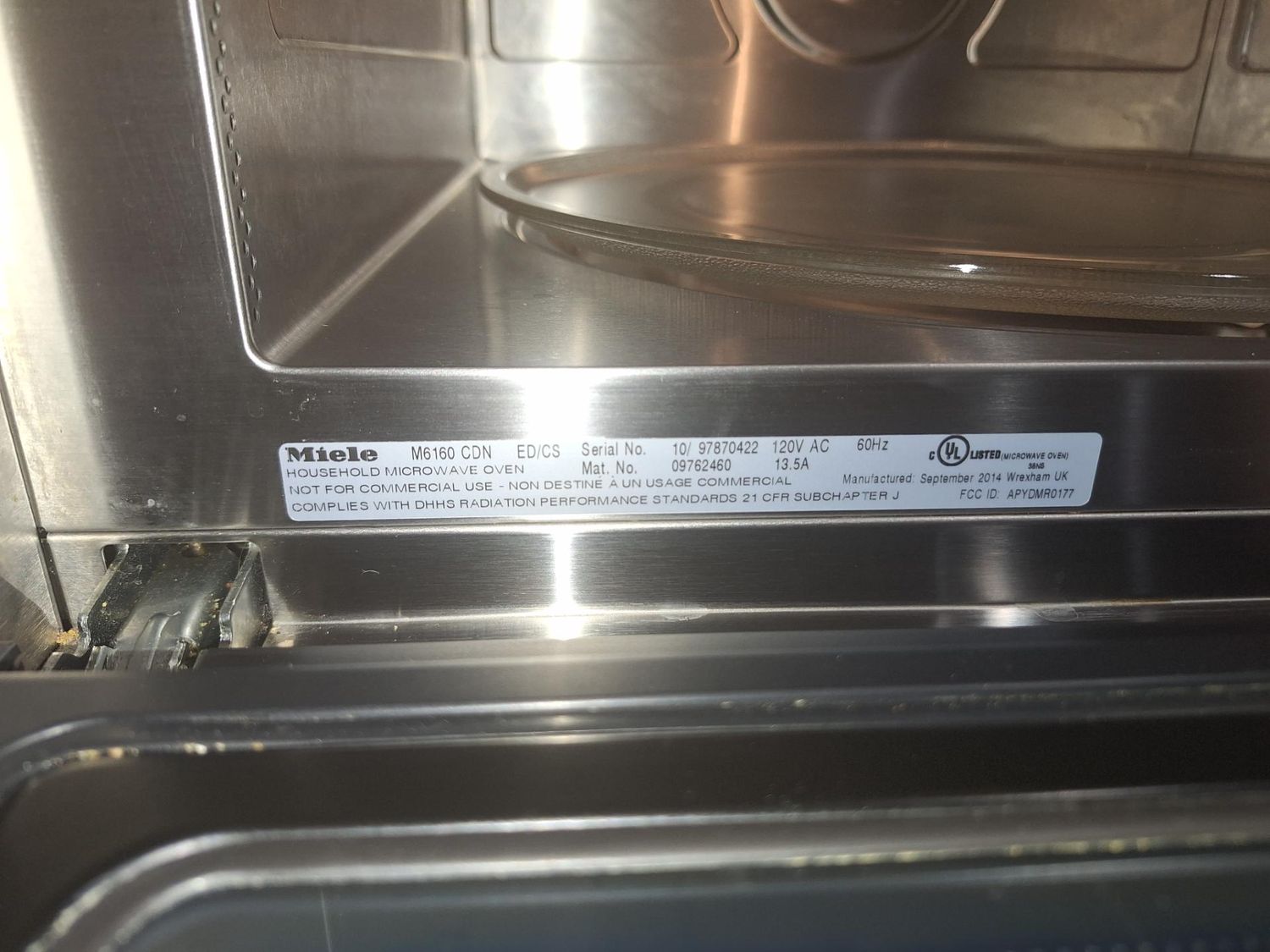
Components identified for the repair:
- Selector switch (part #9536200) — the mechanical switch behind the knob that registers each detent position
- Encoding switch / rotary encoder (part #9965080) — the position sensor that converts knob rotation into the pulse sequence the control board reads
Both are genuine Miele OEM parts sourced through the manufacturer’s service channel, with a lead time of up to three weeks.
Leaving the decision where it belongs
Here is where the case turns from a diagnosis into a judgement call — the owner’s, not ours. Because slow, counterclockwise use still worked, the microwave remained usable in the short term. Rather than press for an immediate parts order, Oleksandr completed the diagnosis, provided a written quote for the repair to keep on file, and left it with the owner to decide when — or whether — to proceed. The diagnosis is done, the parts and price are known, and there is no fresh service call required to pick the work back up later.
That is the honest shape of a lot of premium-appliance service. A rotary encoder degrades progressively, so this repair will likely be wanted eventually. But “eventually” is the customer’s timeline to set, especially when a workable habit — turning the dial slowly — buys them room to choose. An owner who knows exactly what is failing, what it costs, and that the fault is not a safety issue is in a far better position than one who is pushed into ordering parts on the day.
Book online to schedule a Miele microwave diagnostic with our team.