

The owner of a high-rise condo in the Lake Fraser area of southeast Calgary reported a loud screeching sound whenever water came into their Whirlpool front-load washer. They also offered a diagnosis, with appropriate hedging: it might need a pump or a valve, but they were not sure which.
Both are plausible. Both move water. Only one of them was involved — and the visit was scoped to establish that for both, not just for the one that turned out to be faulty.
Step 1 — Anchor the noise to a phase of the cycle
The customer’s description already did most of this work. The screech occurred during water intake, not during agitation, drain or spin.
That timing is diagnostically strong. The drain pump does not run while the machine is filling; it runs at the end of a cycle to empty the tub. A noise that appears only on fill points at the components that are actually operating on fill — the water inlet solenoid valves, which open under mains pressure to admit hot and cold water.
Step 2 — Get to the valves
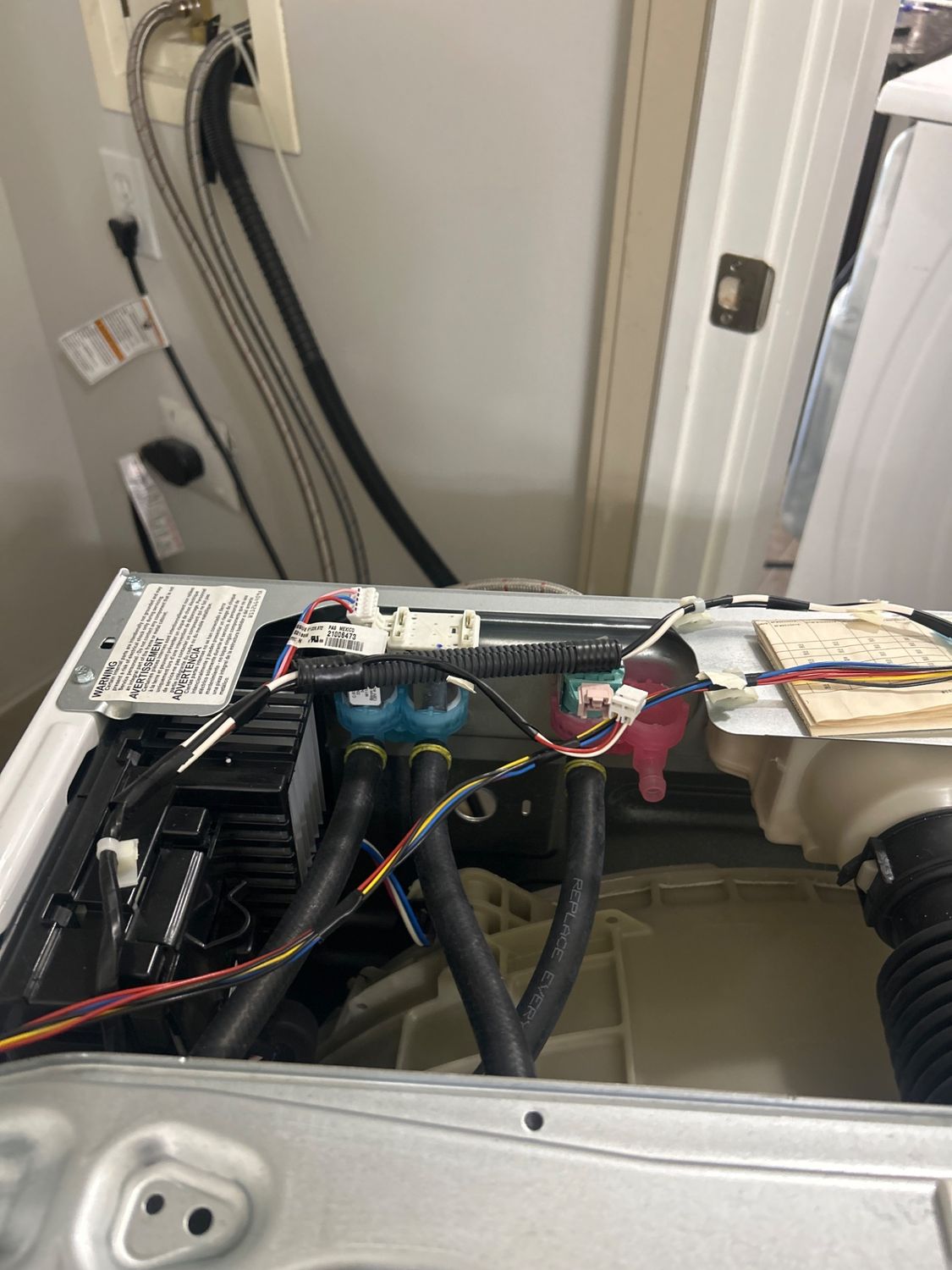
Technicians Oleksandr and Marlon attended together and opened the top of the machine, where the inlet valve assembly and its wiring sit above the tub.
Step 3 — Confirm the valves
Both solenoid valves were producing abnormal sound in operation. A healthy inlet valve opens with a soft click and passes water quietly; a failing one chatters, buzzes or screeches as the solenoid and the diaphragm inside it stop working cleanly against line pressure. The customer’s “screeching” was a literal description of what these two were doing.
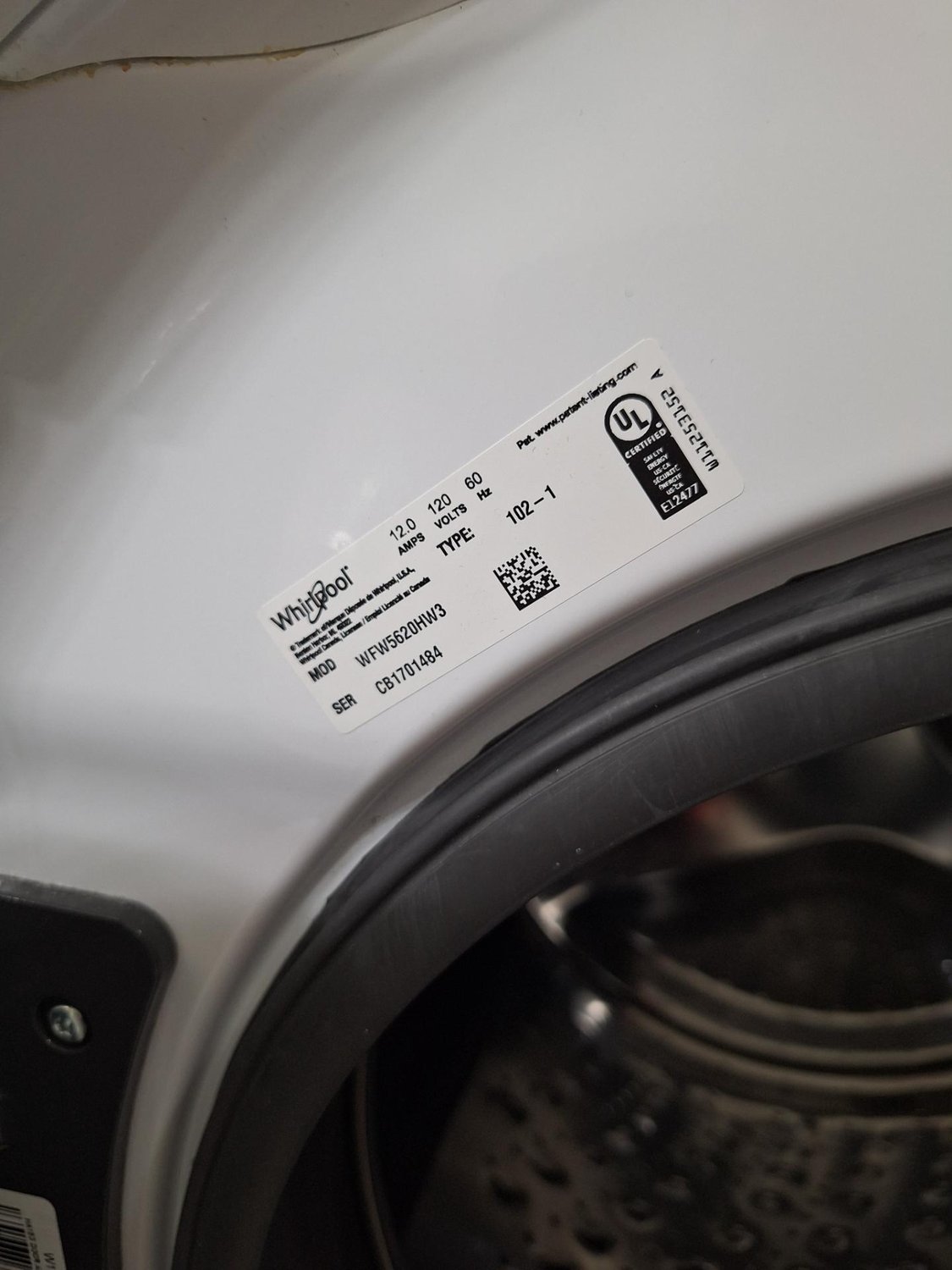
Step 4 — Test the other hypothesis anyway
This is the step that could have been skipped.
The valves were confirmed. The fault was found. The job could have proceeded straight to replacement — and the customer would have been left holding half an unanswered question about the pump they had also suspected.
Instead, the drain pump was checked and the drain function run. Both were working normally. No action was required on that system, and that finding was documented rather than left implied.
Step 5 — Replace, test, close
Components replaced:
- Water inlet solenoid valve (part #W11688994) — the electrically operated valve that admits supply water to the machine on fill
- Water inlet solenoid valve (part #W11688995) — the second, separately numbered valve serving the other supply line
The two valves carry different part numbers because hot and cold inlets are not interchangeable components on this machine — they are specified individually, and ordering two of the same number would leave one position wrong.
Both were installed and the machine was tested through a fill. The screech was gone and operation was normal.
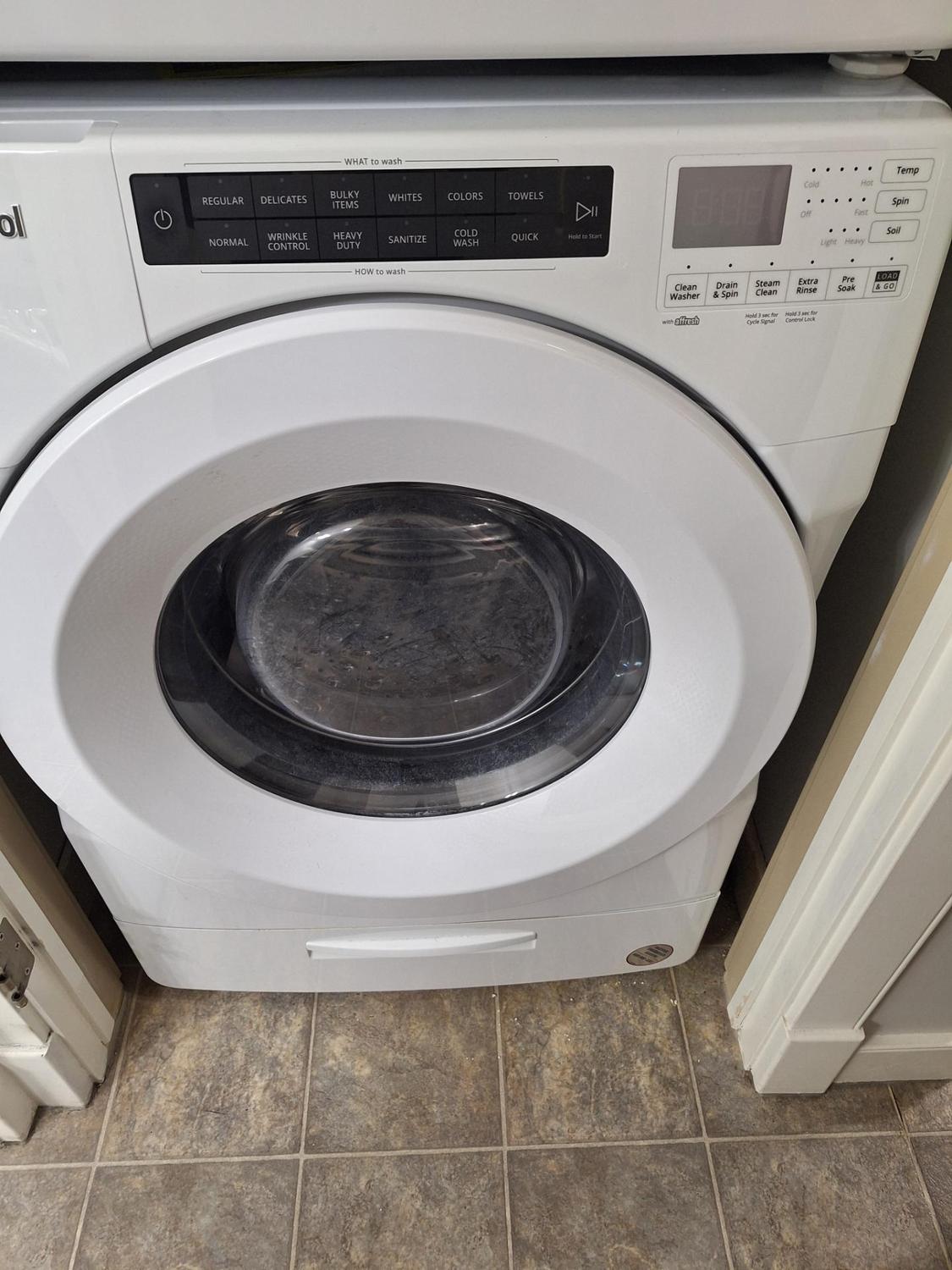
The visit ran 60 minutes and the repair completed in a single trip, with parts on hand. The work carries a three-month labour warranty. The total came to $604 plus GST — $634.20 — collected in full on the day, with no split payment needed because nothing had to be ordered.
Why answering both halves matters
A customer who says “it might be the pump or the valve” is telling you two things: what they suspect, and that they cannot tell which. Fixing the valve alone answers the first and ignores the second.
Six months from now, if that washer makes any unfamiliar noise, the difference between a customer who was told “we replaced the valves” and one who was told “we replaced the valves, and we checked the drain pump and drain function — both normal” is the difference between a nagging doubt and a settled question. The second costs a few minutes on site.
TechVill repairs Whirlpool washing machines across Calgary and surrounding areas, with access to genuine OEM parts through authorized supplier networks. Book online to schedule a Whirlpool washer diagnostic with our team.