

A homeowner in the Gleneagles View community of Cochrane, Alberta contacted TechVill after their Electrolux electric dryer (model ELFE7637CBTO) stopped working and began making a grinding noise. The customer suspected worn bearings or rollers. TechVill technician Randy worked through the drum-drive system methodically and found the noise was not a single failed part—it was the whole wear set at end of life.
A grinding dryer is a diagnostically interesting symptom precisely because the noise can originate from several mechanically linked components: the drum rollers that carry the tumbler, the idler pulley that tensions the belt, the drive belt itself, or the motor bearings. Replacing the wrong one—or only one—brings the noise back within weeks. Here is how the source was isolated.
How the grinding source was traced
Step 1 — Confirm the failure mode, not just the noise. The dryer had progressed past noise to a full stop. That distinction matters: a drum that will no longer rotate points at the drive path (motor, belt, idler) rather than at an electrical or control fault. With the dryer stopped and safely isolated, Randy opened the cabinet to inspect the drum-drive subsystem directly rather than guessing from the sound alone.
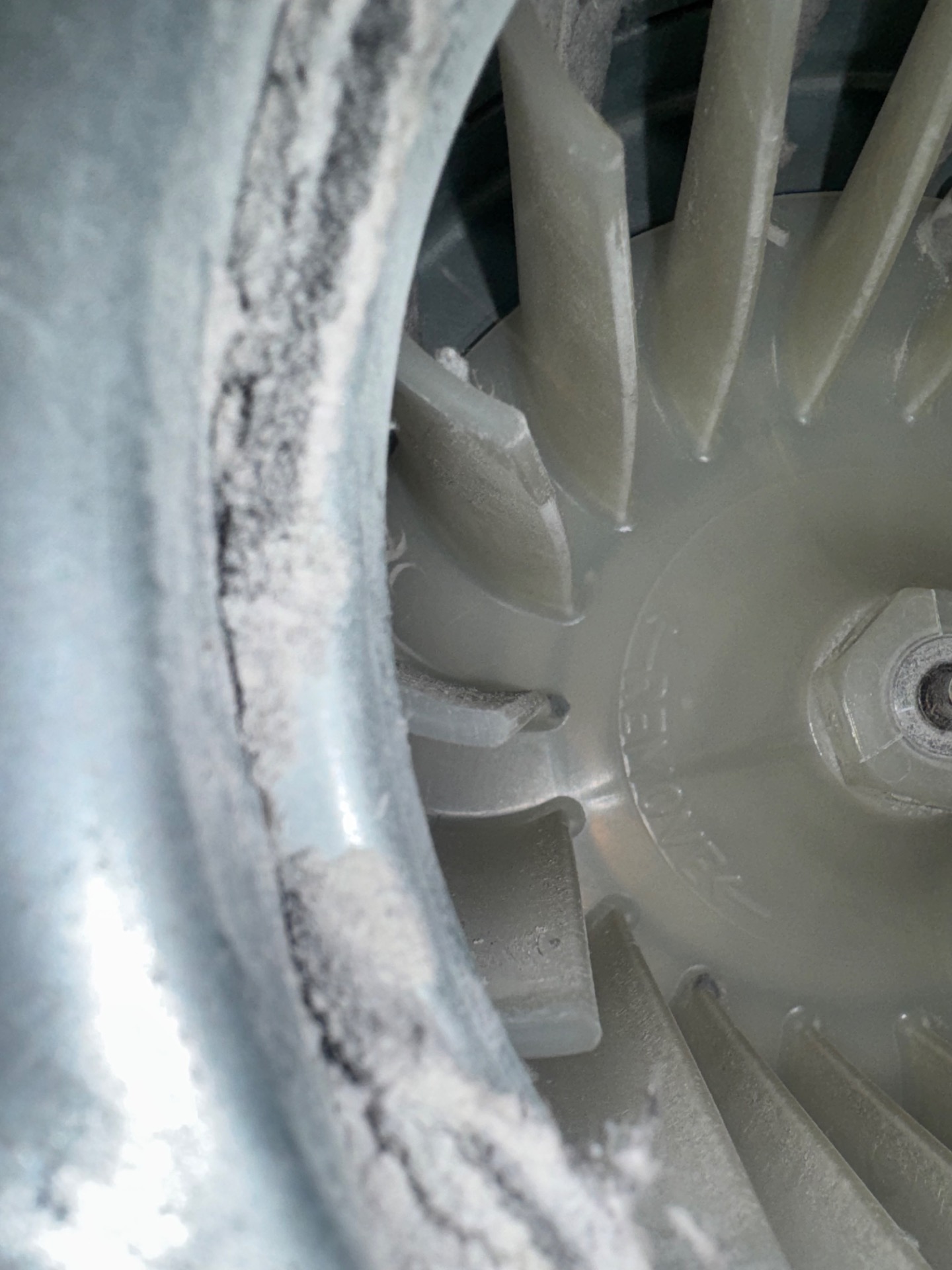
Step 2 — Check the drum rollers. The four drum-support rollers carry the weight of the tumbler and let it spin freely. Under load they had flattened and grooved from continuous friction, so the drum no longer rode true. Off-round rollers are a classic grinding source—and, just as importantly, they throw the rest of the drive path out of alignment.
Step 3 — Check the idler pulley and belt. The idler pulley keeps constant tension on the drive belt; its bearing had worn, which adds its own grind and lets the belt slip. The belt had stretched and cracked. Neither would survive long on its own, and a worn belt forces the motor to work harder to turn the drum.
Step 4 — Check the drive motor. The main motor spins the blower and drives the drum through the belt. Its bearings were worn as well—consistent with a high-mileage unit where a slipping belt and off-round rollers have been loading the motor for some time.
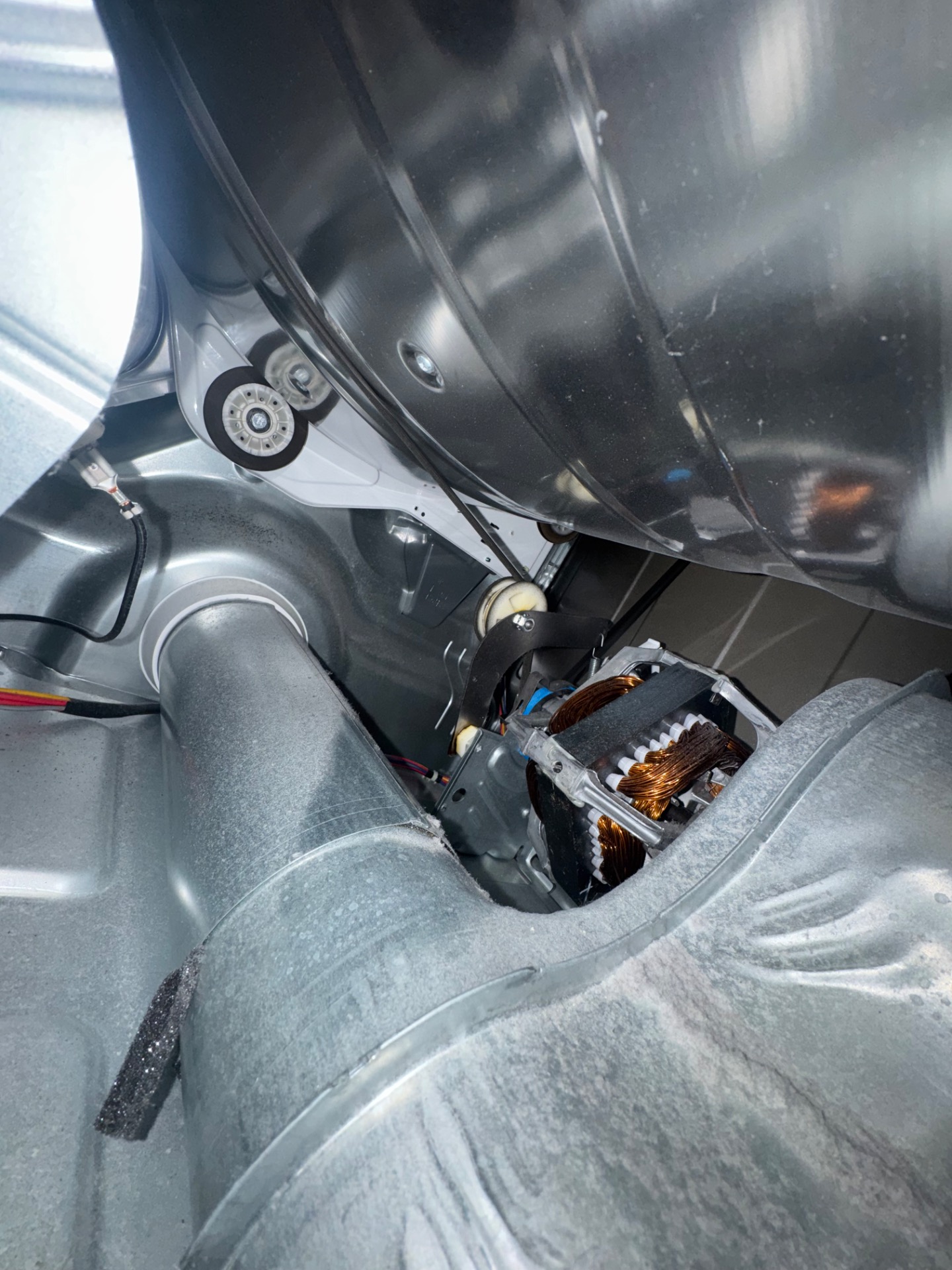
Step 5 — Read the pattern, not the parts. Each of the four components was worn, and each was contributing to the noise. This is the signature of high-mileage drum-drive wear: the parts are mechanically linked, so once one degrades it accelerates the others. Worn rollers create abnormal drum motion that stresses the idler and belt; a slipping belt overworks the motor. Diagnosing this as one part would have been a misread.
The fix — the wear set replaced together
Because all four wear items had reached end of life together, the correct scope was to replace them together—not to swap one part and leave the customer waiting for the next one to fail. The following genuine Electrolux OEM parts were sourced for the repair:
- Drive motor (part #5304529782) — spins the blower and drives the drum through the belt
- Drum rollers ×4 (part #5304523152) — support the rotating drum so it turns freely and true
- Idler pulley (part #134793511) — maintains constant tension on the drive belt
- Drive belt (part #134719300) — transfers motor rotation to the drum
At the install visit the dryer is disassembled to reach the drum-drive subsystem, the four wear items are replaced as a set, and the unit is reassembled and run to verify the drum turns smoothly with no grinding through a full cycle. The completed repair carries TechVill’s 90-day labour warranty.
Why replace the whole set on a high-mileage dryer
Swapping only the belt—or only the rollers—on a dryer this worn is false economy. The remaining worn parts keep degrading, the grinding returns within weeks, and the customer pays a second diagnostic and a second labour charge to open the same cabinet again. Replacing the motor, rollers, idler pulley and belt in one scope amortizes the labour across all four components, brings every wear-linked part back to the same service life, and settles the problem in a single visit instead of a string of return trips. On this repair the parts and comprehensive install came to roughly $1,190 CAD including the service call and GST—well short of the $700–$1,200 cost of replacing the dryer outright, and with the drive path fully renewed rather than partially patched.
Working through the drum-drive path in order—failure mode, rollers, idler and belt, motor, then the pattern across all four—is what turns a vague grinding noise into the correct fault on the first visit. It is also why the OEM wear set matters here: these are dimension- and tolerance-matched Electrolux family parts, so the new rollers ride true and the new belt and idler hold correct tension. Generic substitutes that are slightly off-spec reintroduce the same abnormal drum motion that caused the wear in the first place.
TechVill is factory-authorized by Electrolux and repairs Electrolux dryers across Cochrane and the surrounding Calgary area, arriving with the tools to walk the drum-drive system end-to-end and access to genuine OEM parts. Book online to schedule an Electrolux dryer diagnostic with our team.