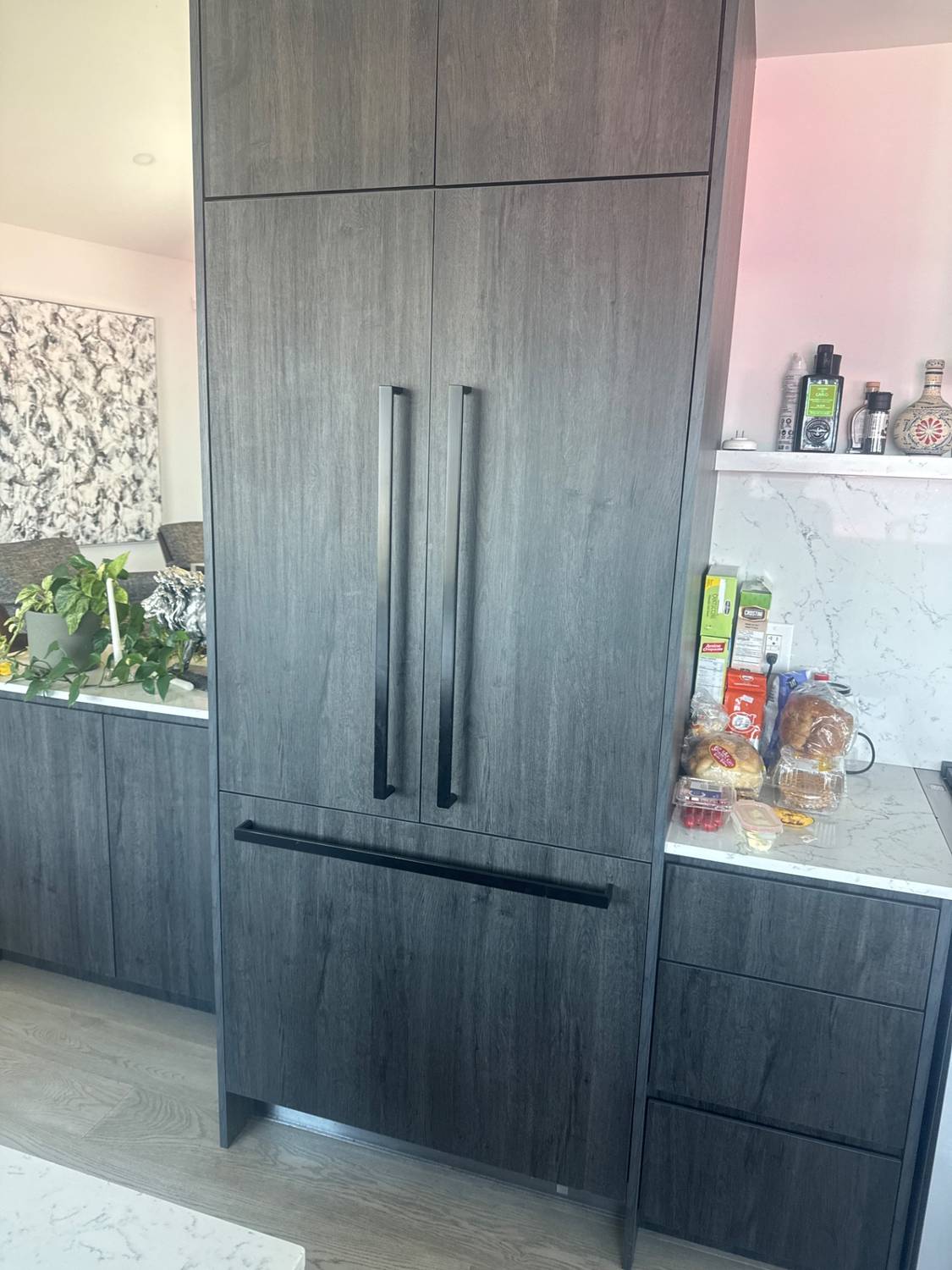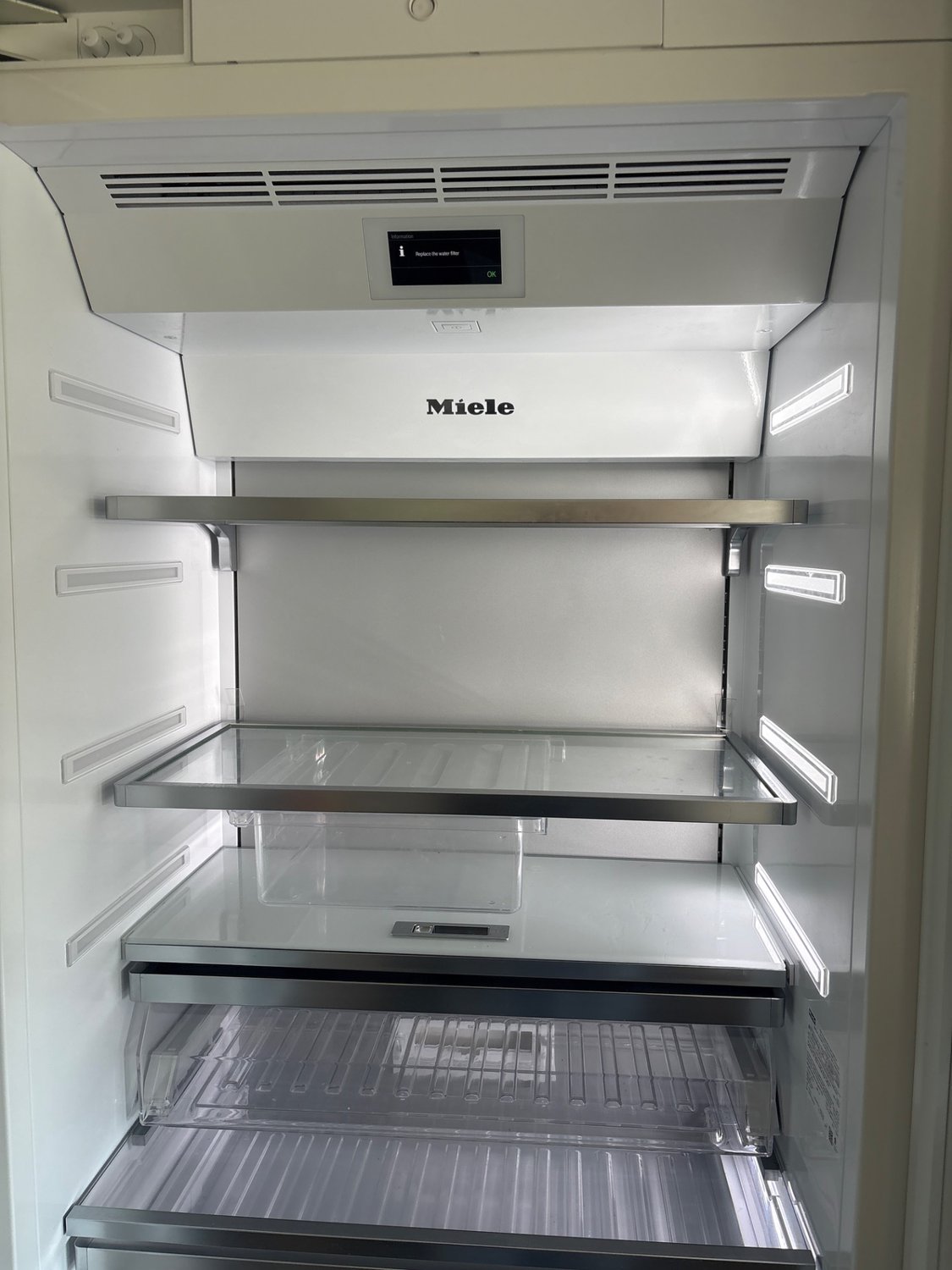


A Sub-Zero 48-inch built-in is the kind of appliance a kitchen is designed around — panel-matched, flush-fitted, and engineered around the brand’s signature architecture: two independent refrigeration systems, one dedicated to the fresh-food side, one to the freezer. That dual-system design is why the symptoms in this south Edmonton kitchen took the shape they did: the unit was making noise, and the freezer was losing temperature — while the refrigerator side carried on.
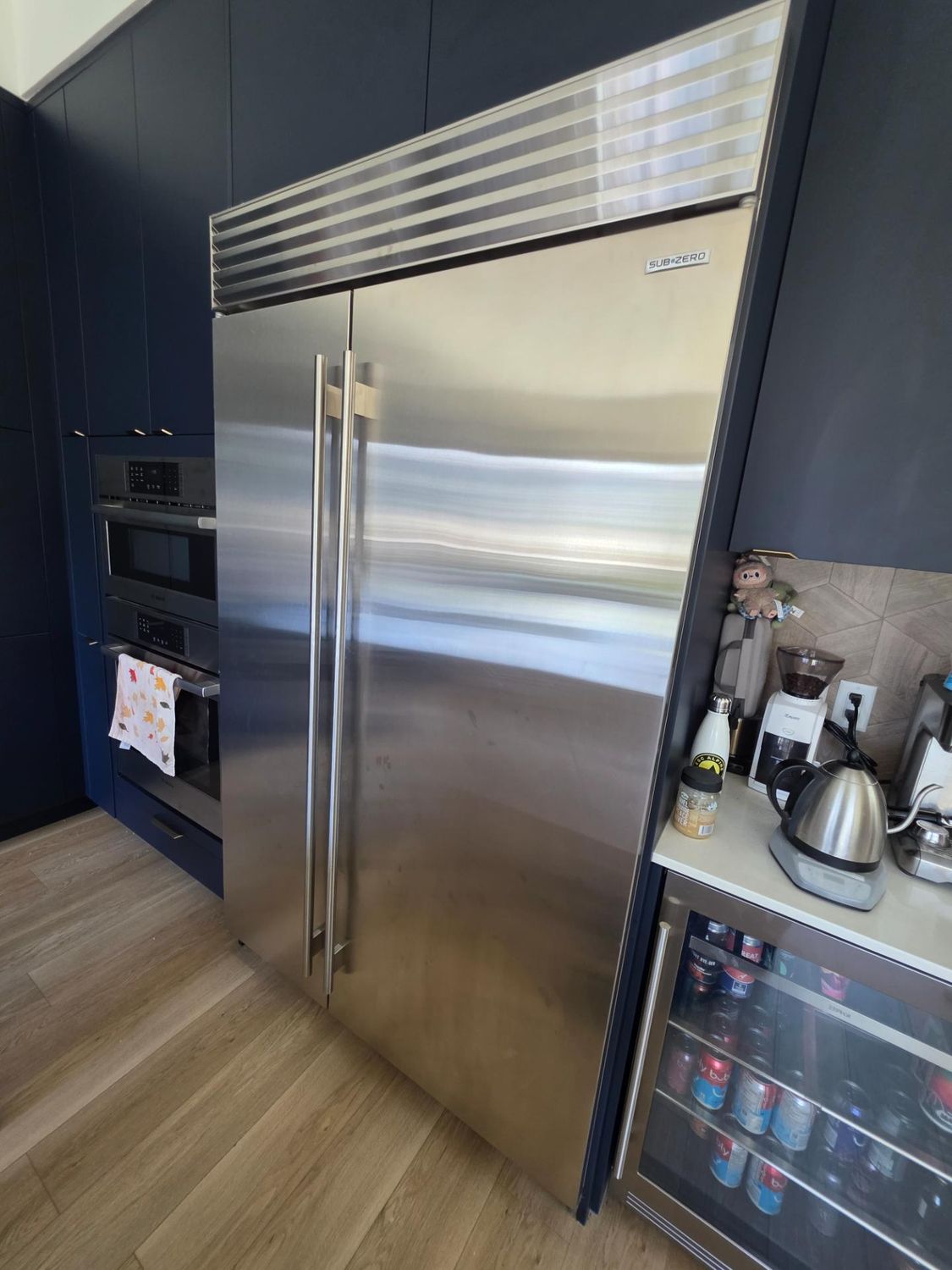
A diagnosis in three independent measurements
On equipment of this calibre, “the compressor sounds bad” is not a diagnosis — it’s a hunch. TechVill technician Oleksandr documented the freezer-side compressor failing across three separately measured dimensions:
- Acoustic — a loud grinding noise from the freezer compressor: the audible signature of internal mechanical wear.
- Thermal — the compressor body overheating to a measured 190°F, far beyond normal operating temperature, evidence of a machine labouring under severe internal stress.
- Electrical — current draw of 3.2A, an abnormal reading captured with a meter rather than described by feel.
Any one of these alone could carry an alternative explanation. All three together, on the same component, at the same time, point one direction only: the freezer-side compressor is failing mechanically, and it is taking the freezer’s cooling down with it. The dual-system architecture is also the diagnosis’s built-in cross-check — the healthy refrigerator side proves the failure is local to the freezer circuit, not a shared supply or control problem. Twenty minutes on site, because measurements this decisive don’t need padding.
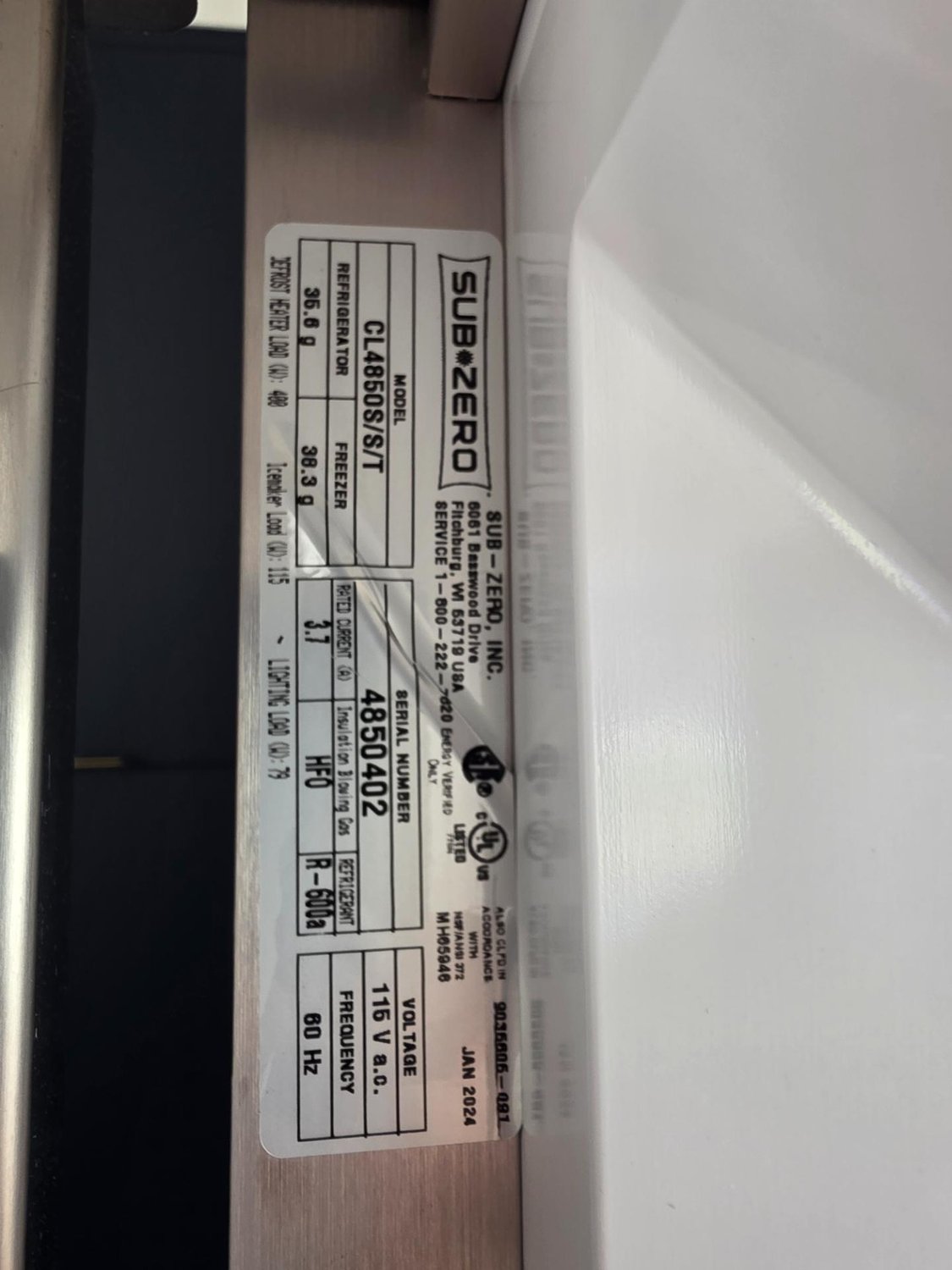
The scope: a sealed-system repair done as a system
The recommended repair replaces the freezer compressor, evaporator, and filter drier together, followed by evacuation and recharge of the freezer-side sealed system. That scope isn’t padding either. When a compressor fails grinding and overheating, it sheds debris and contamination into the refrigerant loop; bolting a new compressor onto a contaminated circuit is how a five-figure appliance ends up failing twice. Replacing the circuit’s wear components together and pulling a deep vacuum before recharge is the difference between a repair and a repeat visit.
Parts pricing is being confirmed with the supplier, with the full quote to follow — Sub-Zero OEM sealed-system components are substantial, and the customer will decide with real numbers in hand rather than estimates.
Why this case is worth reading even if you don’t own a Sub-Zero
It shows what a defensible premium-appliance diagnosis looks like: quantified evidence on multiple axes, an architectural explanation for the symptom pattern, and a repair scope that treats the sealed system as a system. If your built-in refrigeration is making new noises or losing a compartment, have it measured before it becomes an emergency. Book online to schedule a Sub-Zero diagnostic with our team in Edmonton.