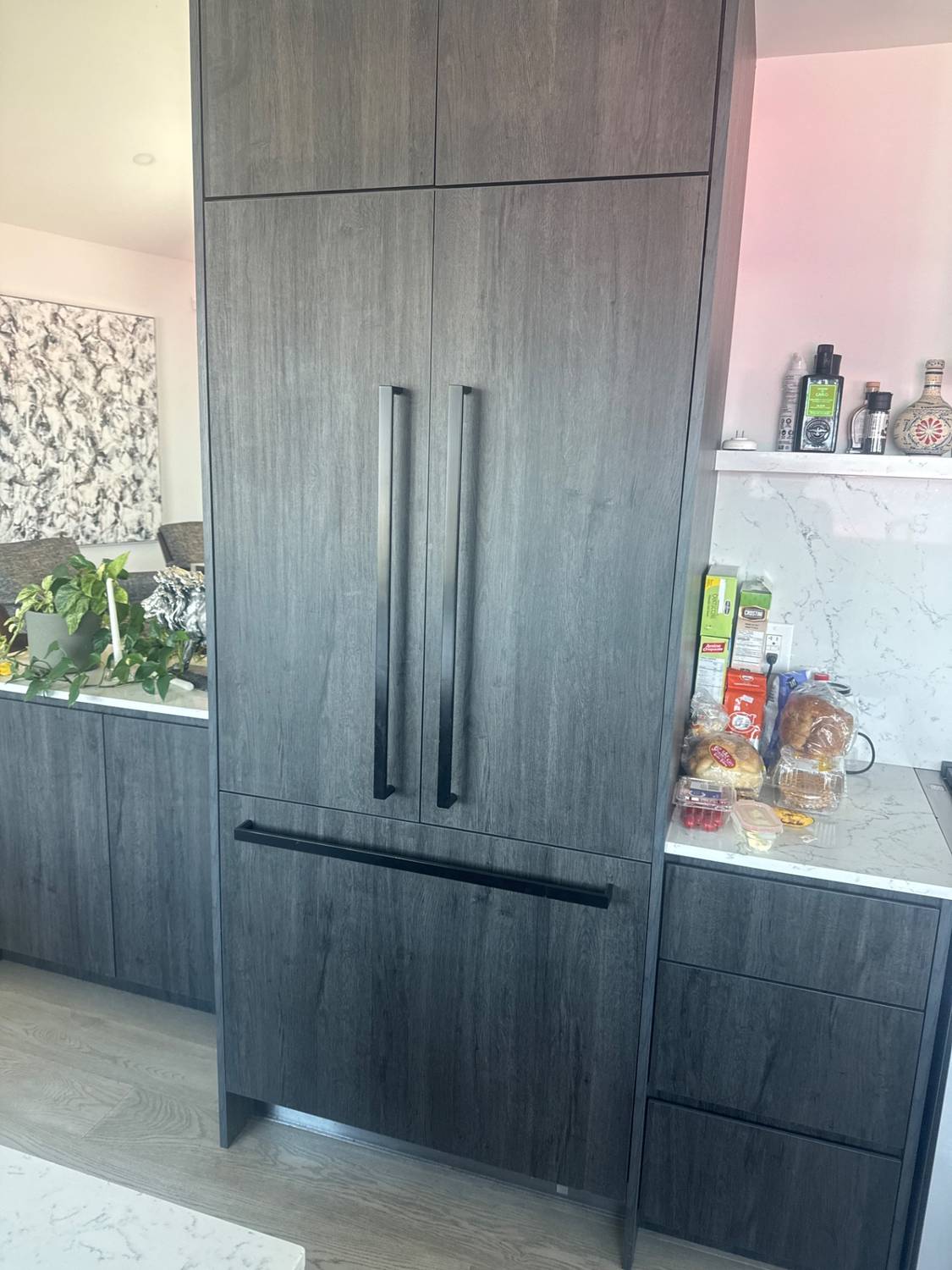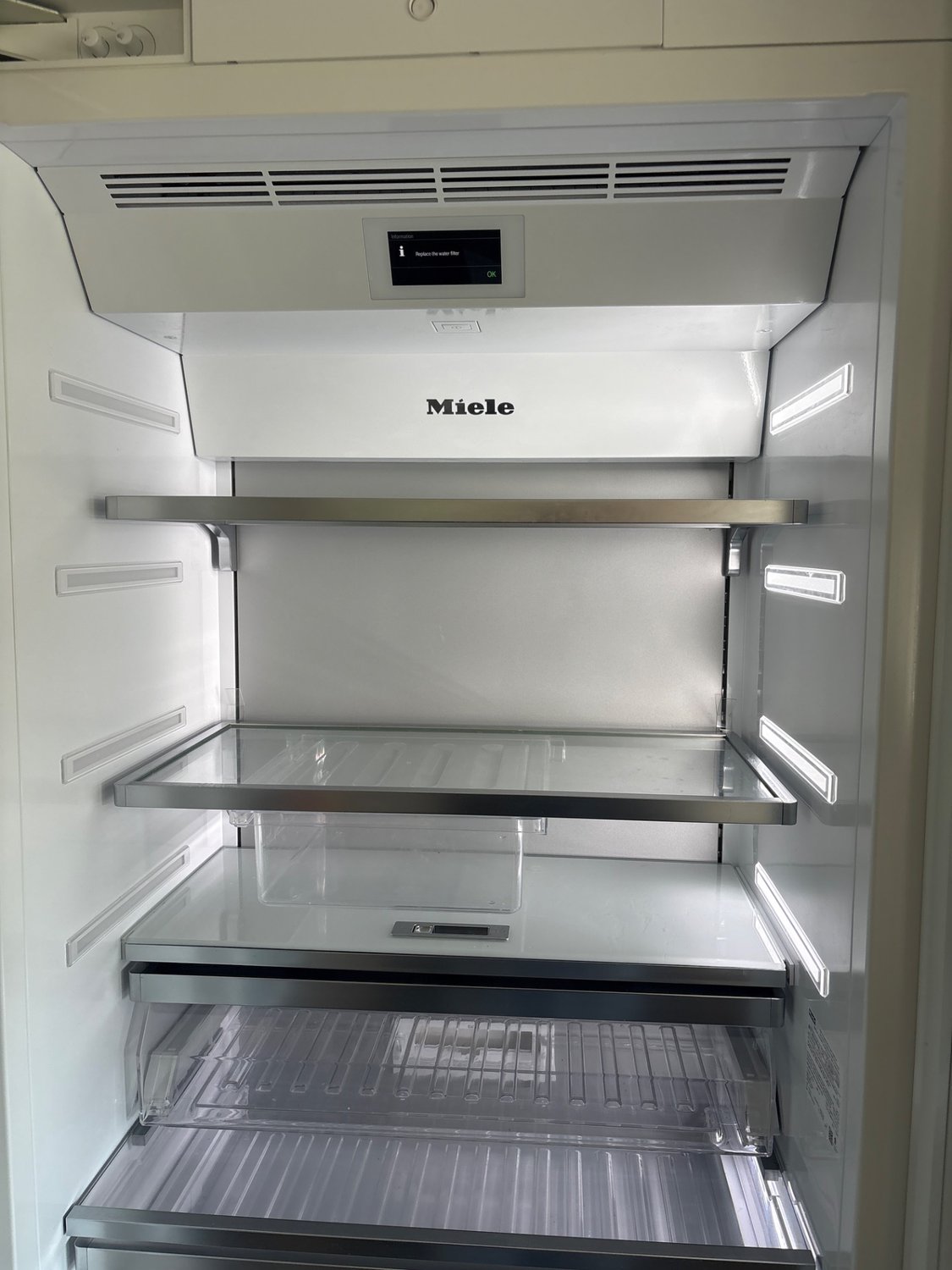


A homeowner in the Bearspaw / Springbank acreage community west of Calgary reported a freezer that would not get cold. The temperature was sitting around -5°C when it should have been near -18°C, and frozen food had started to soften. TechVill technician Boris confirmed the failure, traced it to the compressor’s inverter box, and verified the fix with direct current measurements before leaving the home.
A freezer holding 13°C above its setpoint is not a control glitch or a fogged-up display — it is a real loss of cooling capacity. The diagnostic question is narrow but important: is the compressor not running at all, running but under-powered, choked by an airflow restriction, low on refrigerant, or being mis-commanded by the control electronics? Each of those points to a different repair. Working through them in order is what separates a correct first-visit fix from a guessed part swap.
How the fault was isolated
Step 1 — Confirm the symptom against spec. The reported freezer temperature (~-5°C versus a -18°C setpoint) and the softening food were consistent with a genuine sealed-system or compressor-drive fault, not a sensor or door-seal issue. That ruled the problem into the cooling circuit and warranted measuring the compressor directly.
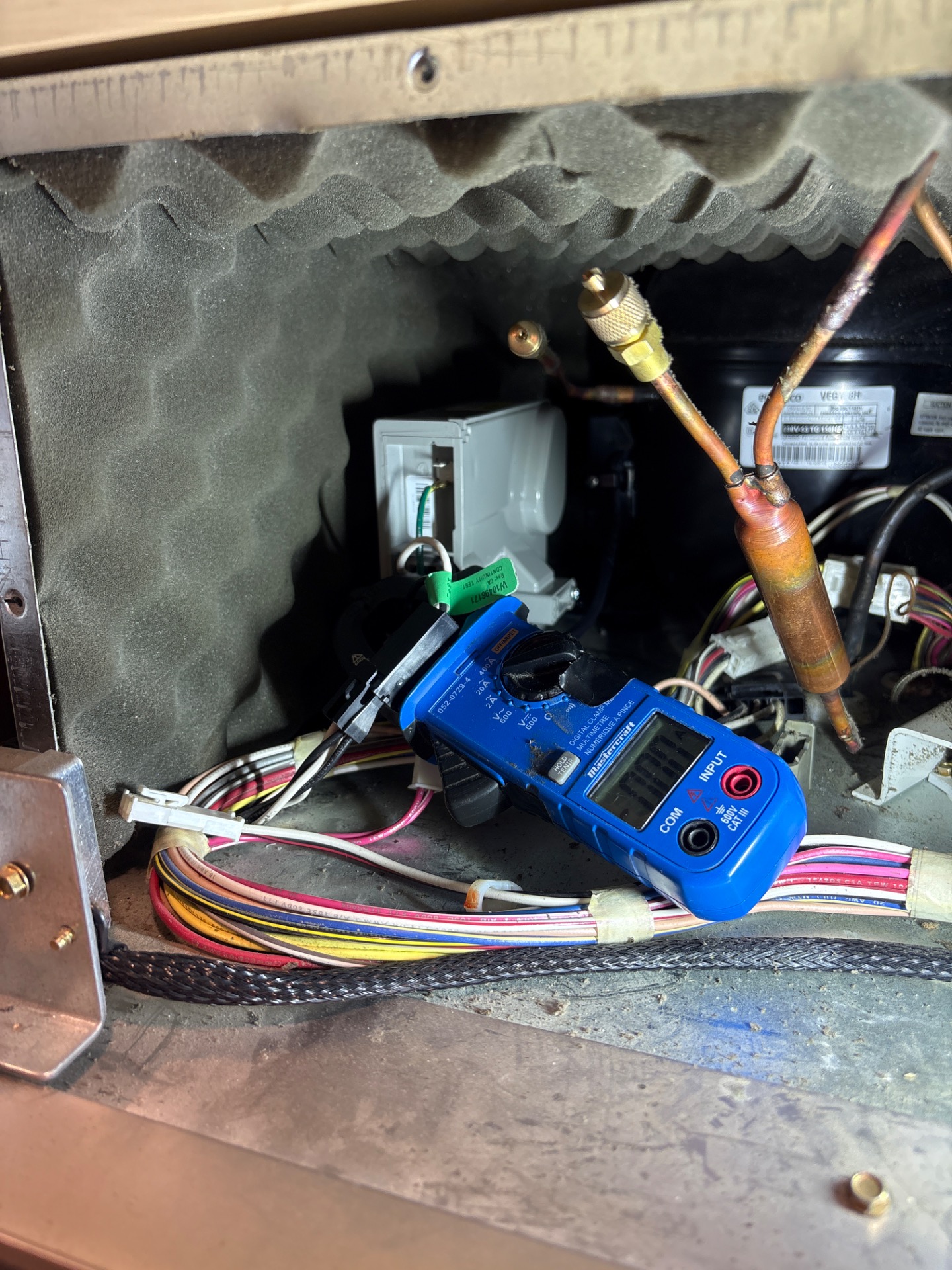
Step 2 — Measure compressor current. On this KitchenAid the compressor is a variable-speed (inverter-driven) unit, so the meaningful test is current draw over time, not a simple on/off check. Boris measured the compressor at startup and tracked it as the system settled:
- 3.7 A at startup — normal high inrush as the variable-frequency drive ramps the compressor up to speed.
- 1.7 A shortly after — a quick drop, showing the drive is modulating speed rather than stalling.
- 1.6 A after about 10 minutes — steady-state draw as the system stabilized.
Step 3 — Interpret the readings against the operating range. The documented expected operating range for this compressor is 0.9–1.5 A. The behaviour told the story: a healthy startup-then-settle curve confirmed the compressor itself was starting and modulating correctly, while the slightly elevated steady-state draw pointed upstream to the electronics commanding it. A failed inverter typically shows current that is stuck high, erratic, or absent — and this unit’s drive was clearly being driven incorrectly.
Step 4 — Identify the failed part. The inverter box is the high-voltage module that converts incoming AC into the variable-frequency signal that runs the inverter compressor. When it degrades, the compressor may fail to start, fail to reach speed, or run inefficiently — all of which produce a freezer that cannot reach setpoint. That matched every observation here.
The repair
Boris replaced the inverter box with the genuine Whirlpool-family OEM part, then re-ran the current check above as verification rather than assuming the swap had worked.
Components replaced:
- Refrigerator inverter box (part #W10629033) — converts incoming AC power into the variable-frequency DC signal that drives the inverter compressor and sets its speed.
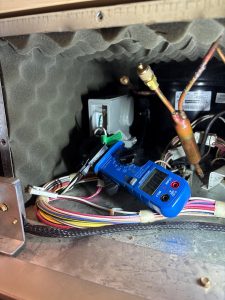
Step 5 — Re-verify and set honest expectations. After the replacement the freezer temperature was dropping in the right direction, confirming the cooling system was removing heat again. Boris was candid with the homeowner: the 1.6 A steady-state reading was “still a little higher than needed but close to normal,” and he expected it to keep settling toward the 0.9–1.5 A range as the system reached equilibrium. He also flagged that pulling a thermally heavy freezer compartment from -5°C back down to -18°C is not instant — full working temperature would realistically arrive the next morning, 12–24 hours out. That honest range disclosure matters: the customer knows the repair is working without mistaking a still-cooling freezer for a still-broken one. The visit took about 30 minutes and carries a 3-month labour warranty.
Why the method matters
Most refrigerator notes record “compressor running” or “not running” as a yes/no. Measuring actual current at startup, at the quick-drop, and at steady-state — then comparing it to a known operating range — is what let us name the inverter box as the fault on the first visit instead of replacing the compressor or recharging refrigerant on a hunch. The OEM W10629033 is specified for these Whirlpool-family inverter systems; an aftermarket drive module that does not hold the same switching tolerances can mis-modulate the compressor and reproduce the exact symptom we just resolved. TechVill repairs KitchenAid refrigerators across Calgary and the surrounding rural communities, arriving with the test equipment to measure the sealed system end-to-end and with access to genuine OEM parts.
Book online to schedule a KitchenAid refrigerator diagnostic with our team.