

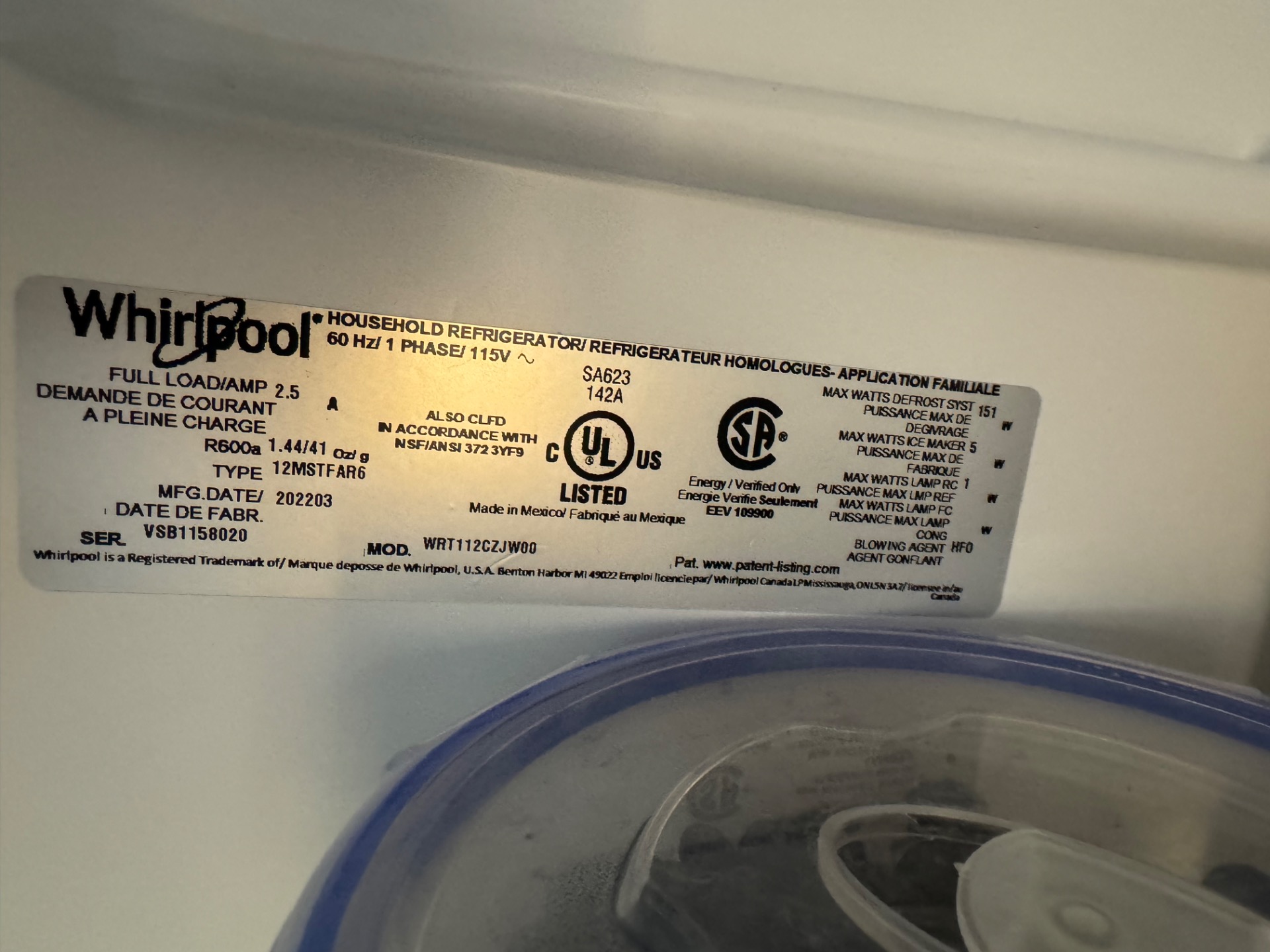
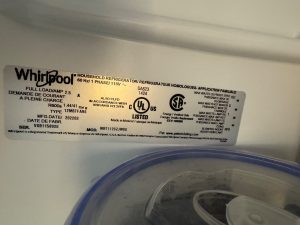
A homeowner in a Brentwood condo, NW Calgary, contacted TechVill for fridge repair in Calgary after their Whirlpool WRT112CZJW00 top-freezer refrigerator started leaking water between the freezer and refrigerator doors. The symptom location matters: water between the two compartments isn’t a floor puddle (which would point at the ice maker or water lines) and it isn’t door-gasket condensation (which would show on the seals). Water emerging at the junction between freezer and fridge sections points at internal water that’s overflowing its intended path — typically from a drainage failure inside the freezer that lets defrost water find its way down between the cabinet sections.
The diagnostic walk on this call was tight, and the verification step at the end was the part most repair shops skip.
Step 1 — Confirm the source
Technician Randy opened the freezer compartment and inspected the evaporator area. Ice buildup at the freezer drip tray confirmed the working theory: defrost-cycle water that should have drained out to the evaporator pan was instead refreezing on the tray. That’s the immediate, visible failure mode. The water has somewhere it’s supposed to go; it’s not getting there.
Step 2 — Locate the drain blockage
Tracing the drain line from the drip tray down to the evaporator pan confirmed the second link: the drain tube was clogged, preventing the meltwater from following its design path. This is the diagnostic chain working: water between the doors → must be coming from inside the freezer → freezer water comes from the defrost cycle → defrost water should drain to the pan → if it’s not getting there, the drain is blocked → ice buildup on the drip tray confirms it.
Each link is a small inference, but they have to be made correctly and in order. Skipping straight to “replace the door gasket” or “check the water line” on a “water between the doors” symptom sends the repair down the wrong path entirely.
Step 3 — Verify the defrost heater
This is the step that separates a real diagnostic from “unclog the drain and hope.”
A drain clog can be the cause of the leak symptom, or it can be a recurring downstream symptom of an upstream defrost-cycle failure. If the defrost heater isn’t generating enough heat to fully melt the frost during each cycle, the cycle leaves behind partially-melted water and slush — which then refreezes in the drain line, causing it to clog repeatedly. A new drain clear on a refrigerator with a weak heater holds for a few months, then fails the same way.
Randy put a multimeter across the defrost heater terminals and read 108 ohms — within the heater’s operating specification. That single measurement confirms the defrost cycle itself is healthy. The heater is generating the heat the design calls for, the cycle is fully melting the frost, and the drain clog is the actual root cause of this leak — not a recurring symptom of a weaker upstream component.
Step 4 — Clear the drain and verify
With the heater verified, the repair scope reduced to drain work only:
- All obstructions cleared from the drain line
- Drainage flow verified — water now reaching the evaporator pan as designed
- Unit run through observation of the defrost cycle end-to-end
- Drain tube draining freely; no leak between the doors
Why the heater check matters
The proof is in the math. A drain unclog plus a heater that reads in spec produces a permanent repair. A drain unclog without the heater check, on a unit where the heater is actually under-performing, produces a 60-to-90-day repair followed by a callback. The customer on the callback assumes the technician didn’t fix it the first time. The shop loses the warranty hours plus the goodwill.
Verifying the heater on the first visit eliminates that branch entirely. It takes thirty seconds with a multimeter. There’s no excuse for skipping it.
The repair, in full
No parts replaced. Labour-only drain clearance with electrical diagnostic on the defrost heater. The customer paid for diagnostic skill and the physical labour to clear the system — exactly what was performed, without padding the invoice with parts that weren’t needed.
This is the same labour-only repair pattern as TechVill’s Maytag drain unclog in Lincoln Park (a separate case in our portfolio, completed by a different technician). Two cases now in the Calgary portfolio with the same correct outcome: drain repairs that don’t need parts, identified by technicians who verify the upstream component before declaring the diagnosis complete.
Need Whirlpool or Mass-Market Refrigerator Repair in Calgary?
TechVill services Whirlpool, Maytag, KitchenAid, and the broader Whirlpool group of brands across Calgary and surrounding areas. Our technicians run the actual diagnostic chain — including the verification steps that confirm the upstream components are healthy before the repair is closed out.
Book online to schedule a Whirlpool refrigerator diagnostic with our team.