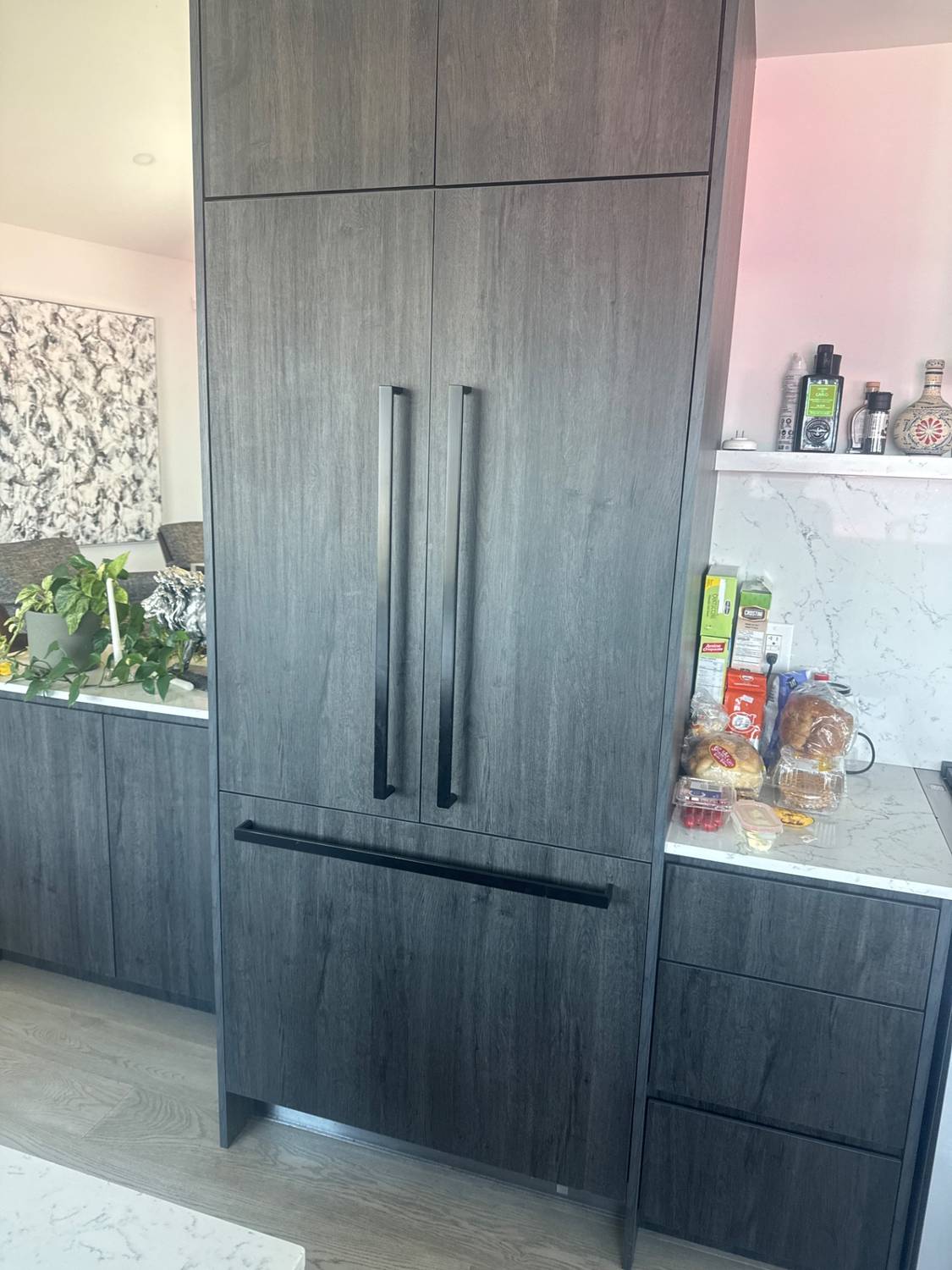


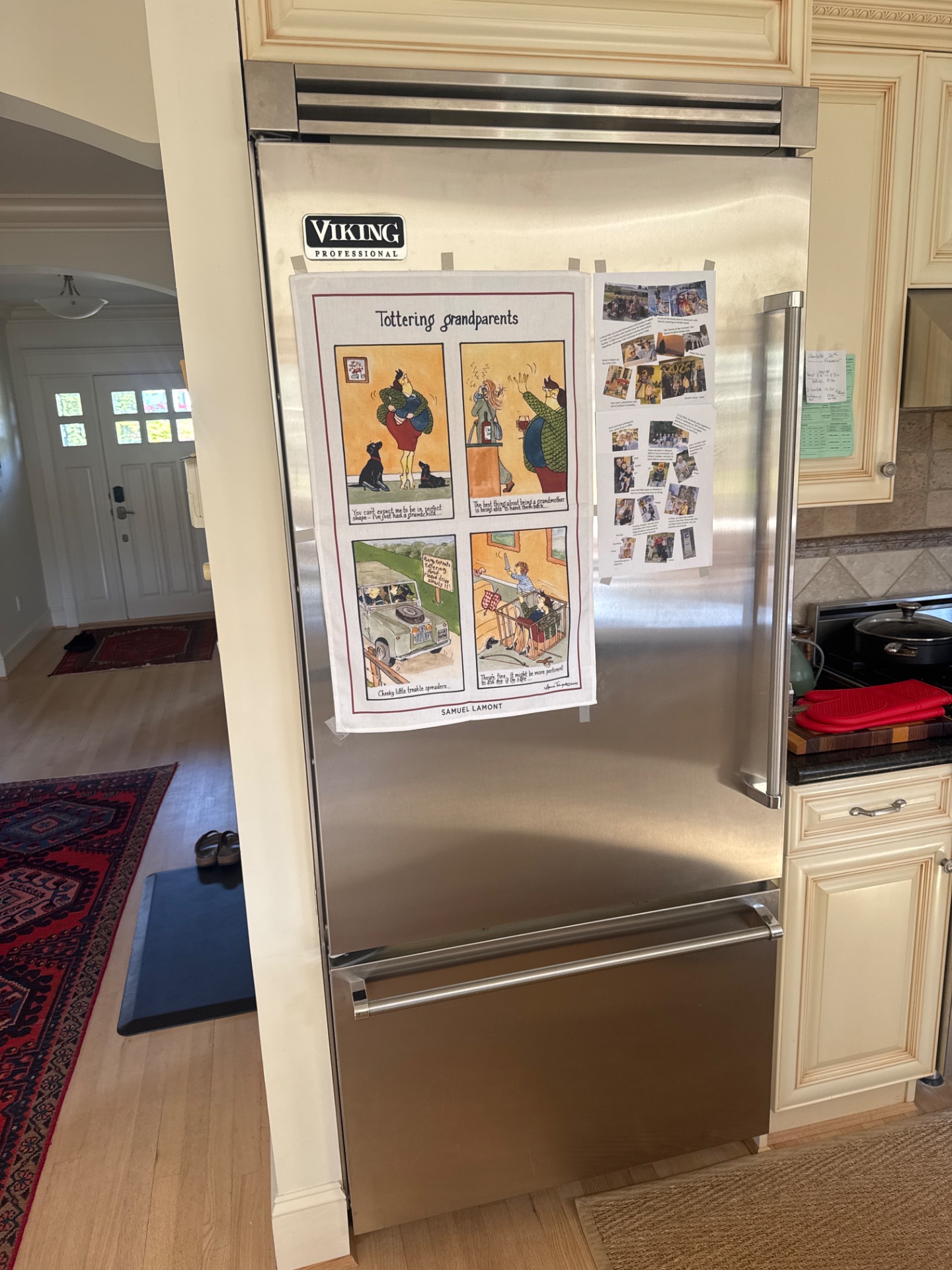
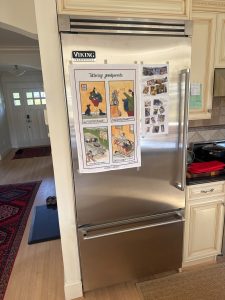
A homeowner in the MacKenzie Heights neighbourhood on Vancouver’s west side contacted TechVill about a recurring problem on their Viking VCBB363LSS built-in bottom-freezer refrigerator. The unit would intermittently stop cooling properly and flash the Hi-Temp warning light. A reset would clear the alarm and the unit would resume normal operation — for a while. The intervals between failures had been getting shorter over recent months.
That last detail — increasing frequency — is the diagnostic key. The story of this repair is what you can infer from the conditions a working unit is sitting in, and why an inverter board cannot be diagnosed the same way most other refrigerator components can.
The Problem — Intermittent Hi-Temp on a Premium Built-In
A Hi-Temp warning on a built-in refrigerator is not a small thing. The unit has decided that the cabinet temperature has risen high enough to threaten the food inside, and it is alerting the homeowner. On a Viking VCBB363LSS — a pro-style built-in bottom-freezer with a new replacement cost in the six-to-nine-thousand-dollar range, plus custom cabinetry around it that was built to the appliance’s exact dimensions — getting ahead of a complete failure matters. Replacement is not the casual default it might be on a mass-market unit.
The customer’s description carried two important pieces of information. First, the reset cycle was clearing the alarm — meaning the unit was capable of recovering, which ruled out the most catastrophic failure modes (compressor seizure, sealed-system leak, total electrical failure). Second, the failures were getting more frequent. An intermittent fault that is stable in frequency is usually a sporadic environmental trigger — a door left ajar, an occasional power dip, a hot day pushing the unit’s thermal envelope. An intermittent fault that is progressively more frequent is almost always a degrading component, something failing on a thermal or electrical cycle, recovering on reset, and heading toward complete failure as the degradation continues.
Diagnosis — Inference From Observable Conditions
TechVill technician Alex arrived to find the unit in perfect working condition. Compressor running, both compartments at proper temperature, no alarm active. That is the diagnostic challenge of intermittent faults — when the technician is there, the appliance is not misbehaving.
Two unproductive paths exist at that point. The first is to declare “could not reproduce” and leave. The second is to start replacing parts on guesswork in the hope that something stops the symptom. Neither produces a real diagnosis.
The third path — the one that produces an actual diagnosis on an intermittent call — is to observe the operating environment of the components most likely to fail, and to work from conditions back to cause. That is what this case ran on. Three observations:
- The condenser was very dirty. Accumulated dust and pet hair were physically blocking airflow through the condenser coils.
- The entire compressor area was running very hot to the touch. Not just the compressor itself — thermal stress across every component sitting in the machine compartment.
- The condenser fan was working perfectly. Air movement was happening. But with a dirty condenser, air cannot actually pass through the coils efficiently, no matter how well the fan is moving it. Low airflow despite a working fan.
From those three observations, the inference chain that explains the customer’s exact symptom:
- Dirty condenser → poor heat rejection from the sealed system.
- Poor heat rejection → elevated temperatures throughout the compressor area.
- The Viking VCBB-series uses an inverter-driven variable-speed compressor, and the inverter board that controls it sits in the same machine compartment as the compressor itself — getting baked by the same heat.
- Inverter board operating outside its thermal envelope → intermittent failure to drive the compressor correctly.
- Compressor not driven → temperature in the compartments rises → Hi-Temp alarm fires.
- Reset cycles the inverter board → it works again until the next thermal stress event.
- Each thermal stress event accelerates the board’s degradation → the symptom gets more frequent over time.
Step 7 is the match with the customer’s description. “More frequent” is the degradation curve telling you the component is dying, not the environment misbehaving.
The Repair — Inverter Board Plus Root Cause Addressed
The diagnostic conclusion: the Viking inverter board is the failing component, and the dirty condenser is the root cause that has been accelerating its failure. Both parts of that have to be addressed in the same repair. Replacing the board alone would put a new component into the same overheating environment that destroyed the original — guaranteeing a return failure within months. Cleaning the condenser without replacing the board would buy time but not resolve the degraded board already underway.
The scope: replace the inverter board with the OEM Viking 011666-000, and perform a deep condenser cleaning as part of the same visit — dust and debris cleared from the coils, airflow capacity restored, the thermal environment around the new board returned to spec.
The 011666-000 is in stock on TechVill’s BC inventory. Same operational pattern as the Wolf service parts the team keeps stocked — relay boards, spark modules, oven thermostats. For Viking customers on this failure mode, that means a near-immediate install visit rather than a multi-week Viking service-channel wait. On a premium-brand refrigerator where the unit is the kitchen’s central appliance, that scheduling difference matters: the customer is not living without refrigeration while waiting on parts.
Components replaced:
- Viking inverter board (part #011666-000) — drives the variable-speed compressor in the VCSB and VCBB Custom Built-In refrigeration lines; the failing unit on this fridge had been operating outside its thermal envelope due to a heat-blocked condenser, producing the intermittent Hi-Temp symptom that recovered on reset and grew progressively more frequent
Procedure performed alongside the board replacement:
Deep condenser cleaning — coils cleared of accumulated dust and debris, airflow capacity restored to the heat-rejection path. Without this step, the new inverter board would have been subjected to the same overheating environment that drove the original to failure.
What This Case Demonstrates
Two Viking refrigerators in TechVill’s documented portfolio have failed on the same OEM part — the 011666-000 inverter board — from two different root causes. The earlier case, a Viking VCSB5483 side-by-side in Burnaby, failed because the inverter compartment had filled with moisture, frying the board. This case failed from heat stress driven by a blocked condenser. Two different environmental conditions degrading the same component on two different product lines. That tells you something specific about where the stress point is on Viking inverter-driven refrigeration: the component itself sits in a compartment that is exposed to whatever conditions the room and the unit’s airflow create around it. Diagnosing one of these intelligently requires reading the environment, not just the part.
On cost rationale: replacement of a built-in bottom-freezer of this tier runs in the six-to-nine-thousand-dollar range new, plus the cabinet modifications and installation labour required to fit a replacement into the existing kitchen. The repair scope on this case is in the two-to-three-thousand-dollar range and addresses both the failed component and the upstream cause. The math is straightforward.
On root cause vs symptom: the symptom is the Hi-Temp warning. The component that produced the symptom is the inverter board. The cause that produced the failed component is the blocked condenser. A repair that addresses only the symptom (replace the board) leaves the cause in place. A repair that addresses only the cause (clean the condenser) leaves the already-degraded board in place. A repair that addresses both is the durable one. Same logic applied on the Miele MasterCool case in Olympic Village earlier in the year — replaced components plus a deep condenser cleaning to address the airflow restriction that had contributed to the failure.
On OEM parts policy: the Viking 011666-000 fits across multiple Viking refrigerator product lines because Viking engineered the same control board for the inverter-driven compressors in both the VCSB Custom Side-by-Side and the VCBB Custom Built-in Bottom-freezer. Aftermarket inverter boards exist for some refrigeration platforms; on a Viking pro-style built-in with a variable-speed compressor driven by tight tolerances on PWM signals, mixing tolerances would be a near-immediate compressor-life problem. OEM is the only correct part on this repair.
The Result — Install Pending, Stable Diagnosis
The diagnostic visit ran 30 minutes — efficient given that the failure mode had to be inferred from environmental observation rather than directly observed. The customer committed to the repair with a 50% deposit ($1,354.50 CAD on a $2,709 total, math reconciles cleanly to $2,580 × 1.05 GST). Balance due at install: $1,354.50. The install is a two-technician scope; built-in cabinetry pullout and the inverter board location both call for it.
The MacKenzie Heights call extends Vancouver-proper coverage to a third inner-city neighbourhood after Olympic Village and East Vancouver. Viking, as a brand, has now been documented across three distinct product lines in TechVill’s portfolio — side-by-side, French-door pro-style, and built-in bottom-freezer — and three distinct Metro Vancouver communities. The pattern is consistent enough that “Viking refrigerator service in the Lower Mainland” has become its own named service capability.
Need Viking Refrigerator Repair in Metro Vancouver?
TechVill services Viking appliances across Metro Vancouver and the Lower Mainland — from Burnaby through to Caulfeild and the Vancouver west side. Our technicians arrive with the brand-specific test equipment for inverter-driven variable-speed compressors, the inventory positioning to handle the recurring failure modes without multi-week parts waits, and the diagnostic discipline to read intermittent faults by inference rather than by guess.