

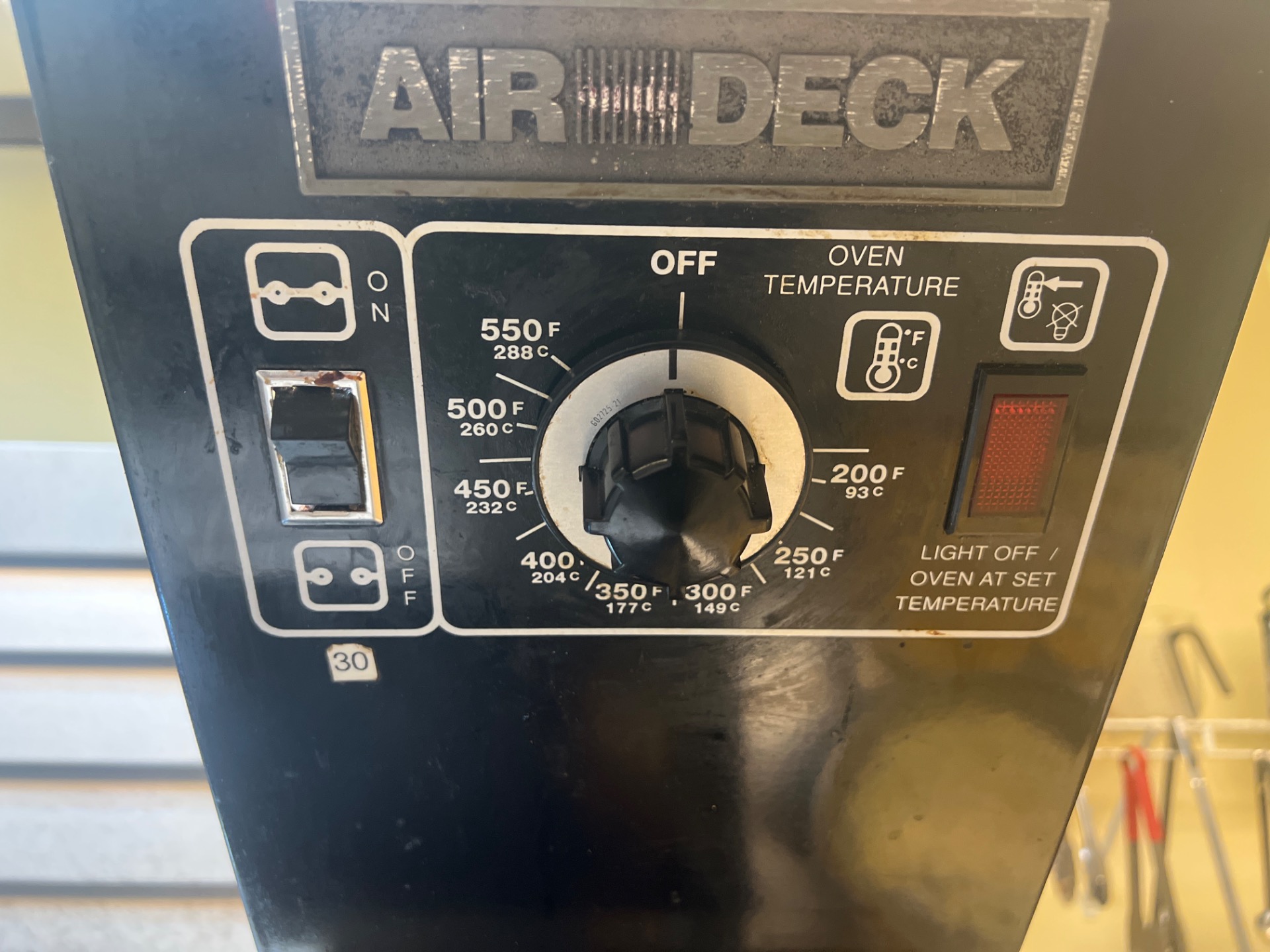
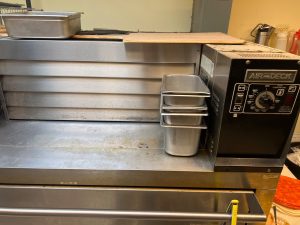
The customer ticket on this call read simply: oven keeps overheating, temperature climbs past setpoint. On a commercial Garland Air Deck — a deck/convection oven built for pizzerias, bakeries, and institutional kitchens — that is a clear fault description and a clear repair path. Replace the thermostat, verify temperature regulation, write the invoice.
The diagnostic conversation on site changed the disposition of the job. Here is what surfaced and how it was handled.
What the Work Order Said
Garland Air Deck oven, overheating, climbing past setpoint. Operator location in Calgary’s Manchester Industrial / Alyth-Bonnybrook corridor — commercial / light-industrial neighbourhood, foodservice operator. Same-shop work order, technician dispatched.
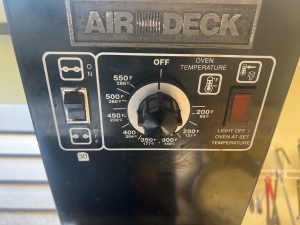
The presenting fault read as a textbook thermostat call. On a Garland Air Deck deck oven, the temperature control regulates the heat circuit by closing it when the cavity reaches target temperature. If the regulator fails open — which is what “keeps climbing past setpoint” describes — the heat circuit never gets the signal to stop, and the oven cooks past its setpoint into thermal-stress territory.
Technician Leonid arrived, confirmed the fault on the unit, and verified it against the Garland service catalogue: thermostat, OEM part 1611900, was the indicated replacement.
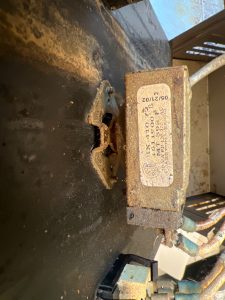
The thermostat pulled from the oven — visible heat-stress discolouration on the body and the surrounding bracket consistent with prolonged operation outside spec. That detail mattered for the next question.
What the Diagnostic Conversation Surfaced
The question that changed the repair was: how long has this been happening?
The operator’s answer: approximately eight months. Eight months of the oven running overheated, in production, under load, on a daily commercial schedule.
That is a substantively different unit than the work order described. A Garland Air Deck thermostat replacement on a unit that started overheating last week is a one-part repair. A Garland Air Deck thermostat replacement on a unit that has been overheating for eight months is a one-part repair with a documented risk profile attached — because every other heat-loaded component in that oven has been thermally stressed well beyond design parameters for that entire period. Heating elements. Gas valves. Control wiring. Door seals. Insulation. Any of them may have sustained latent damage that has not yet surfaced as a failure but will.
The 8-month history is not a fault you can repair on this visit. It is a risk that will arrive on a future visit, almost certainly.
Why the Two Answers Point at Different Repairs
The wrong move at this point is either of two extremes.
The weaker version is to replace the thermostat, ignore the history, send the invoice, and look unprofessional when the heating element fails three weeks later and the operator wonders why nobody flagged it. The other weak version is to refuse to do the repair without a full teardown inspection of every potentially heat-stressed component — which gets the shop a four-figure invoice but loses the customer’s trust on a call that doesn’t justify that scope today.
The correct move is the one that was made: replace the immediate fault, document the customer’s answer in the work order, and give the operator a written advisory that additional components may require testing or replacement going forward. That structure protects both sides. The operator has a record of when the oven was returned to spec and what the technician warned about. The shop has documentation that any future failure of a heat-stressed component is not attributable to today’s thermostat repair — it is attributable to eight months of overheating that preceded it.
The Repair
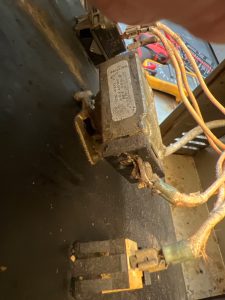
Components replaced:
- Thermostat / temperature control (Garland part #1611900) — the regulator that closes the heat circuit when the oven reaches target temperature; failure of this part is what allowed the oven to keep climbing past setpoint
After installation, the oven was tested through its temperature range and confirmed operating within parameters at the time of service. No other faults were observed.
The customer was formally advised, in writing on the work order, that given the documented 8-month overheating history under continuous load, additional components — heating elements, gas valves, control wiring, door seals — may have sustained latent damage that has not yet surfaced. Further testing or replacement of any of those components may be required on a future visit. The operator now has that on record.
What This Reflects About Commercial Service Relationships
A note about how commercial foodservice service relationships work. When a piece of commercial equipment fails on a foodservice operator’s line, the question is not just “is the repair right today” — it is “who do I call when the next one fails.” The technician who asked the right diagnostic question, documented the answer in writing, and gave honest forward-looking advice about probable knock-on damage is the technician the operator will call back. The technician who replaced the thermostat without asking and disappeared is not.
That dynamic is more pronounced on commercial equipment than it is on residential. On a residential service call, the relationship ends when the appliance is fixed. On commercial — and especially on heat-loaded commercial cooking equipment like a Garland Air Deck — the relationship just started.
The Numbers
Total invoiced: $1,182.30 CAD — OEM Garland thermostat (part 1611900), labour, diagnostic, and the risk-disclosure consultation.
Garland Air Deck ovens are commercial-grade equipment built for production environments — not residential kitchens. Servicing them requires familiarity with commercial gas/electric control circuits and access to the specific Garland service parts catalogue. TechVill’s commercial foodservice book includes documented work on Garland and on Delfield (both Welbilt-family brands) for operators in Calgary’s industrial and food-court corridors.