(855) 397-7233
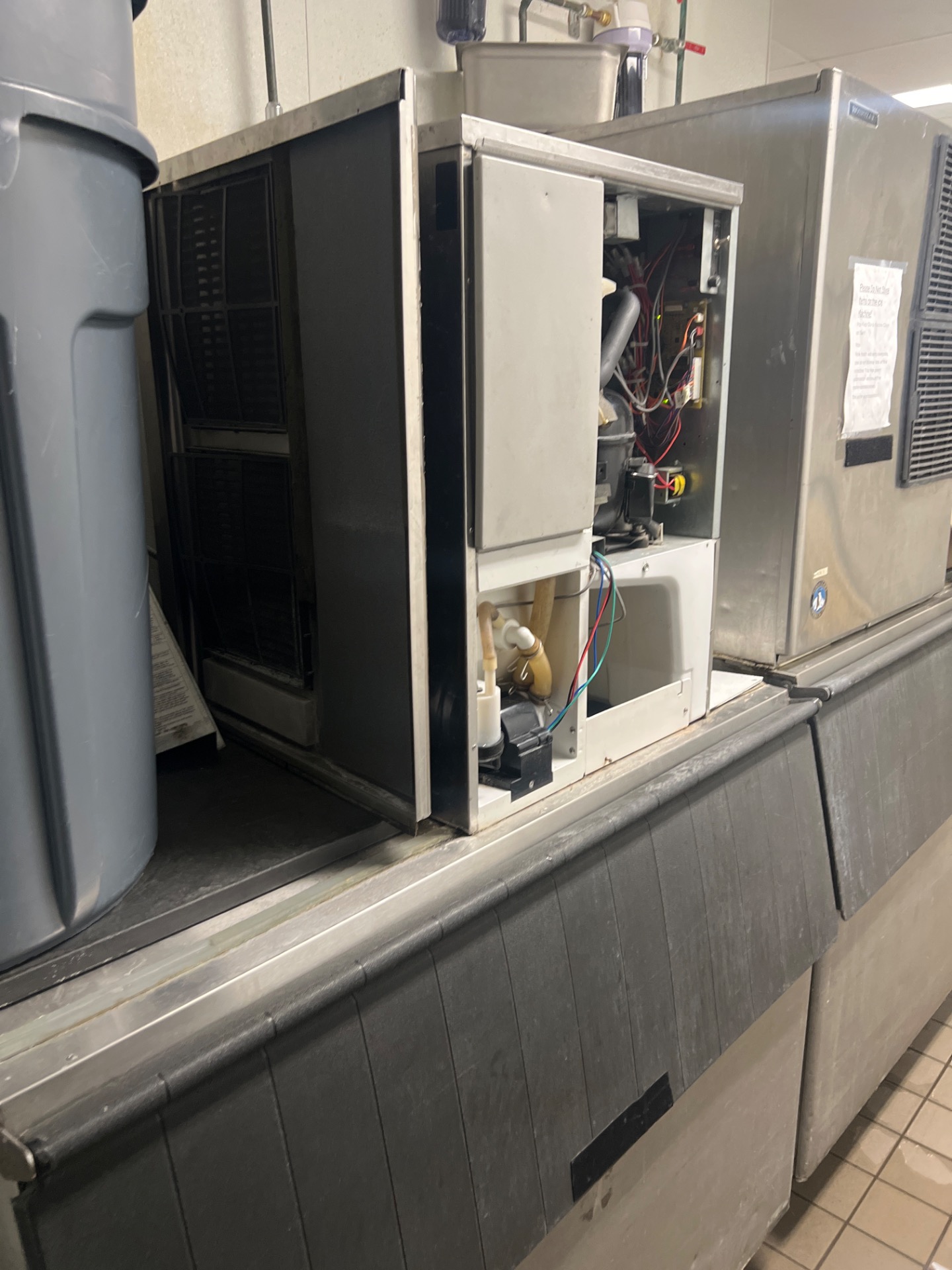
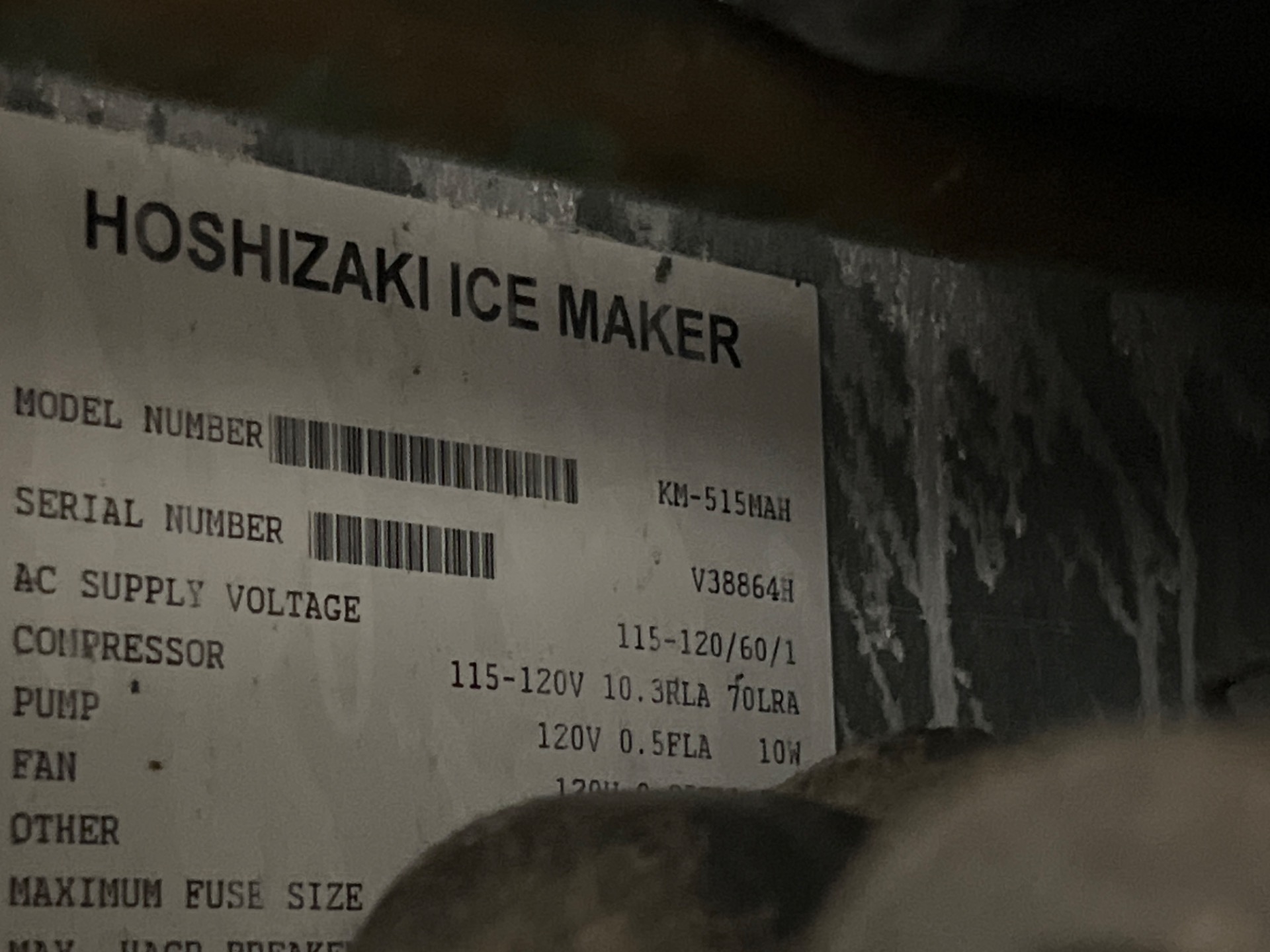
A hospitality business on Macleod Trail South called TechVill with two Hoshizaki commercial ice makers down at once. One was running an alarm and producing ice slowly; the other (a KM-515MAH cube machine) had stopped entirely and kept faulting into alarm. For a bar, ice supply is not optional — every hour offline pressures beverage service. TechVill technician Leonid worked both units in a single visit, and neither needed a part.
How the Diagnosis Ran
Both machines presented as “failing components,” which is exactly the assumption that leads to unnecessary compressor or control quotes. Leonid worked each unit back to its actual fault.
Unit 1 — slow production and alarm:
- Inspected the condenser coil and found it heavily loaded with dirt and debris, choking airflow. A condenser that can’t shed heat can’t drive ice production, and a machine sensing poor performance will alarm.
- Cleaned the coil thoroughly to restore heat rejection.
- Verified airflow with a paper test — holding a sheet against the condenser fan to confirm the fan was drawing air correctly through the cleaned coil. This step proves the cleaning worked rather than assuming it.
- Confirmed the machine returned to normal ice output.
Unit 2 (KM-515MAH) — no operation, repeated alarm:
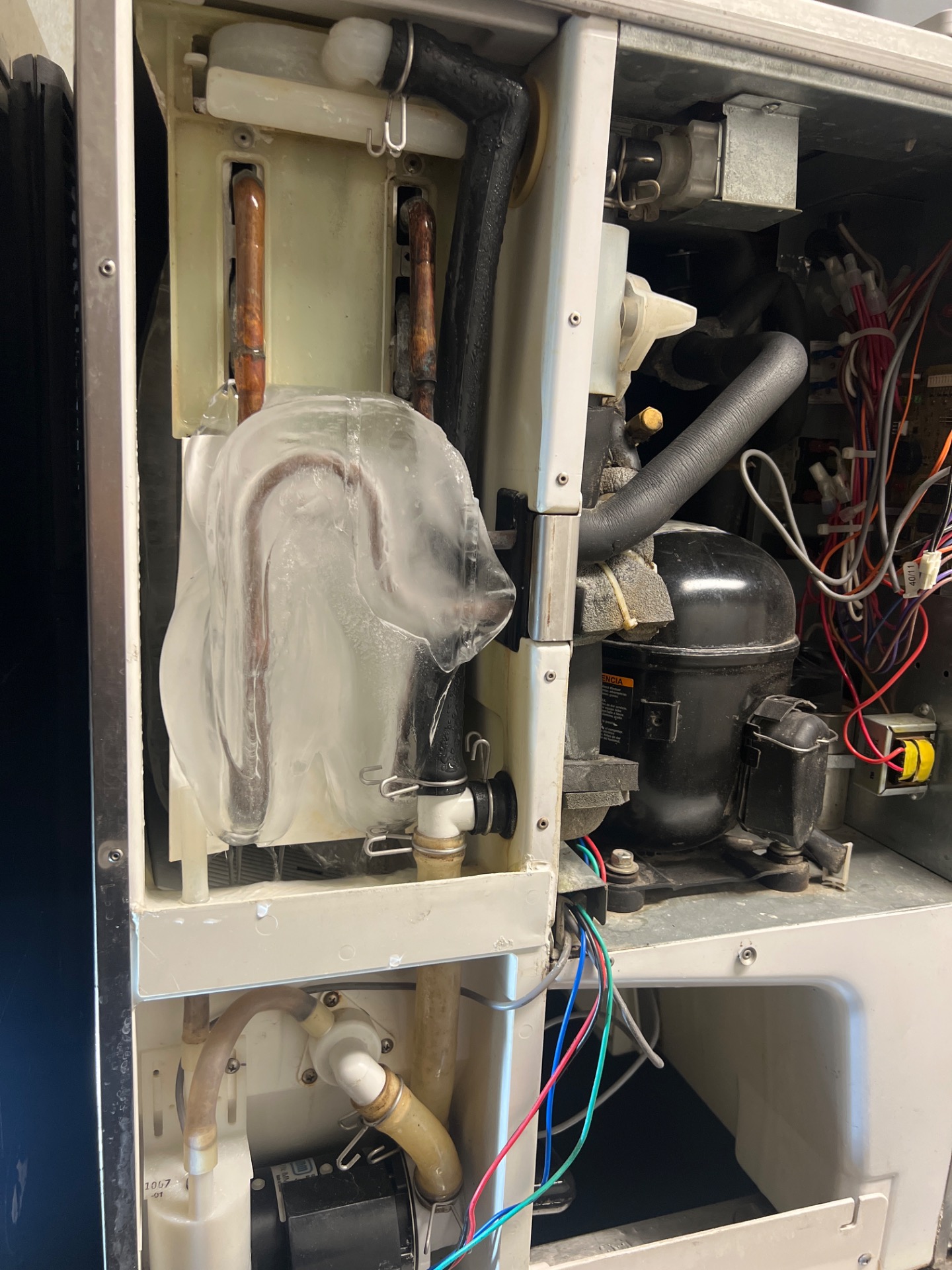
- Found a heavy ice build-up on the evaporator, which prevents the unit from harvesting a clean cube batch.
- Traced the water side and found the inlet tube blocked with calcium — Calgary’s hard water is aggressive on any machine that continuously processes water.
- Fully defrosted the evaporator to clear the build-up, then cleared the calcium blockage and restored proper water flow and spray.
- Confirmed normal operation with no alarms present.
The Repair — Cleaning and Technique, No Parts
Both units were returned to full function on the first visit through cleaning, defrosting, and blockage removal — no components replaced on either machine. Leonid also documented preventative guidance for the operator: a proper condenser deep-clean with foaming coil cleaner, and a descaling schedule to slow the calcium build-up that Calgary water accelerates.
Parts replaced: none. Both Hoshizaki units were restored through maintenance and airflow verification alone.
Why This Case Matters
Commercial customers are the easiest to upsell. The downtime pressure is real (“your bar is losing money”), and that pressure is often used to justify expensive component swaps. Both of these machines could have been quoted a new condenser fan, a compressor, or a control board — and both would have been wrong. The correct diagnosis on each was a maintenance fault: restricted airflow on one, an iced evaporator and scaled water line on the other.
Verifying the fix — the paper test on the condenser, confirming spray and harvest on the evaporator — is the difference between “cleaned it and hoped” and knowing the machine will hold. On commercial refrigeration, that discipline is what keeps a bar’s ice supply reliable instead of back in a week.
Book online to schedule a Hoshizaki commercial ice maker service with our team.