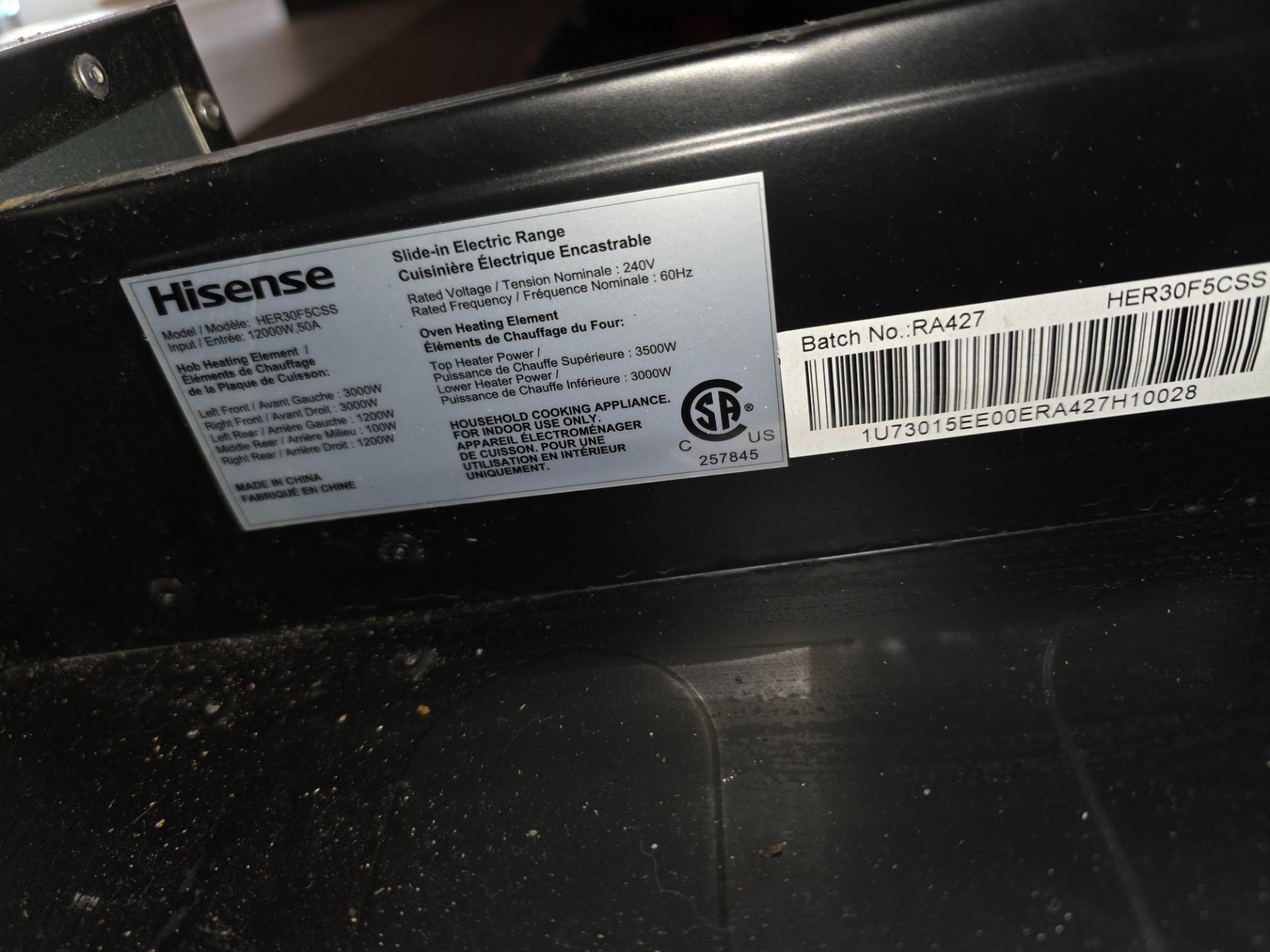


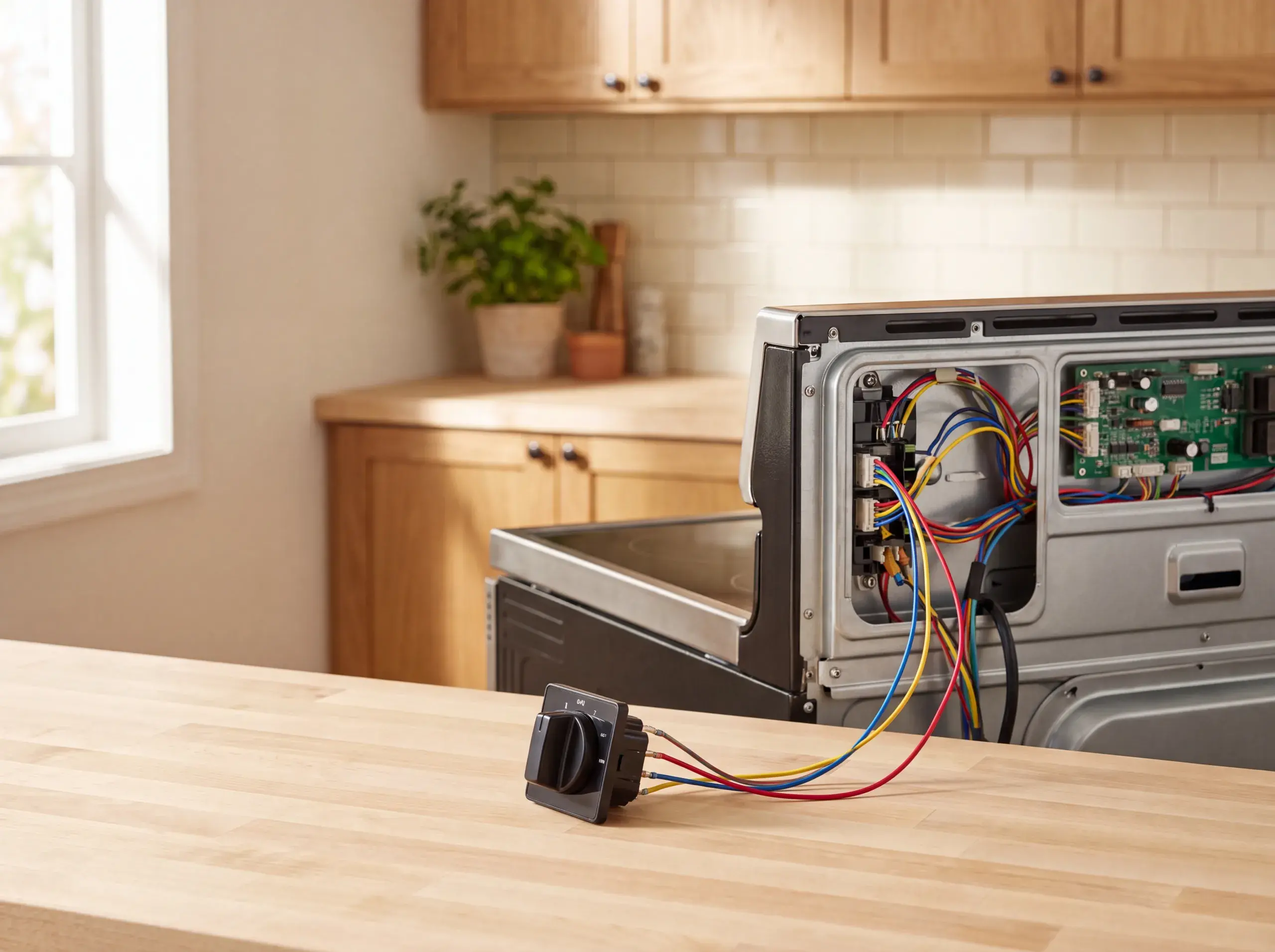
A homeowner in Sage Creek reported the oven on their Hisense HER30F5CSS 30-inch electric range simply wasn’t working. On an electric range, “the oven’s dead” can trace to the element, the switch that controls it, or the wiring between them — so the job is to find which link is actually broken before replacing anything.
How the diagnosis ran
TechVill technician Oleh worked it in order:
- Traced the oven fault to the control, not the element. The oven wasn’t heating because the single ring switch that controls it had failed — the switch, not the heating element it feeds, was the broken link.
- Replaced the failed switch and verified. With the OEM ring switch fitted, Oleh tested the oven and confirmed it was heating and operating correctly again.
- Found a second, separate fault during testing. While verifying the range, he found the front-left surface element wasn’t working either — an independent problem from the oven fault, not a knock-on effect.
Part replaced (oven repair completed):
- Single ring switch (part #WK0035678) — the switch that controls power to the oven heating circuit
The honest part
Here’s where the case is worth telling. Oleh didn’t guess a price for the second fault to close the ticket faster. The front-left element repair was flagged and left for a real supplier quote rather than a made-up number — the customer gets an accurate figure for that part before committing, instead of a placeholder that shifts later. The completed oven repair was paid on the visit and carries a 3-month warranty; the surface-element repair is quoted separately once the supplier pricing is confirmed.
That’s the difference between rushing a two-fault range into one padded invoice and doing it straight: fix and verify what’s confirmed, price the rest honestly. A genuine OEM ring switch matters on the fix that’s done — it’s matched to this range’s control circuit, where a mismatched switch can mis-sequence the oven’s heating.
Book online to schedule a Hisense range diagnostic with our team.