

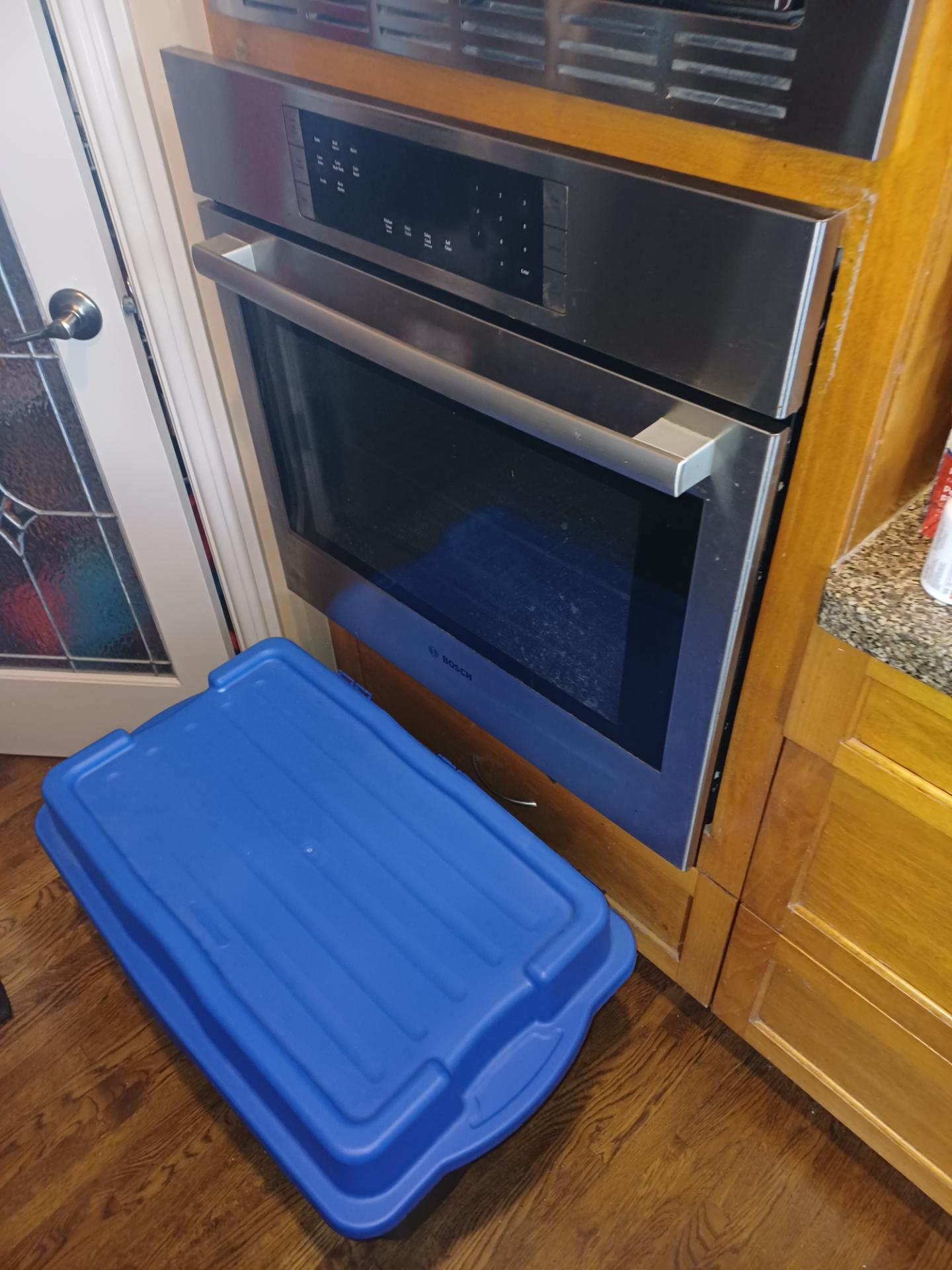
When a wall oven dies immediately after a self-cleaning cycle, that’s not a coincidence — it’s a pattern appliance technicians know well. Self-clean runs the cavity at 500–900°F for hours, far beyond anything normal cooking asks of the machine, and the thermal stress lands hardest on the electronics and safety components packed around that cavity. A Coach Hill homeowner in southwest Calgary just experienced the textbook version: their Bosch HBL8451UC/01 built-in wall oven finished a self-clean cycle and never heated again.
The customer’s report was unusually precise, and the precision mattered. The oven had flashed error code E302 — on Bosch ovens, control-module overheating or critical electronics failure — which cleared temporarily when the breaker was cycled, then the heating stopped entirely. The timing (immediately post-self-clean) plus the code told TechVill technician Amin where to look before the panels came off.

How one hot afternoon takes out three components
The diagnostic found a cascade, not a single failure — three components damaged in sequence by the same thermal event:
Components on order:
- Power module (part #11020741, factory-programmed for this model) – the central electronics distributing power to elements, fans and controls; burnt out, matching the E302 code
- Temperature limiter (part #00631343) – the high-limit safety thermostat; it tripped correctly as cavity temperatures climbed, then burnt to a permanent open circuit
- Temperature limiter (part #10012286) – the second limiter in the protection chain, replaced with the first to restore the full safety circuit
- Line fuse – the first-line protection on the oven’s main power circuit, blown during the failure event
Read the sequence and the story tells itself: the self-clean heat pushed the cavity past safe limits, the high-limit thermostat cut power exactly as designed, the power module absorbed electrical stress and burned out, and the line fuse blew. Every safety layer did its job. The cost of that protection is that all of them now need replacement before the oven can safely hold power again.
This is why replacing only the obvious part fails on cascade cases. A shop that swapped the power module alone — the component the error code points at — would restore power into a circuit with a dead high-limit thermostat and a blown fuse: incomplete protection, and a repair that can’t even be tested properly.
The honest part of the quote
The work order includes a contingency disclosure worth quoting, because it’s the part most repair quotes leave out: with the primary power and safety components dead, nothing downstream can be electrically tested. The cooling fan and heating elements may have come through the same event stressed or damaged — there is no way to know until the safety circuit is restored and the unit powers up. So the repair is staged: replace the known failures first, then run a full secondary system test, and re-quote before any further work if that test surfaces anything. The customer approved the scope with that understanding documented, parts prepaid, with the usual three-to-seven-day distributor timeline before the install visit.
On a premium built-in wall oven — $2,500–$5,000+ to replace, plus cabinetry fitting — a staged repair with disclosed unknowns is the proportionate path. The replacement module also ships programmed for this exact model from the BSH parts channel, which TechVill, as a Bosch factory-authorized service provider, orders directly.
The takeaway for self-clean owners
The self-clean feature is the single most demanding thing a wall oven can do to itself, and on an aging unit it’s the most common trigger for exactly this multi-component failure. Many technicians quietly recommend skipping it altogether and cleaning manually — hours at extreme temperature are simply wear concentrated into one afternoon. If you do run it and the oven misbehaves afterward — error codes, dead display, no heat — resist the urge to keep cycling the breaker. Repeatedly re-energizing a compromised safety circuit is how a contained failure becomes a bigger one.
TechVill repairs Bosch built-in ovens across Calgary’s southwest, from Coach Hill and Patterson Heights through the wider T3H corridor. If your oven hasn’t been the same since its last self-clean, book online to schedule a diagnostic.