

A homeowner in Scenic Acres, in Calgary’s northwest, called TechVill about an electric range whose oven had stopped heating entirely. The cooktop still worked; the oven cavity stayed cold. On a Frigidaire PGLEF385ES5, that symptom has three possible sources — the control side, the wiring, or the heating element itself — and the order in which a technician tests them is the difference between a guess and a diagnosis.
“Oven not heating” is one of the most common electric range complaints, and the bake element is the most common culprit. But the element is also the easiest part to blame without proof. TechVill technician Randy walked the electrical chain in sequence instead of jumping to the obvious suspect.
How the fault was isolated
Step 1 — confirm the symptom. The oven was run against a set temperature and confirmed not to heat. Verified, not assumed: intermittent faults and user-settings issues get screened out at this stage.
Step 2 — verify voltage from the control board to the element terminals. With the oven calling for heat, supply voltage was present at the heating element connections. That single measurement clears a long list of suspects at once: the control board is issuing the heat call, the bake relay is closing, the timer isn’t blocking the cycle, and the wiring between board and element is intact. Whatever is wrong sits at or beyond the element.
Step 3 — inspect the element. The bake element showed visible burnout — a break in the resistive coil. The element was receiving power and producing nothing, the classic end-of-life failure after years of thermal cycling.
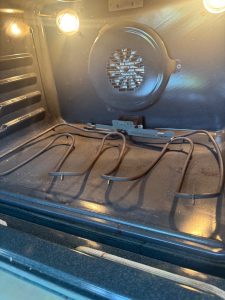
The reverse order — see a burnt element, swap it, leave — works most of the time. The times it doesn’t are the expensive ones: an element that looks tired but tests fine while the real fault hides in the control board or a connector. Verifying upstream first means the part that gets replaced is the part that actually failed.
The repair, verified on a live cycle
Component replaced:
- Bake element (Frigidaire OEM service part) – the lower resistive heating coil that produces bake-cycle heat in the oven cavity
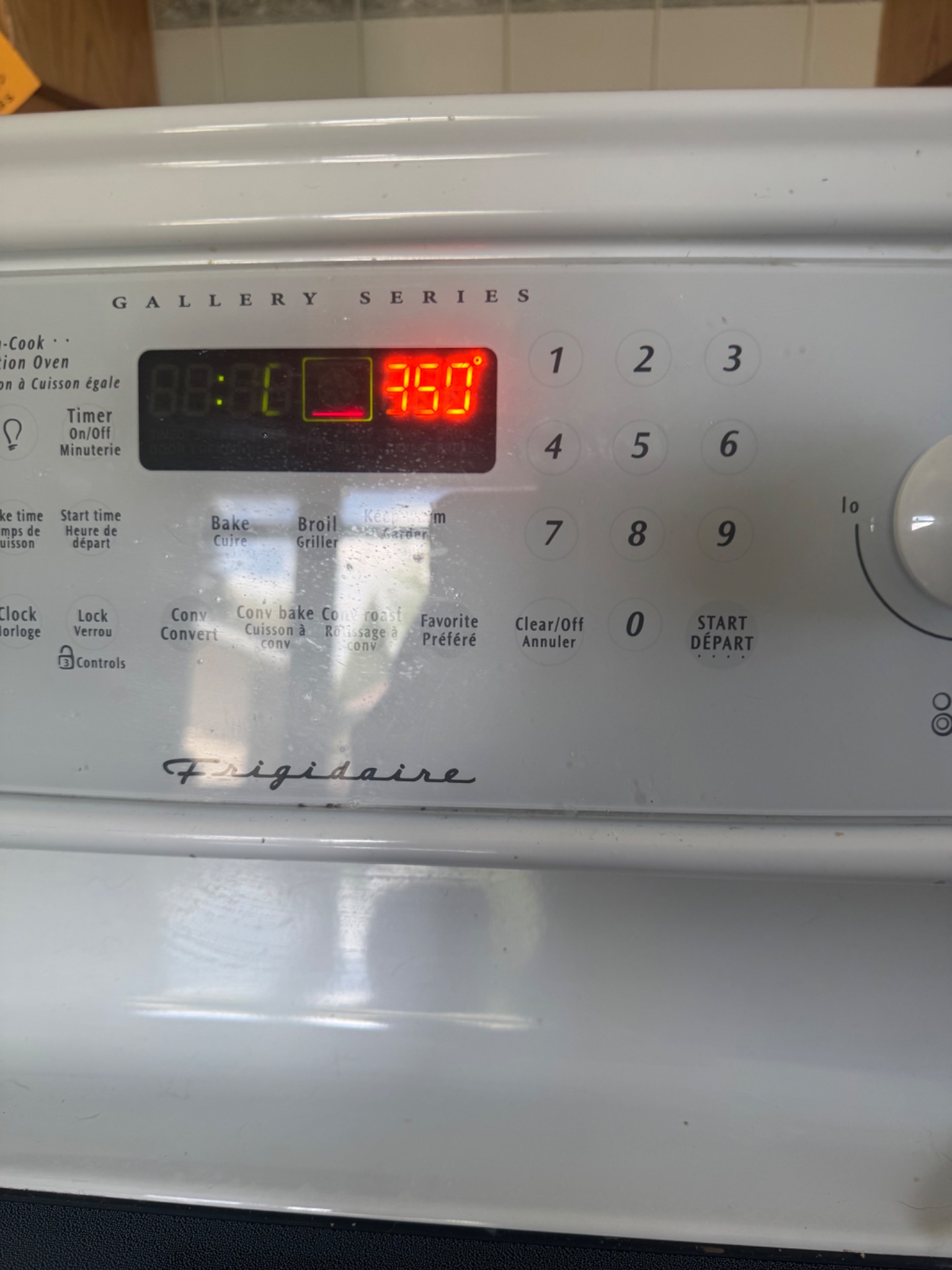
The element was replaced and the oven was put through a full 350°F bake cycle on the spot. It preheated in roughly nine minutes — within the normal envelope for this class of range — and then held the set temperature, with the element cycling on and off under thermostat control as designed. All other functions tested normal. Total time on site: about an hour, covering diagnosis, replacement, and the verification cycle.
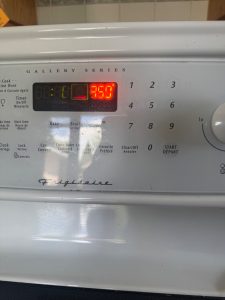
The repair came to $543.90 including GST, completed in a single visit and backed by TechVill’s 90-day labour warranty.
A wear item, not a dying appliance
A burnt bake element says nothing alarming about the range itself. Elements are consumables — the coil heats and cools thousands of times over an oven’s life, and eventually a weak point opens. Replacing one is routine maintenance that returns the appliance to full service, the oven equivalent of new brake pads. Genuine Frigidaire elements match the original wattage and fit; an aftermarket coil with a different resistance rating heats off-spec and works the thermostat harder than the design intends.
If your oven has stopped heating anywhere in northwest Calgary, book online to schedule a range diagnostic with our team.