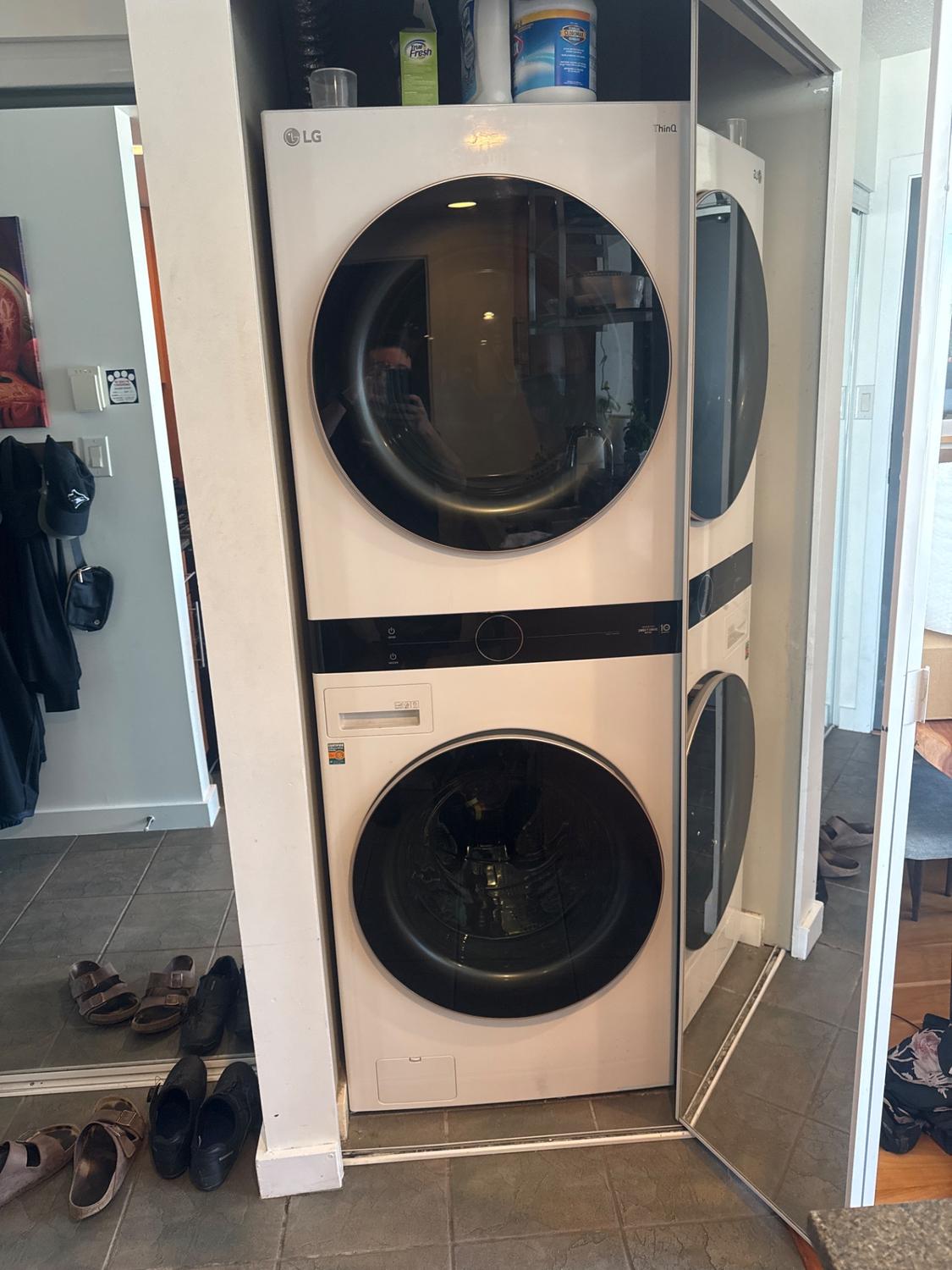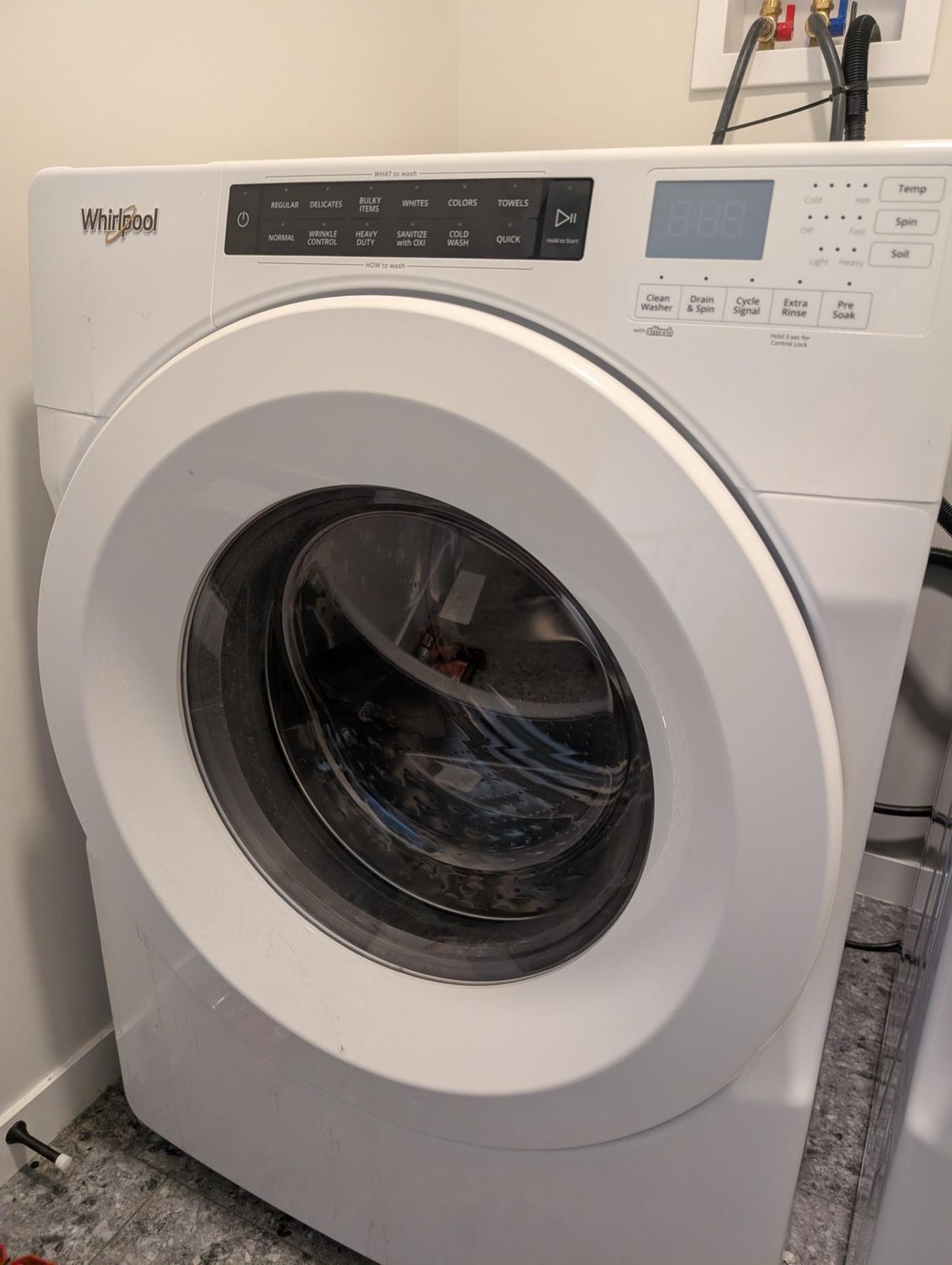


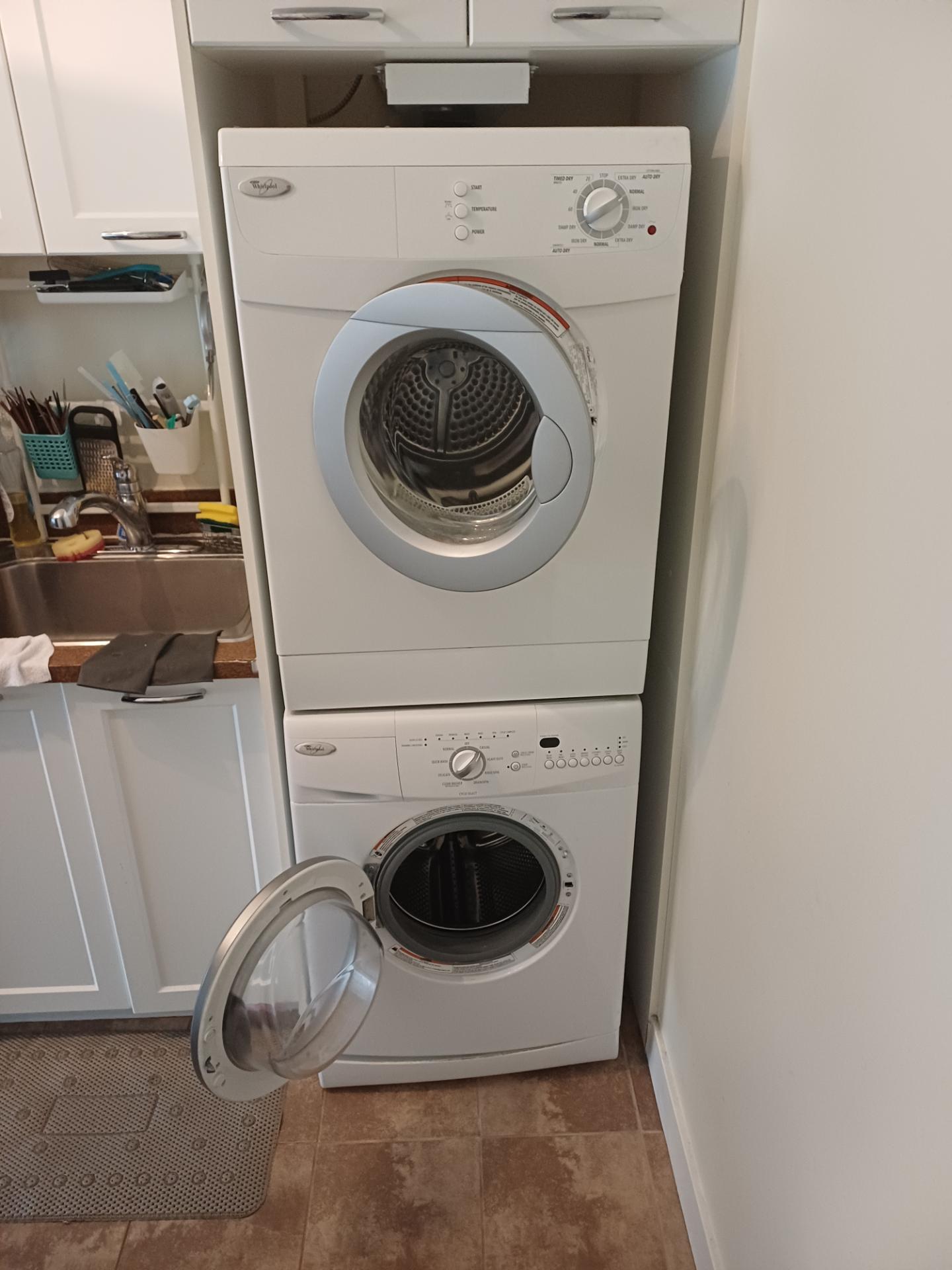
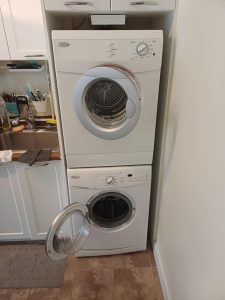
A homeowner in the Brentwood community of NW Calgary called TechVill for washer repair in Calgary on a Whirlpool WSC7500VW top-load washer that had stopped draining. The customer’s read was a pump issue — a reasonable starting point on a draining failure, and as it turned out, the right starting point. But the actual service visit found three things, not one. This walks through what the call was, what got fixed, and what was deliberately left alone with full disclosure to the customer.
What the customer asked for
The washer is not draining. I think it might be the pump.
That description does the right thing diagnostically — it identifies the symptom (no drain) and offers a hypothesis (the pump). TechVill technicians Amin and Marlon arrived at the unit and started with the customer’s hypothesis as the first thing to test. The drain pump had indeed failed; replacement was the immediate fix on the obvious symptom.
That is where a less thorough service call would have stopped. New pump in, unit runs, invoice closed. The story would have continued for the customer in two ways: first, the new pump would have started its working life fighting a partially-restricted drain line; second, the actual longer-term concern on this unit would have remained completely invisible until it surfaced as a separate breakdown weeks or months later. Neither of those would have been the customer’s fault, but both would have made the repair shorter-lived than it needed to be.
What the visit actually found
Three things, addressed proportionately.
Finding 1 — The drain pump had failed, as the customer suspected. Replacement with the OEM Whirlpool service part (WPW10465252, which replaces the older W10192988) restored normal drain function. This is the part of the call that matched the customer’s complaint and expectation.
Finding 2 — The drain pipes were heavily clogged. With the pump out, Amin and Marlon inspected the drain lines and internal plumbing and found a substantial blockage inside the pipes. That detail matters in a specific way: installing a brand-new pump on a partially-restricted drain line means the new pump immediately starts working against the same restriction that contributed to the failure of the old one. The clog got fully cleared and flushed, and water flow was verified unrestricted before the new pump was put under load. The new pump enters service on a clean line, not on a fight-the-restriction handicap from day one.
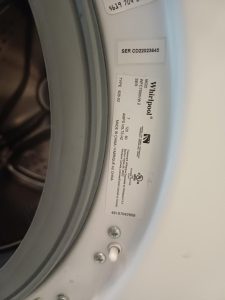
Finding 3 — Moisture damage and corrosion on the main control board. Inspection of the control board surfaced visible rust and corrosion underneath the board, specifically around the electronic rings and traces. The board is not currently failed — the washer still responds to cycle commands and runs through wash phases — but it is showing the early symptoms of moisture-driven degradation: intermittent glitches, occasional communication delays where the machine takes too long to initiate or complete a cycle. The corrosion is not going to reverse itself. Over the coming months, it is likely to worsen until the board’s signal integrity degrades enough that the unit either glitches frequently or stops responding entirely.
What the technicians did with the control board finding
This is the part of the case worth being explicit about. Finding moisture damage and visible corrosion on a circuit board, with the customer already on the hook for a pump replacement, is exactly the situation that gets converted into a “while we’re here, let’s also replace this for $X more” upsell. The board is showing real degradation, the customer is already engaged in a service visit, and adding a board replacement would have nearly doubled the invoice. Many service calls go that way.
Amin and Marlon chose not to. The board is operational right now. The customer’s unit is back to draining correctly with a new pump and a cleared line. Preemptively replacing the board today would mean charging for a part the unit does not need yet, before the symptom that would actually justify the replacement has emerged. The right call was to document the condition, inform the customer of the likely trajectory, and let them decide when to escalate.
The disclosure to the customer was both verbal and on the work order:
- The control board has sustained moisture damage with visible rust and corrosion around the electronic traces.
- The unit is currently operational but exhibiting intermittent glitches and communication delays.
- The corrosion is likely to worsen over time. The board may glitch more frequently or fail to operate entirely in the near future.
- A control board replacement may be required if the symptoms persist or worsen. The customer can budget accordingly rather than be surprised when it happens.
That gives the customer two things at once: the immediate repair that resolves the original complaint, and clear information to plan around the next one. Both pieces are what they actually need.
The repair that was done, and the warranty on it
Components replaced:
- Whirlpool drain pump (part #WPW10465252, supersedes the older part #W10192988) — pumps wash water out of the drum at the end of each wash and rinse cycle; the failed unit had reached end of life and was the immediate cause of the no-drain symptom
Procedure performed alongside the pump replacement:
- Drain lines and internal plumbing flushed; heavy clog cleared completely from the pipes. This step matters because the new pump enters service against an unrestricted flow path rather than fighting the same restriction that stressed the original.
- Water flow tested and verified unrestricted after the cleared lines and the new pump were both in.
Documented but not replaced:
- Main control board — visible moisture damage and corrosion around the electronic traces. Currently operational with intermittent glitches. Replacement budget guidance provided to the customer for the likely future repair.
The visit ran 120 minutes on site, covering the pump replacement, the substantial drain-line clog clearing, and the full board inspection. The work was a two-technician scope for efficiency on a job that required both rear/underneath access for the pump and drain-line clearing simultaneously. A 3-month labour warranty covers the completed repair.
What the customer paid
The total quoted: $673.05 CAD ($641 + 5% GST). Itemized:
- Parts (drain pump): $271
- Parts fee: $30
- Labour (2 technicians): $340
The math reconciles cleanly to the quoted total. The work was completed in a single visit with the unit returned to operation.
What this case demonstrates
The right scope on a service call is sometimes wider than the customer asked for and sometimes narrower than the technician could have justified billing. Here, both at once. The scope was wider on the drain side — the customer asked about the pump, and the right repair included the pump and the clogged line, because installing one without the other would have made the repair shorter-lived. The scope was narrower on the control board — the technicians could have justified replacing it, the customer would have authorized it on the spot, and it would have nearly doubled the invoice. Choosing not to was the harder call.
Honest future-state disclosure is the right way to handle a finding that does not need immediate action. The control board’s moisture damage is real, the trajectory is predictable, and the customer needed to know about it. Documenting the condition in writing and giving the customer the budget context to plan around the future repair is more useful than either a quiet omission or a preemptive replacement charge.
Customer intuition is a starting point worth honouring. The pump was indeed the immediate cause, exactly as the customer suspected. Confirming that, doing the related work that the pump replacement implied (the line clog), and then surfacing what the customer could not have known about (the board moisture) is the order of a useful service visit.
The same Amin Hosseinifar through-line shows up across multiple cases in the portfolio. A Whirlpool refrigerator repair in Killarney where the run capacitor was tested before the start relay was replaced. A Blomberg fridge in Bridgeland where the control board was left alone pending monitoring instead of preemptively replaced. A Maytag fridge in Lincoln Park where the drain repair was completed without parts and the customer was given a separate safety inspection on adjacent water infrastructure. And now this Whirlpool washer in Brentwood, where the board is documented and not replaced. Four cases across four different appliances and four different brands, one consistent diagnostic philosophy: immediate fix done correctly, proactive disclosure of what else matters, customer gets information and choice rather than a hard sell.
Brentwood is now the second documented Whirlpool service call in the same neighbourhood. The previous case was a Whirlpool top-freezer refrigerator drain repair at a different Brentwood address, by a different technician — a confirming pattern that the area’s mass-market appliances get serviced at the same diagnostic standard as premium work elsewhere in the portfolio.
Need Whirlpool or Maytag Washer Repair in Calgary?
TechVill services Whirlpool, Maytag, KitchenAid, and the broader Whirlpool Corporation family of laundry and kitchen appliances across Calgary and surrounding areas. Our technicians arrive with the W-prefix parts-catalogue access, the diagnostic discipline to scope a service call correctly, and the disclosure standard to leave the customer with both a working appliance and the information to plan around it.