

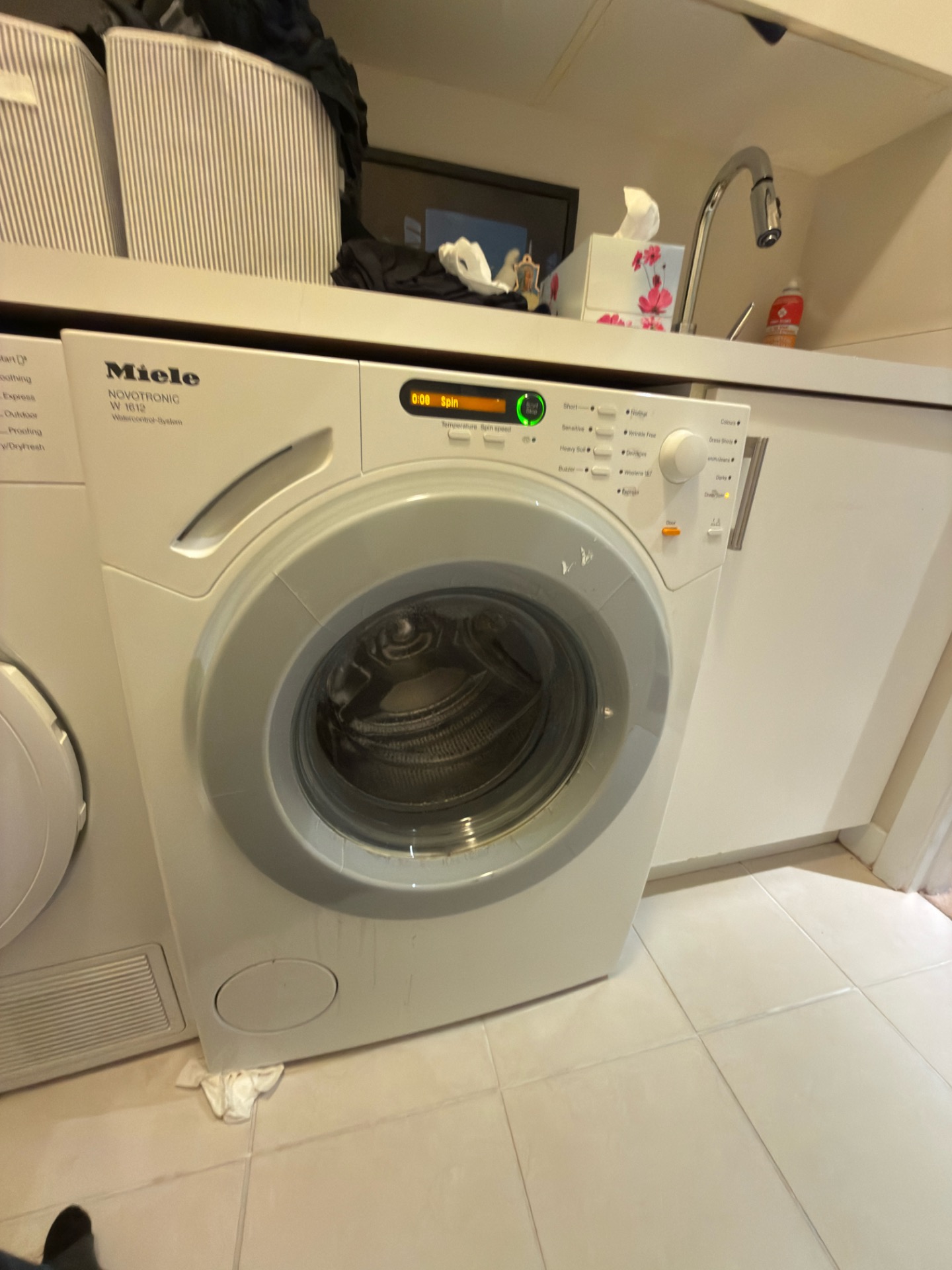
A homeowner in the Brighouse / City Centre area of Richmond contacted TechVill on a Miele W1612 front-load washer that had stopped spinning. The diagnosis on the no-spin symptom is brand-specific: Miele washers use commutator motors, and a no-spin failure on this brand often traces to the motor’s carbon brushes. This case ran exactly that diagnostic, plus two secondary findings on the door seal that the technician flagged before they became leak problems.
TechVill technician Alex confirmed the no-spin symptom on arrival, walked the diagnosis, and quoted the scope. The repair tells the story better than the explanation does — here is what the work looked like.
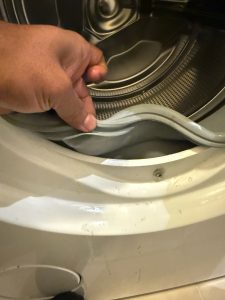
A Miele W1-series washer is designed for a service life that runs past 20 years. Reaching the motor for a brush inspection means rear-panel access — straightforward on this brand, where the engineering supports long-term serviceability the way the marketing language promises.
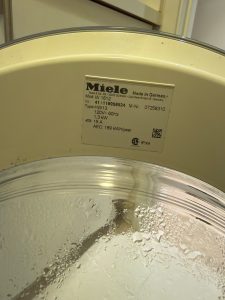
The commutator motor is the right-hand component. On a brushed motor, the commutator and the carbon brushes work together — the brushes transfer current to the rotating armature through sliding contact on the commutator surface. The brushes wear as a consumable. That is by design.
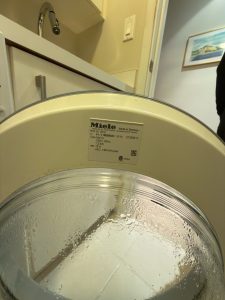
Here are the carbon brushes from this unit. They are completely worn down. That is not a defect — it is a wear item that has reached the end of its service life. Miele engineers these motors knowing the brushes will need replacement somewhere in the ten-to-fifteen-year range of regular use. When the brushes are fully worn, the motor loses electrical contact across the commutator, the armature does not get driven, and the drum will not spin. That is exactly what the customer reported.
The carbon brush kit replacement returns the motor to full function. Worn brushes on a Miele washer are a longevity story, not a failure story — the machine has been working long enough to wear a consumable component, exactly as designed.
While the unit was open, Alex documented two secondary findings on the door seal. These were not the reason for the service call, but they would have been the reason for the next one if they had not been caught now.
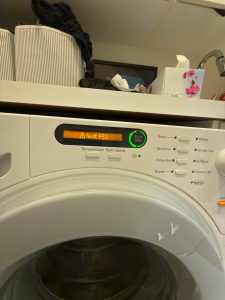
The rear gasket clamp is heavily rusted. On a front-loader, the door seal depends on intact clamping around the entire perimeter. A rusted clamp will eventually fail, and a failed clamp lets the door seal pull away from its mounting surface — at which point the unit starts leaking during wash and spin cycles. Catching the rust now means replacing the clamp before the seal is compromised; catching it after means a leak-repair call and possible water damage to the laundry-room floor.
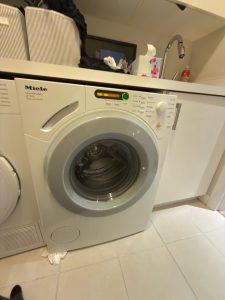
The front gasket ring is missing on the door seal. That is a related issue with the same downstream consequence: incomplete sealing around the door, eventual leaks, eventual water damage if left alone. Replacing the sealing clamp ring restores the proper seal geometry around the door.
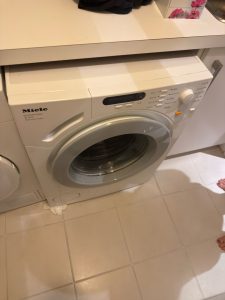
Components ordered for the install visit:
- Carbon brush kit (Miele part #4297414) — motor brushes that transfer current from the stator to the rotating armature in Miele’s commutator motors; the worn pair on this unit had lost electrical contact at the commutator surface, preventing motor drive
- Clamp ring (Miele part #9041120) — door gasket clamp that maintains seal integrity around the perimeter of the door; the original rear clamp on this unit was heavily rusted and would have failed in service
- Sealing clamp ring (Miele part #6947095) — front sealing component restoring the door seal geometry where the original gasket ring was missing
The cost rationale and the timeline
The total quoted: $833.70 ($794 + 5% GST). Parts and handling prepaid on the diagnostic visit: $502.95 CAD via credit card. Balance due at install: $330.75 ($315 labour + GST). Math reconciles cleanly across the line items to the quoted total.
A few things worth being explicit about. First — the brush kit fix returns a 10-to-15-year-old washer to working condition for years more, at a fraction of the cost of replacement. A new comparable Miele W1-series washer runs in the $1,500-to-$2,500 range plus installation. The brush kit and the gasket components together come in well below the cost of a single year’s depreciation on a new machine.
Second — catching the door seal issues during the same visit avoids the leak-repair call that would otherwise come later. Surfacing them while the machine is already being serviced is the right time to address them; deferring would just mean a separate call when the seal lets go.
Third — OEM is the only correct choice on a Miele washer. The brushes, the clamps, the seals are all specified to Miele’s specific motor and door geometries. Aftermarket components at lower price points are widely available, but they are not engineered to the same tolerances, and the cost saving disappears the first time a mis-toleranced component takes another part down with it.
Brighouse is the second documented Richmond case in TechVill’s portfolio after a Bosch Benchmark refrigerator repair on the central core of the City Centre district. Together with a Fhiaba Italian built-in case in West Cambie, Richmond coverage now spans both the central Brighouse area and the northeastern West Cambie corridor on premium brands.
Book online to schedule a Miele washer diagnostic with our team.