

A refrigerator compressor that’s making an unusual noise is one of the most-misdiagnosed faults in residential appliance service. The customer hears the noise, looks it up, finds compressor-replacement videos at the top of the search results, and braces for a quote in the $1,500–$3,000 range. The technician arrives, hears the same noise, agrees the compressor is the culprit, and writes the big-ticket repair.
In practice, the compressor is almost never what failed. When a refrigerator compressor “squeaks,” “buzzes briefly and stops,” or “clicks repeatedly without starting,” the fault is almost always one circuit upstream — in the start device that gives the compressor the brief electrical boost it needs to overcome inertia at the beginning of every cycle.
This call out to a rural Strathcona County address is the textbook example.
The Premise
Every refrigerator compressor needs help to start. At rest, the rotor inside the compressor is stationary, and overcoming that inertia requires a brief surge of current well above the steady-state draw the unit will settle into once it’s running. The job of the start device — usually a relay plus a capacitor plus a thermal overload, sometimes packaged as a single combined unit — is to deliver that surge for a fraction of a second, then drop out and let the compressor run on its main winding.
When the start device fails, the compressor tries to start but never gets the boost it needs. What the homeowner hears depends on exactly how the device is failing: a clicking relay that won’t hold, a hum that lasts a couple of seconds and stops, a squeak as the compressor strains against the inertia it can’t overcome, or a buzz that cycles on the overload’s reset interval. The compressor itself is healthy. It’s just being asked to start without help.
The diagnostic giveaway: the noise is associated with the start cycle, not steady-state running. If the unit ever does start (when the device is intermittent), it runs normally. If it never starts at all, the cabinet warms up while the noise cycles on the overload’s thermal reset interval — typically every few minutes.
How That Read in Strathcona County
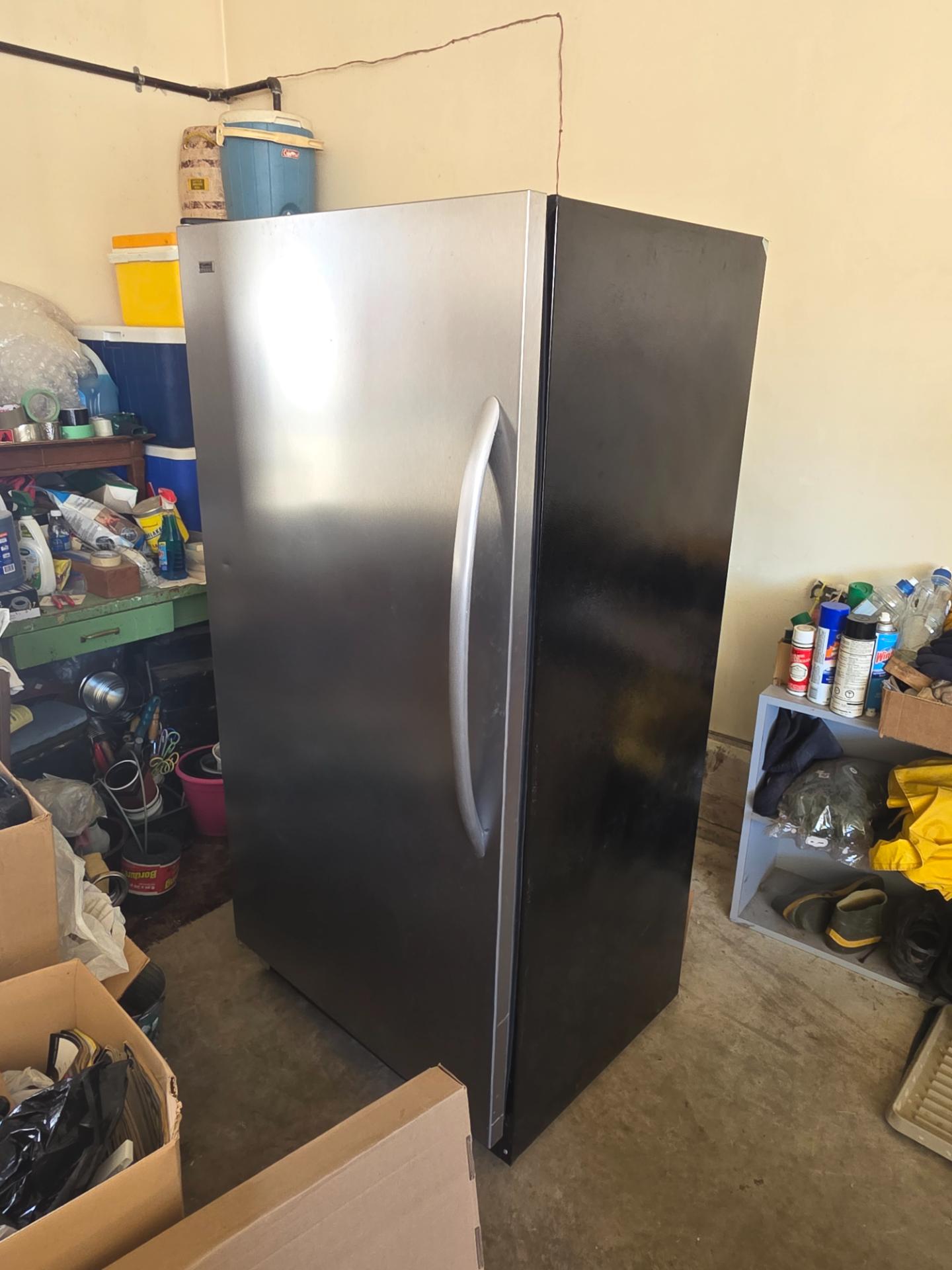
The customer reported two things on the same call. The door gasket was visibly worn and the seal had gone — a straightforward mechanical failure, customer-reported and obvious. And the motor was making a squeaking noise.
The first complaint was the easy part. The second was the interesting one. Oleksandr arrived, listened to the noise cycle, and confirmed the diagnostic signature: the squeak was associated with the compressor’s start attempt, not its running state. The start device — a factory relay-and-capacitor combination on this generation of Kenmore — wasn’t engaging the compressor cleanly. The compressor was being asked to break inertia without the boost, straining, and producing the unusual noise as it failed to start.
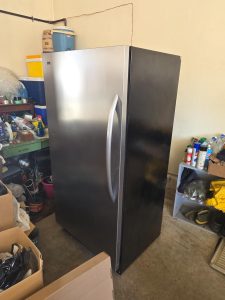
A second observation that mattered for parts ordering: the door gasket service part for this unit is a Frigidaire/Electrolux number (5304507206), not a Kenmore-branded part. Kenmore refrigerators are built by other manufacturers and rebadged for Sears; this one was a Frigidaire build. Sourcing through the Frigidaire/Electrolux service catalogue is faster than chasing parts through the Sears legacy supply chain — and on a rural service call where a return visit isn’t cheap, getting the right part on the first order matters.
The Repair
Components replaced:
- Door gasket (Frigidaire/Electrolux part #5304507206) — perimeter seal that prevents warm air from infiltrating the cabinet; OEM service part for this Frigidaire-built Kenmore
- Compressor start device (Supco RCO410) — universal 3-in-1 starter that combines the relay, the running capacitor, and the thermal overload into a single robust unit, replacing the failed factory start combination
The RCO410 is a universal-aftermarket start device, but it’s not a compromise on this kind of repair. On a mid-market refrigerator where the original factory start parts may be discontinued, hard to source through Sears’ legacy parts channel, or simply more expensive in the original three-piece configuration than the universal in a single piece, the RCO410 is the right call. It’s surge-tolerant, it’s a clean install on the existing compressor terminals, and it’s far less likely to be the failure point if the area takes another power-grid hit a year from now. Same retrofit pattern TechVill has used on the Whirlpool repair in Killarney (case 2 in our portfolio) — different brand, same logic.
The gasket was installed with the door re-aligned to seat the new seal properly. Post-repair: the compressor started cleanly on the first cycle, the squeak was gone, and the freezer was tested for normal cooling. Three-month labour warranty on the repair.
What This Reflects
Reading the noise correctly is the diagnostic. A less experienced approach hears “motor squeaking” and starts down the structural-failure path — compressor bearings, fan motor, mount stress. None of those would have been wrong on a different unit. They are simply not where this failure was. Putting the right diagnostic frame on the symptom is how a $651 repair stays a $651 repair instead of escalating into a four-figure compressor-replacement quote.
Cross-brand parts knowledge is the second diagnostic. Recognizing the Frigidaire service-part prefix on a Kenmore unit is the kind of knowledge that comes from servicing the brand under its various build sources — and it determines whether the parts arrive in three days through the modern supply chain or in two weeks through the Sears legacy channel. On a rural address, that’s the difference between a single-trip repair and a return visit.
Rural addresses get serviced too. Strathcona County’s range-road grid puts this address 30 to 60 minutes outside Edmonton proper. Most urban-only appliance shops won’t drive that far for a mid-market refrigerator repair — the economics don’t work for them. Servicing rural Alberta on the same diagnostic and pricing standards as the metro core is a deliberate operational choice, and it’s why this kind of address doesn’t end up on the receiving end of a quote padded with a travel surcharge.
If your refrigerator makes a noise at start-up that wasn’t there last month, the answer is almost always upstream of the compressor. Book online to schedule a Kenmore refrigerator diagnostic with our team.