KitchenAid Appliance Repair in Winnipeg

KitchenAid
Home / Winnipeg / Appliance Repair / KitchenAid

KitchenAid Appliances We Service in Winnipeg

Choose your KitchenAid appliance for repair

Our Winnipeg team services the complete KitchenAid home appliance lineup – Extra Power top-load and front-load washers, vented and heat pump dryers, Third Level Jet Rack and 360° Max Jets dishwashers with ProDry™, French door and built-in column refrigerators, chest and upright freezers, Even-Heat™ True Convection ranges and wall ovens with FIT System, gas and induction cooktops including downdraft models, and range hoods. KitchenAid’s shared Whirlpool Corporation platform means strong parts availability, while the brand’s premium features – OWI sensor dishwashers, PrintShield™ finishes, interchangeable hardware kits – require technicians trained in KitchenAid-specific service procedures.

Reviews of our customers

Common KitchenAid Appliance Issues in Winnipeg

  • Not draining water after wash cycle – blocked drain pump filter, kinked hose, or pump failure
  • Not filling with water or filling slowly – inlet valve fault, supply issue, or mineral-scaled inlet screen
  • Door not locking on front-load models – door latch or wiring fault; cycle won’t start
  • Lid lock not engaging on top-load models – lid latch or control board fault
  • Drum not spinning or agitating – motor coupling, drive belt, or control board fault
  • Extra Power Button not boosting cleaning performance – control board or agitator motor fault on equipped models
  • Excessive vibration during spin cycle – unbalanced load, drum bearing wear, or leveling issue
  • Error codes: F8 E1 (long fill / water supply error), F9 E1 (long drain error), F5 E2 (lid lock failure), FH (no water entering or no pressure switch trip), Sud (excess suds detected)
  • Inlet valve screen blocked by mineral scale – Winnipeg’s moderately hard water accumulates deposits on KitchenAid inlet valve screens over time, progressively restricting fill flow and triggering F8 E1 long-fill faults; screen inspection every 18–24 months prevents most fill faults on models where the valve itself is undamaged
  • Not heating or taking multiple cycles to dry – heating element, thermal fuse, or gas valve fault depending on fuel type
  • Drum not tumbling – belt or motor fault
  • Shutting off mid-cycle – thermal protection trigger from restricted exhaust airflow or failed thermostat
  • Extra Power Button not improving drying results – control board or heating circuit fault on equipped models
  • Error codes: PF (power failure during cycle), E1 (open thermistor), E2 (shorted thermistor), E3 (blower rotation failure), E4 (tumbler rotation failure), E6 (exhaust high limit fault – temperature above 87.7°C)
  • Moisture sensor contamination – sensor coating buildup causing over-drying or under-drying on auto-dry cycles
  • Heat pump dryer condensate not draining – drain path blockage or pump fault on ventless models
  • Thermal fuse blown – dryer starts briefly then cuts off; non-resettable, requires replacement
  • Vented dryer exhaust duct condensation – in Winnipeg, duct runs through uninsulated exterior walls freeze in deep winter, triggering E6 exhaust high limit faults and thermal cutoffs; insulating exterior-facing duct sections before each heating season prevents most climate-related shutdowns. Note: KitchenAid heat pump dryers are ventless and are not affected by this issue
  • Not cleaning dishes thoroughly – Third Level Jet Rack nozzles blocked, spray arm blockage, or OWI sensor fault affecting wash intensity selection
  • Not draining water at end of cycle – blocked drain filter, clogged hose, or drain pump fault
  • Water leaking from door seal or base – door gasket worn or flood switch triggered
  • ProDry™ not improving drying results – heating element or vent fan fault
  • Error codes: 1-1 (water supply fault – inlet valve or clogged screen), 7-1 (door latch fault), 6-2 (drain fault), 3-1 (thermistor / OWI sensor fault), 4-1 / 4-2 (heating element fault – element not heating or not shutting off)
  • PrintShield™ door panel showing streaks or hazing – improper cleaning product used on fingerprint-resistant finish
  • Control panel unresponsive or button stuck – 9-1 error (stuck key on user interface); UI board or control board fault
  • 360° Max Jets not rotating – mineral blockage at precision nozzles or pump pressure reduced
  • OWI sensor scaling from mineral deposits – Winnipeg’s moderately hard water deposits calcium scale on the OWI sensor (water/air/soil/temperature) and spray arm nozzles; monthly filter cleaning and a descaling cycle every 4–6 weeks maintains sensor accuracy and spray pressure, preventing misread wash intensity and drain faults
  • Not cooling or maintaining consistent temperature – compressor, condenser fan, or evaporator fault
  • Ice maker not producing ice or producing undersized cubes – inlet valve, water line, or ice maker assembly fault
  • Frost buildup on evaporator coils – defrost heater, thermostat, or defrost timer fault
  • Water dispenser not working or slow flow – inlet valve or filter blockage
  • French door bottom drawer not sealing flush – hinge misalignment or drawer seal wear on multi-door models
  • Built-in column panel not maintaining flush alignment – installation bracket or hinge calibration fault
  • Error codes: displayed via digital panel or LED blink sequences depending on model; freezer temperature, defrost system, fan motor, and condenser faults are most common categories
  • PrintShield™ exterior finish marking from improper cleaning – requires KitchenAid-approved cleaning products only
  • Ice maker scale buildup in water supply line – Winnipeg’s moderately hard water accelerates mineral accumulation at the inlet valve and water supply line; replacing the water filter every 4–5 months rather than the standard 6 maintains reliable ice maker performance
  • Compressor failure to cycle in unheated garages – KitchenAid refrigerators are engineered for indoor ambient temperatures above approximately 10°C; Winnipeg garages dropping to -30°C or below cause the thermostat to stop calling for cooling while the freezer section warms above safe food storage temperature
  • Not maintaining set temperature or cycling above safe range – compressor, thermostat, or evaporator fan fault
  • Manual-defrost chest freezer requiring excessive defrost frequency – frost accumulating faster than expected; door seal or usage pattern assessment required
  • Auto-defrost upright freezer leaving ice crystals on stored food – defrost heater or thermostat fault causing incomplete defrost cycles
  • Door gasket pulling away from frame – temperature fluctuation and condensation; common on chest models after repeated loading
  • Drain line frozen causing water pooling at bottom of upright models – defrost drain heater or drain path fault
  • Interior light not turning off when lid or door is closed – door/lid switch fault causing heat buildup and accelerated bulb failure
  • Compressor failure in unheated garages – Winnipeg garages reaching -30°C to -40°C cause freezer compressors to stop cycling; unlike refrigerators, a garage freezer gives no visible warning that food has reached an unsafe temperature until significant spoilage has already occurred
  • Oven temperature inconsistent during baking – Even-Heat™ True Convection fan fault or temperature sensor calibration drift
  • 2-in-1 Burner outer ring not activating – dual-ring igniter or control module fault on slide-in models
  • Self-clean cycle not completing – door latch mechanism, thermal fuse, or control board fault specific to range combined-unit configuration
  • Double oven upper and lower zones not operating independently – inter-zone relay board or control board fault
  • Slide-in range gap between body and counter surface – installation or leveling adjustment required
  • Error codes: F1-E0 / F1-E1 (EEPROM control board fault), F2-E0 (oven overtemperature), F3-E0 / F3-E1 (temperature sensor open or shorted), F5-E1 (door latch fault), F9-E0 (door latch communication fault)
  • Commercial-style range grate not sitting level – cast iron grate wear or mounting point fault
  • Interchangeable hardware kit (Brass/Bronze/Black Ore) knob not seating correctly after cleaning – mounting tab wear or improper reinstallation
  • Induction glass mineral scale – Winnipeg’s hard water leaves calcium deposits on the induction surface from cooking splatter; prompt cleaning after spills prevents permanent etching under repeated heating cycles
  • Gas burner not igniting or producing weak flame – igniter, spark electrode, or gas pressure fault
  • Induction surface not recognizing compatible cookware – coil, power board, or pan detection sensor fault
  • Touch controls unresponsive or activating randomly – UI board, moisture ingress, or ribbon connection fault
  • Downdraft ventilation not activating with burners – motor, control board, or damper actuator fault on integrated downdraft models
  • Downdraft vent not retracting fully after use – actuator or track fault; leaving vent extended increases damage risk
  • Electric element heating unevenly or not energizing – element or infinite switch fault
  • Glass surface cracked from thermal stress or impact – assessment required before continued use
  • Downdraft filter saturation accelerated in winter – Winnipeg homes sealed against -35°C winters recirculate more cooking particulates indoors; KitchenAid downdraft integrated filters should be cleaned every 2–3 weeks during the heating season rather than monthly to protect the integrated fan motor and duct
  • Oven not reaching set temperature – temperature sensor, heating element, or Even-Heat™ convection fan fault specific to wall oven cavity
  • Temperature inconsistent during baking – RTD sensor calibration drift or fan cycling fault
  • Self-clean door lock engaging but oven cavity not reaching pyrolytic temperature – thermal fuse or cavity sensor fault specific to wall oven’s sealed installation in cabinetry; heat dissipation differs from freestanding ranges and affects thermal cycle completion
  • FIT System installation gap appearing after replacement – wall cutout measurement or trim kit adjustment required
  • Combination oven microwave and convection modes not coordinating – inter-mode control board communication fault
  • Error codes: F1-E0 / F1-E1 (EEPROM fault on wall oven control board – distinct from range board), F3-E0 / F3-E1 (temperature sensor fault in wall oven cavity), F5-E1 (wall oven door lock fault – single dedicated lock mechanism vs range combined-unit latch)
  • 7-inch LCD display flickering or unresponsive on smart models – display driver or control board fault
  • Interchangeable hardware kit handle not seating flush after self-clean – thermal expansion affecting handle mounting; allow full cool-down before assessing
  • Range hood fan motor not running on any speed – motor or control board fault
  • Suction power reduced despite clean filters – motor wear or duct obstruction
  • Baffle or mesh filter not locking back into position after cleaning – mounting tab wear or clip failure
  • LED lighting not functioning – driver board or wiring fault
  • Boost speed not activating – control board or speed selector fault
  • Duct connection leak reducing exhaust efficiency – installation joint or seal failure
  • Overhead hood grease filter saturation accelerated in winter – Winnipeg homes sealed against -35°C winters concentrate cooking particulates indoors; clean KitchenAid hood grease filters every 2–3 weeks during the heating season to protect the fan motor and prevent grease reaching duct interior

Why Winnipeg Homeowners Choose TechVill for KitchenAid Repair

Winnipeg KitchenAid Specialists
TechVill technicians average 3–5 years of hands-on appliance repair experience across KitchenAid’s full lineup. This includes Third Level Jet Rack dishwasher service procedures, Even-Heat™ True Convection system diagnostics, FIT System wall oven installation assessment, OWI sensor calibration on dishwashers, and Extra Power washer and dryer circuit diagnostics – applying KitchenAid-specific F and E code systems across all product categories.
Same-Day KitchenAid Repair in Winnipeg
When your KitchenAid appliance breaks down, our Winnipeg dispatch team confirms your appointment within 3–5 minutes. Technicians arrive same-day with KitchenAid-compatible diagnostic equipment and common OEM components – completing most repairs in a single 60–90 minute visit.
Genuine KitchenAid Parts Available Locally
All KitchenAid replacement parts are genuine OEM components sourced through authorized suppliers Reliable Parts and Marcone. KitchenAid’s shared Whirlpool Corporation platform means strong parts availability across model years – including PrintShield™ door panels, Third Level Jet Rack assemblies, Even-Heat™ convection components, and interchangeable hardware kits. Only genuine OEM parts are installed under warranty.
KitchenAid Repairs Backed by Real Warranty
Winnipeg KitchenAid repairs carry a 90-day labor guarantee. Genuine OEM parts come with up to 12-month manufacturer coverage. Issues within this period are resolved at no charge – our Winnipeg technician returns and re-diagnoses. Exclusions apply to misuse, physical damage, and residential units used in commercial settings.

Recognized KitchenAid Appliance Service in Winnipeg

BBB Accredited Business, A+ Rating – reflecting transparent business practices and consistent complaint resolution across all TechVill locations including Winnipeg.

Operational standards every Winnipeg KitchenAid service call includes:

  • $5M commercial liability insurance covering gas connections, electrical work, and sealed refrigerant systems
  • Corporate IDs, branded uniforms, and security background checks on all technicians
  • Weekly OHS safety meetings and PPE compliance on every job
How KitchenAid Repair Works In Winnipeg
From Booking To Warranty - Your Repair Step By Step
Contact Us Now

Book Your KitchenAid Repair in Winnipeg

Contact our Winnipeg dispatch team by phone or online form. Our coordinator reviews your KitchenAid appliance category and symptom description – then matches you with the technician experienced in that product line, whether it’s a dishwasher OWI sensor fault, an Even-Heat™ convection issue, or a heat pump dryer service call.

Assemble the Repair Team

Winnipeg Technician Diagnoses & Repairs

Your Winnipeg-based technician arrives with KitchenAid-specific diagnostic tools covering the F and E code systems across all appliance categories – dishwashers, ranges, wall ovens, washers, and dryers. On-site assessment takes 15–30 minutes to isolate the fault. Most repairs are completed within the same visit.

Receive Customer Feedback

Warranty Activated, Quality Verified

We run a complete function test on your KitchenAid appliance – including Third Level Jet Rack spray verification on dishwashers, Even-Heat™ convection fan cycle check on ranges and wall ovens, Extra Power cycle test on washers and dryers, and ice maker production test on refrigerators – before closing the job and activating warranty coverage. When a component needs ordering, our Winnipeg parts network sources most KitchenAid OEM items within 1–3 business days, and follow-up installation is booked at your convenience.

Your Winnipeg Repair Team

Jack - Senior Technician, Training Coordinator

  • Specialization: Manufacturer training protocols, diagnostic procedures
  • Certifications: GE, Electrolux, Bosch factory authorization
  • Role: Develops certification standards, leads technician training

John -
Technician
Team Lead

  • Specialization: Team coordination, quality assurance
  • Certifications: Samsung, Bosch authorized
  • Role: Maintains high completion rates, ensures service standards

KitchenAid Appliances in Winnipeg - How Local Conditions Affect Your Repair

KitchenAid – a Whirlpool Corporation brand positioned at the upper-mid to premium tier – covers both the kitchen and laundry with a lineup that balances professional-inspired design with practical features: Extra Power washers and dryers for heavy loads, Third Level Jet Rack dishwashers with OWI sensor-driven wash intensity, Even-Heat™ True Convection ranges and wall ovens, and PrintShield™ fingerprint-resistant finishes across dishwashers, refrigerators, and ranges. In Winnipeg, several of these technologies interact with local water conditions and winter climate in ways that affect maintenance intervals and failure patterns specific to this market.

Winnipeg’s Hard Water and KitchenAid Water-Connected Appliances

Winnipeg’s municipal supply runs at approximately 150–200 mg/L of calcium carbonate. For KitchenAid appliances that process water, this mineral load creates locally elevated failure patterns:

  • Dishwashers – OWI sensor and 360° Max Jets: KitchenAid’s OWI (Optical Water Indicator) sensor measures water clarity, soil level, temperature, and air quality to automatically adjust wash intensity. Mineral scale on the OWI sensor causes it to misread water conditions – typically registering the cycle as cleaner than it is and selecting insufficient wash intensity, leaving residue on dishes. The 360° Max Jets precision nozzles are also susceptible to calcium blockage faster than standard spray arms. Monthly filter cleaning and a descaling cycle every 4–6 weeks maintains OWI sensor accuracy and jet pressure under Winnipeg’s water conditions.
  • Washers: KitchenAid inlet valve screens accumulate mineral scale under Winnipeg’s water conditions, progressively restricting fill flow and triggering F8 E1 long-fill faults on models where the valve itself is undamaged. Screen inspection every 18–24 months prevents unnecessary valve replacements.
  • Fridges with ice makers: Winnipeg’s mineral load accumulates in the ice maker water supply line and at the inlet valve, producing undersized or hollow cubes. Replacing the everydrop® water filter every 4–5 months – rather than the standard 6-month recommendation – maintains reliable ice maker performance across KitchenAid’s French door and built-in column models.

Winnipeg’s Winter and KitchenAid Appliances

KitchenAid appliances operated indoors are unaffected by Winnipeg’s winter temperatures. Three scenarios create locally specific failure patterns:

  • KitchenAid refrigerators in unheated garages: KitchenAid refrigerators are engineered for indoor ambient temperatures above approximately 10°C. When a Winnipeg garage drops to -30°C or below, the thermostat stops calling for compressor cooling while the freezer section can warm above safe food storage range. This is an operating boundary issue, not a component failure.
  • KitchenAid freezers in unheated garages: Garage freezers present the same issue with a critical difference: there is no fresh food compartment to show visible condensation or off-temperature warning signs. Food may reach unsafe temperatures without the homeowner noticing until significant spoilage has occurred.
  • Vented dryer exhaust duct condensation: KitchenAid standard vented dryers discharge exhaust through an exterior wall duct. In Winnipeg, duct sections running through uninsulated exterior walls accumulate condensation that freezes in deep winter, triggering E6 exhaust high limit faults and thermal cutoffs. Insulating exterior-facing duct sections before each heating season is the most effective prevention. Note: KitchenAid heat pump dryers are ventless – this issue does not apply to those models.

Winnipeg’s Sealed Homes and KitchenAid Ventilation

During Winnipeg’s 4–5 month heating season, homes are sealed tightly against extreme cold, concentrating cooking grease and particulates at higher rates than in milder cities. KitchenAid range hood grease filters and downdraft cooktop filters should be cleaned every 2–3 weeks during the heating season – rather than the standard monthly interval – to protect fan motors and prevent grease from reaching duct interiors.

KitchenAid Appliance Lifespan and Winnipeg Maintenance Schedule

  • Washers: 11–14 years. Inspect inlet valve screens every 18 months for mineral scale. Use HE detergent formulated for hard water. Run a drum cleaning cycle monthly. For front-load models, clean the door gasket regularly and leave the door ajar between uses.
  • Dryers (vented): 12–15 years. Clean the lint filter after every load. Before each Winnipeg heating season, inspect and insulate any exterior-facing exhaust duct sections to prevent E6 fault triggers. Clean moisture sensors every 3 months. Note: KitchenAid heat pump dryers require condenser cleaning rather than duct maintenance – consult model-specific documentation.
  • Dishwashers: 12–15 years. Clean the filter assembly monthly. Run a descaling cycle every 4–6 weeks given Winnipeg’s water hardness – the OWI sensor and 360° Max Jets are both sensitive to mineral accumulation. Use KitchenAid-approved cleaning products on PrintShield™ panels; abrasive cleaners permanently damage the fingerprint-resistant coating.
  • Fridges: 14–18 years. Replace the everydrop® water filter every 4–5 months given Winnipeg’s mineral load. Clean condenser coils every 6 months – Prairie dust accelerates coil fouling. Do not store KitchenAid refrigerators in unheated garages through Winnipeg winters. Use only approved products on PrintShield™ finishes.
  • Freezers: 15–20 years for chest models, 12–16 years for upright. Do not operate in unheated Winnipeg garages below -10°C ambient. Clean door gaskets quarterly – gasket failure is the most common early failure point on chest freezers.
  • Ranges: 15–20 years for gas, 13–17 years for electric and induction. For gas models, clean burner caps and igniter ports regularly. For induction models, clean the glass surface promptly after water-involved cooking to prevent permanent mineral etching. Interchangeable hardware kits should be removed and reinstalled following KitchenAid’s cleaning procedure – improper reinstallation causes mounting tab wear. Limit self-clean to twice per year to protect door seals and thermal fuses.
  • Cooktops: 15–20 years for gas, 13–16 years for induction. For downdraft models, clean the retractable vent grille and filter every 2–3 weeks during Winnipeg’s heating season. Inspect the actuator mechanism annually.
  • Wall Ovens: 15–20 years. FIT System trim kits should be inspected annually for seal integrity around the wall cutout. Limit self-clean to twice per year. Even-Heat™ True Convection fans should be checked annually for bearing wear.
  • Ventilation: 15–20 years. Clean grease filters every 2–3 weeks during Winnipeg’s heating season. Inspect duct connections annually for seal integrity.

When to Repair vs. Replace a KitchenAid Appliance in Winnipeg

KitchenAid occupies the upper-mid to premium tier – dishwashers range from $900 to $2,000+, ranges from $1,500 to $4,000+, and refrigerators from $1,500 to $5,000+. At these price points, with genuine 12–20 year lifespans, repair is the financially rational choice in most scenarios. In Winnipeg, dishwasher OWI sensor faults and 360° Max Jets blockage, refrigerator ice maker fill issues, and vented dryer E6 codes are frequently maintenance-category issues caused by local water and climate conditions – not component failures. Our technicians distinguish between the two at the diagnostic visit before any repair work begins.


KitchenAid Appliance Repair Across Winnipeg Metro Area

Winnipeg
FAQ

Diagnostic assessment starts at $179 for standard KitchenAid models and $259 for Premium or Pro Line built-in units, including 15 minutes of hands-on evaluation. In Winnipeg, several common KitchenAid faults are maintenance issues rather than component failures: dishwasher OWI sensor faults from mineral scale, refrigerator ice maker fill issues from water line scale, and vented dryer E6 exhaust high limit faults from frozen duct condensation all resolve at lower cost than full part replacement. Your technician provides a complete written estimate before any work begins.

Yes. Same-day service runs across Winnipeg and the surrounding metro area. Fridge and freezer failures receive priority dispatch – a KitchenAid fridge breakdown during a Winnipeg deep freeze carries immediate food safety risk, and a garage freezer failure is especially urgent because there may be no visible warning until significant spoilage has occurred. Gas appliance issues receive the same priority treatment. Evening and weekend slots are subject to technician availability; contact us directly for urgent situations.

Our Winnipeg technicians diagnose KitchenAid’s full F and E code system across all appliance categories – F1-E0/F1-E1 (EEPROM/control board), F2-E0 (overtemperature), F3-E0/F3-E1 (temperature sensor), F5-E1/F9-E0 (door latch) for ranges and wall ovens; 1-1/3-1/4-1/6-2/7-1/9-1 codes for dishwashers; F8 E1/F9 E1/FH for washers; E1–E6 for dryers. In Winnipeg, dishwasher 3-1 (OWI sensor fault from mineral scale) and dryer E6 (exhaust high limit from frozen duct condensation) appear at elevated frequency – both have local causes that change the diagnostic and repair approach.

TechVill covers Winnipeg and the surrounding metro area: Headingley, Stonewall, Selkirk, Niverville, Beausejour, Lorette, Oakbank, and surrounding communities. Contact us to confirm coverage for your specific location.

The Winnipeg team has been servicing KitchenAid appliances since TechVill expanded to the city, building hands-on familiarity with the brand’s full lineup – from Third Level Jet Rack dishwashers and OWI sensor diagnostics to Even-Heat™ True Convection wall oven service and heat pump dryer condenser maintenance. KitchenAid’s shared Whirlpool Corporation platform means our technicians also draw on broader experience across overlapping drive systems and control boards found throughout Whirlpool’s brand family, while applying KitchenAid-specific service documentation and F/E code procedures.

Yes. COI documentation is available in advance for property management and building administrators who require it before granting suite access – contact us when booking to request the certificate. KitchenAid’s 24-inch built-in dishwashers and counter-depth refrigerators are common in Winnipeg condo kitchens where space is limited; our team is experienced with the service access constraints specific to these integrated installations.

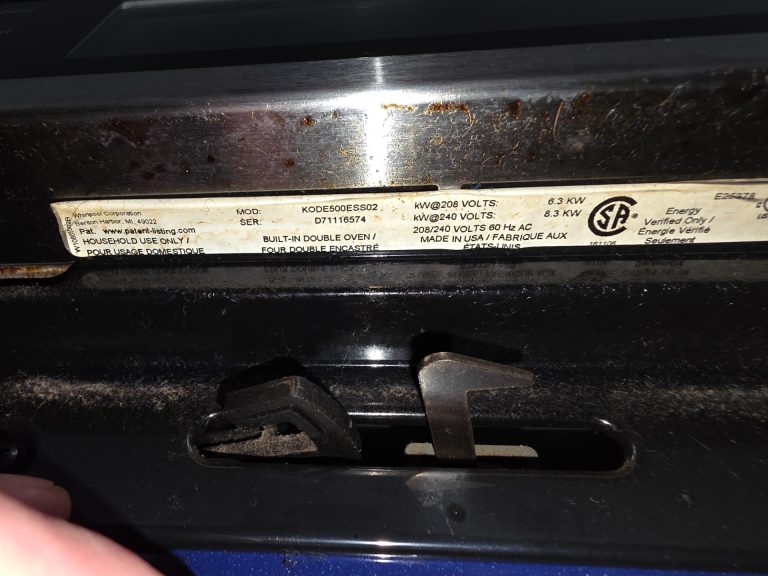
Have your KitchenAid model number ready – found on the door frame label (washers, refrigerators, dishwashers), inside the door rim, or behind the kick plate depending on appliance type. Note any error codes displayed on the panel. For Winnipeg households: if your KitchenAid dishwasher is running full cycles but leaving residue despite clean filters, note whether the issue developed gradually over several months – this pattern strongly suggests OWI sensor mineral scaling rather than a component failure, and changes the service approach and cost significantly. For vented dryers showing E6 exhaust faults, note whether the exhaust duct passes through any exterior-facing walls – this detail helps your technician distinguish a duct blockage from frozen condensation.

Yes. If you have a second appliance needing assessment, we can diagnose it during the same visit. Additional appliance diagnostics are billed at $79 for standard KitchenAid models and $159 for Premium or Pro Line built-in units – a significant reduction from the initial call fee. Mention the second appliance when booking so your technician can allocate appropriate time.