2× Winner
Consumer Choice
2× Winner
Consumer Choice

Choose your Miele appliance for repair
Our Winnipeg team services the complete Miele home appliance lineup – TwinDos® and HoneyComb drum front-load washers, T1 heat pump and vented dryers with PerfectDry and SteamFinish, Generation 7000 AutoDos dishwashers with AutoOpen drying, PerfectFresh and MasterCool refrigerators, KWT multi-zone wine storage systems, Con@ctivity 2.0 induction cooktops, steam and combination steam-convection wall ovens with PerfectClean, and DA ventilation systems. Miele’s “Immer Besser” engineering philosophy – tested to 20 years’ use – means our technicians work on precision German-engineered systems with proprietary F-series diagnostic codes and technology not found on any other brand.
Certified, insured and same-day — here’s what sets our repairs apart.


Real, verified Google reviews from Miele repair customers across Winnipeg and the surrounding communities we serve.
BBB Accredited Business, A+ Rating – reflecting transparent business practices and consistent complaint resolution across all TechVill locations including Winnipeg.
Operational standards every Winnipeg Miele service call includes:

From Booking To Warranty – Your Repair Step By Step


Red Seal certified technicians, matched to your appliance and the job at hand.
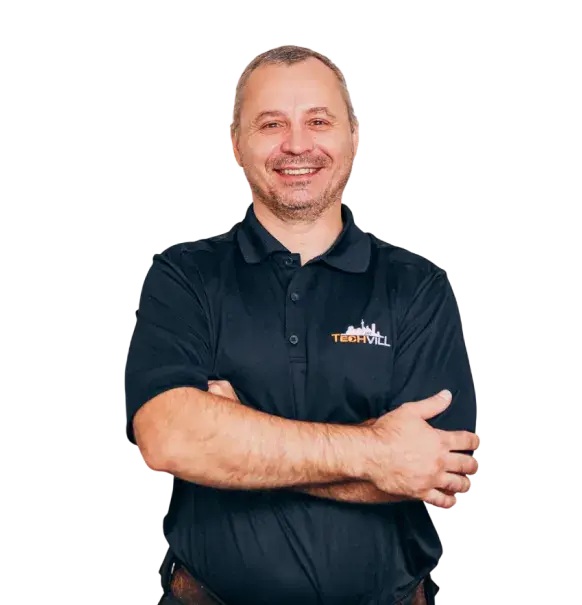
Senior Technician, Training Coordinator
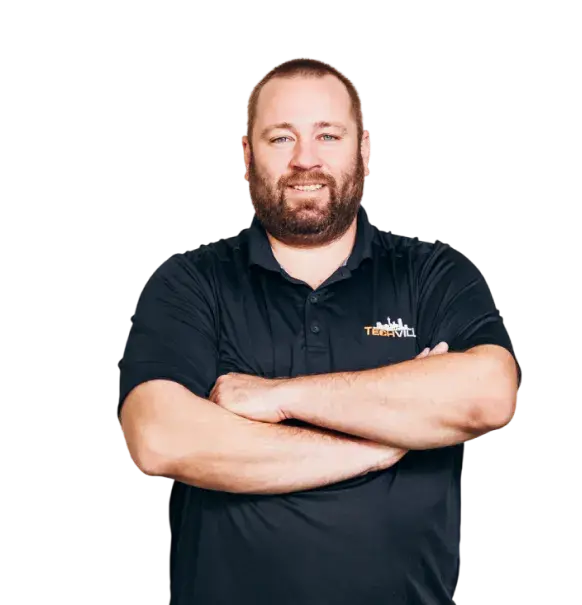
Technician Team Lead
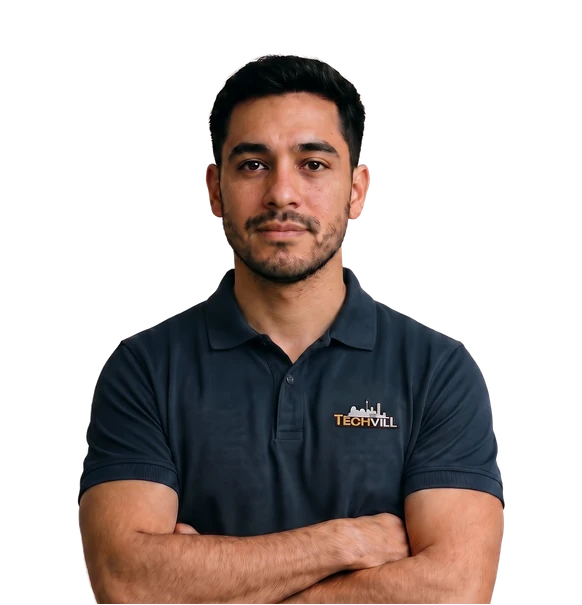
Appliance Technician
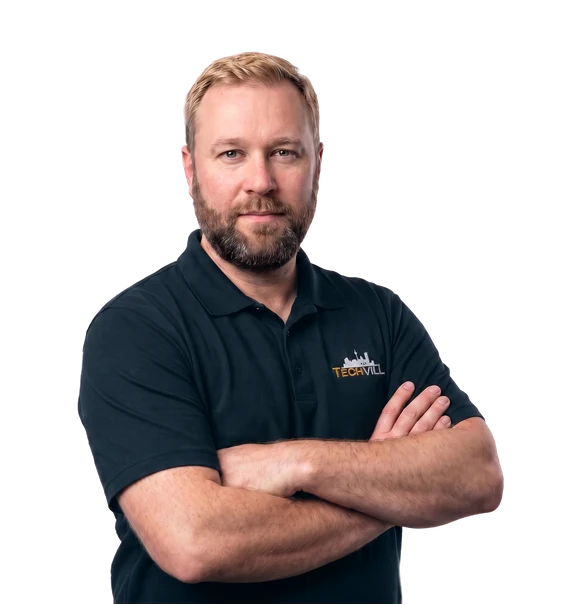
Senior Appliance Technician
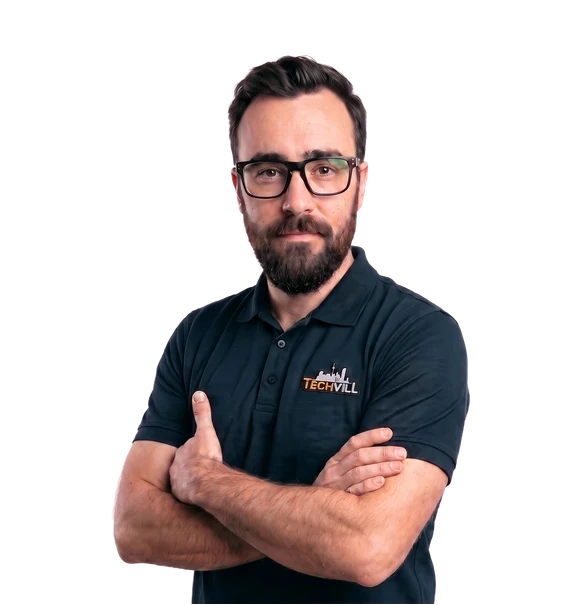
Appliance Technician
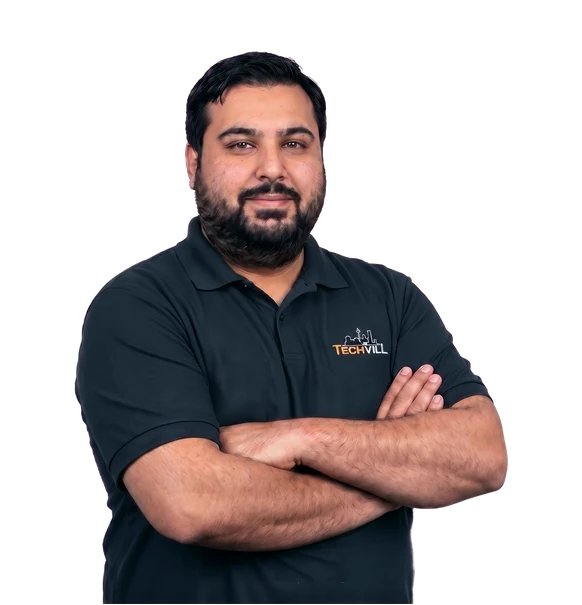
Appliance Technician
Repair tips, behind-the-scenes and honest advice from the TechVill team — straight from the bench.
From the West End to the South — our technicians cover every major Winnipeg community for same-day appliance repair.
Winnipeg and the surrounding towns — same-day appliance repair across the region.
From hard-water scale to winter duct freezing — here’s what our Miele-trained techs diagnose and fix across Winnipeg every week.


Miele & Cie. KG – a family-owned German manufacturer since 1899 – occupies the ultra-premium tier of the Canadian appliance market with a product philosophy built around “Immer Besser” (Forever Better): appliances tested to 20 years’ equivalent use, TwinDos® automatic dual-liquid detergent systems, T1 heat pump dryers that dry gently with zeolite minerals rather than heat, Generation 7000 dishwashers with AutoDos PowerDisk automatic detergent and AutoOpen passive drying, and steam ovens that cook with precision humidity control. In Winnipeg, several of these technologies interact with local water conditions and climate in ways that require specific maintenance adaptations not covered in Miele’s standard documentation for temperate markets.
Winnipeg’s municipal supply runs at approximately 150-200 mg/L of calcium carbonate. Miele’s technology-dense appliances are particularly sensitive to mineral scale in ways that differ from simpler brands:
Miele offers both T1 heat pump dryers (ventless) and traditional vented dryers in the Canadian lineup. The distinction matters significantly for Winnipeg homeowners:
During Winnipeg’s 4-5 month heating season, homes are sealed tightly against extreme cold. Two Miele-specific effects are worth noting:
Miele occupies the ultra-premium tier – dishwashers from $1,500 to $3,000+, washers and dryers from $2,000 to $4,000+, refrigerators from $2,500 to $6,000+, and wall ovens from $2,000 to $5,000+. Combined with Miele’s genuine 20-year tested lifespan, repair is the financially rational choice in virtually all scenarios. In Winnipeg, the most common Miele misdiagnoses involve treating water-scale symptoms as hardware faults: dishwasher F12/F13 from flow meter scale, washer F15 from inlet screen scale, and steam oven descaling alerts are all maintenance corrections. Our technicians identify the local cause at the diagnostic visit – distinguishing a Winnipeg water-quality issue from a genuine component failure before any parts are ordered.
Monday – Sunday: 24/7 — even on holidays
9627 Horton Rd SW, Calgary, AB, T2V 2X5
4838 Richard Road SW, Suite 300, Calgary, AB, T3E 6L1
Real repairs from TechVill’s certified technicians across Winnipeg
Everything you need to know before you book — pricing, warranty and timing.
Diagnostic assessment starts at $259 for all Miele units – the brand’s ultra-premium positioning means all categories qualify as high-end built-in appliances – including 15 minutes of hands-on evaluation. In Winnipeg, several common Miele faults are maintenance issues rather than component failures: dishwasher F12/F13 from flow meter scale, washer F15 from TwinDos® channel inlet screen scale, and steam oven descaling alerts all resolve at lower cost than full part replacement. Your technician provides a complete written estimate before any work begins.
Yes. Same-day service runs across Winnipeg and the surrounding metro area. Fridge failures and steam oven faults affecting food preparation receive priority dispatch. A TwinDos® washer F15 fill fault in a household relying on automated detergent dispensing also warrants prompt attention. Evening and weekend slots are subject to technician availability; contact us directly for urgent situations.
Our Winnipeg technicians diagnose Miele’s full F-series fault code system across all product categories – F11 (drainage), F15/F16 (water intake/door lock), F20/F34/F35 (heating/drum) for washers; F51/F53/F55/F63/F65 for dryers; F01/F02/F11/F12/F13/F14/F32/F70/F78 for dishwashers; F23/F32/F33/F44/F54/F60 for ovens. In Winnipeg, dishwasher F12/F13 (flow meter scale) and washer F15 (TwinDos® inlet screen scale) appear at elevated frequency – both have local water-hardness causes that change the diagnostic approach and whether component replacement is actually needed.
TechVill covers Winnipeg and the surrounding metro area: Headingley, Stonewall, Selkirk, Niverville, Beausejour, Lorette, Oakbank, and surrounding communities. Contact us to confirm coverage for your specific location.
The Winnipeg team has been servicing Miele appliances since TechVill expanded to the city, building hands-on familiarity with the brand’s Generation 7000 platform, TwinDos® dual-channel detergent systems, T1 heat pump dryer PerfectDry diagnostics, AutoDos PowerDisk mechanism service, and Miele steam oven DG and DGC combination mode faults. Miele’s German-engineered precision and proprietary component specifications – TwinDos® cartridge assemblies, zeolite canisters, steam generators – require brand-specific sourcing and handling procedures that our technicians are trained to apply.
Yes. COI documentation is available in advance for property management and building administrators who require it before granting suite access – contact us when booking to request the certificate. Miele’s 24-inch integrated washer, dryer, and dishwasher formats are common in Winnipeg condo kitchens and laundry alcoves where space is limited; our team is experienced with the installation constraints specific to fully integrated Miele configurations, including the access requirements for T1 heat pump dryer condenser cleaning in tight spaces.
Have your Miele model number ready – found on the door frame label (washers, dishwashers), inside the appliance cavity, or on the rear panel depending on appliance type. Note any fault codes displayed on the M Touch display or indicator lights. For Winnipeg households: if your Miele dishwasher is showing F12 or F13 water intake faults, note whether the fault appeared gradually over several cycles or suddenly – gradual onset over weeks strongly suggests flow meter scale accumulation rather than valve failure, which affects the repair approach and cost significantly. For steam ovens, note when the steam generator was last descaled before the appointment.
Yes. If you have a second Miele appliance needing assessment, we can diagnose it during the same visit. Additional appliance diagnostics are billed at $159 for all additional Miele units. Mention the second appliance when booking so your technician can allocate appropriate time.