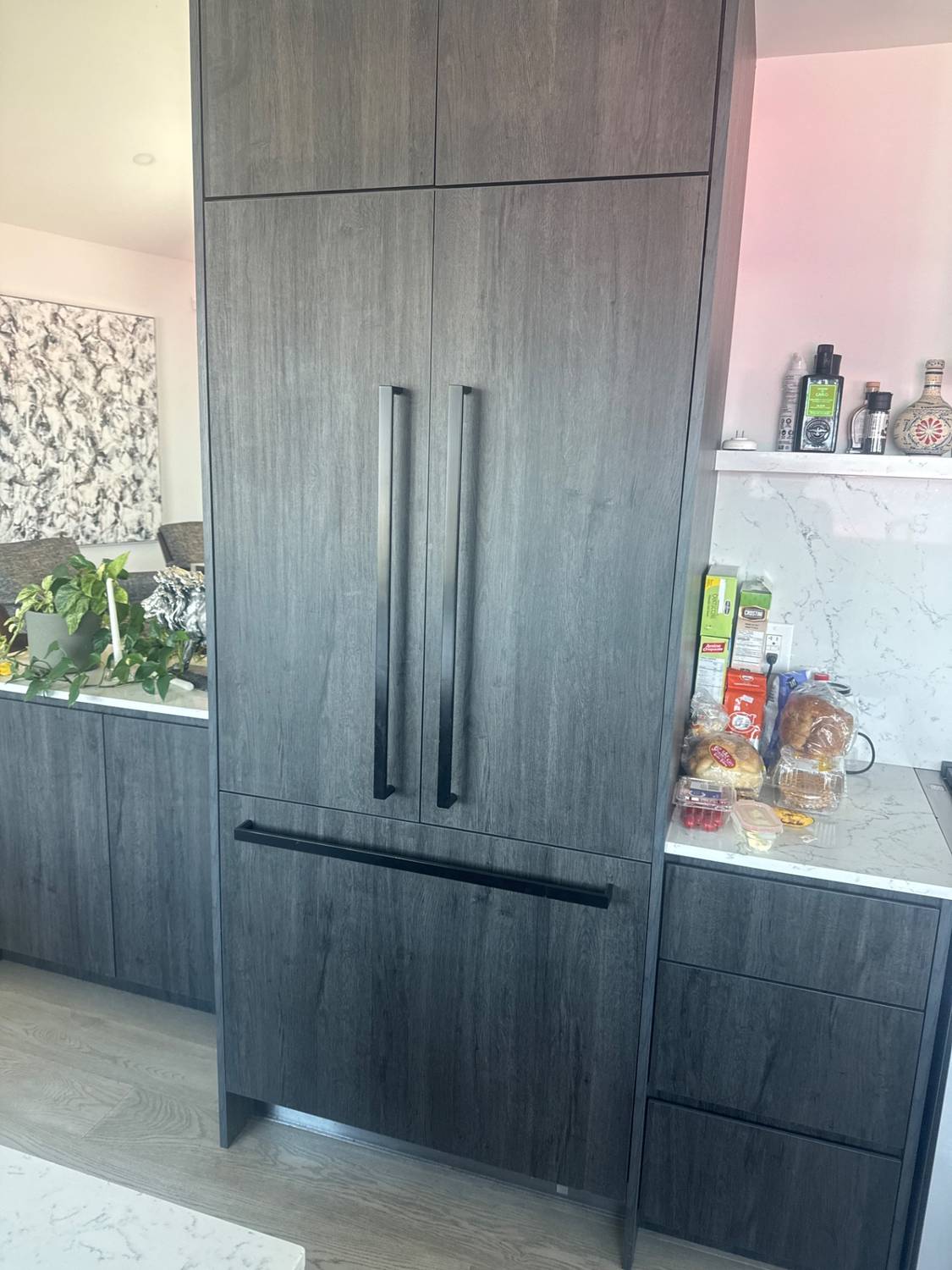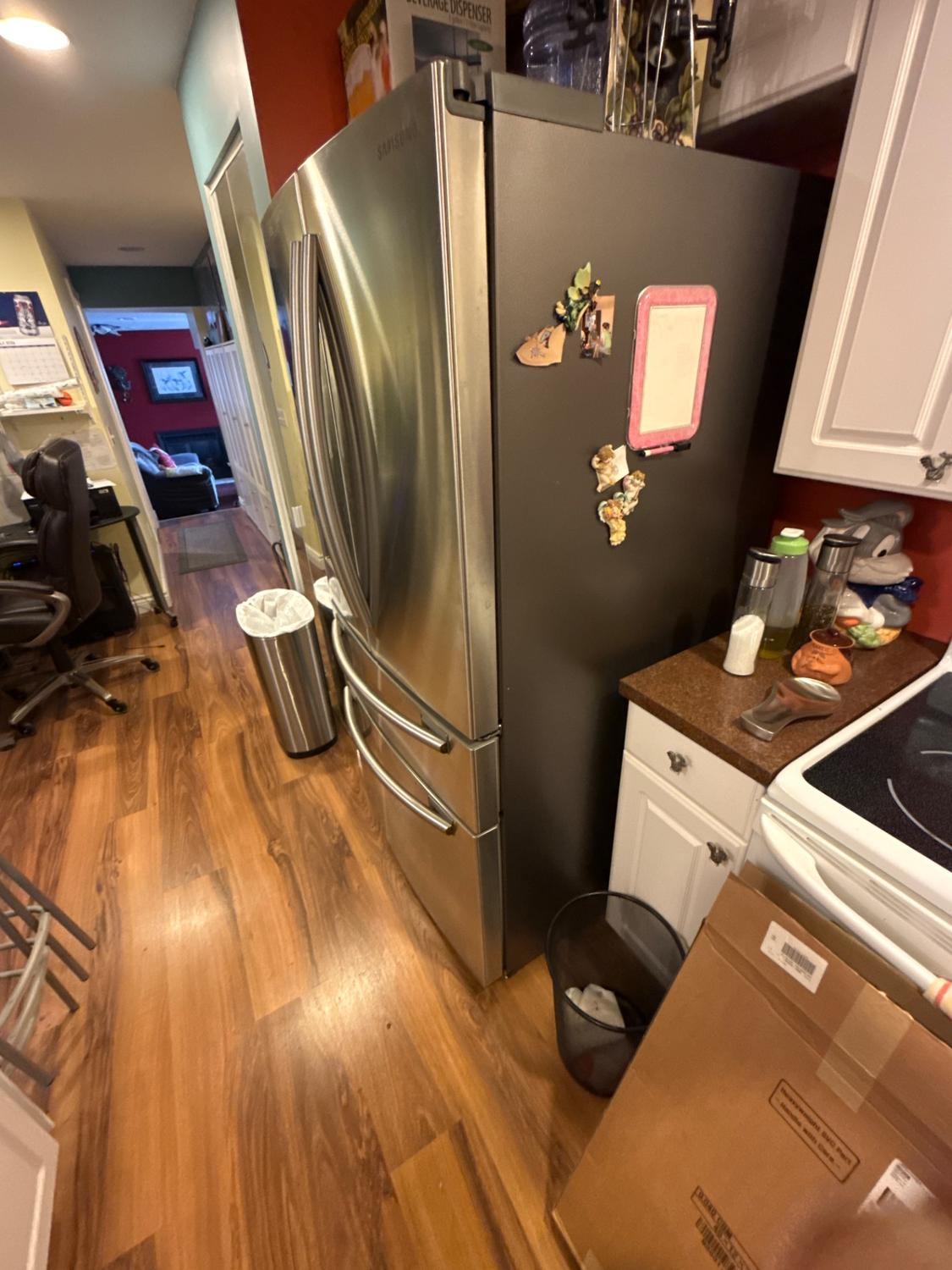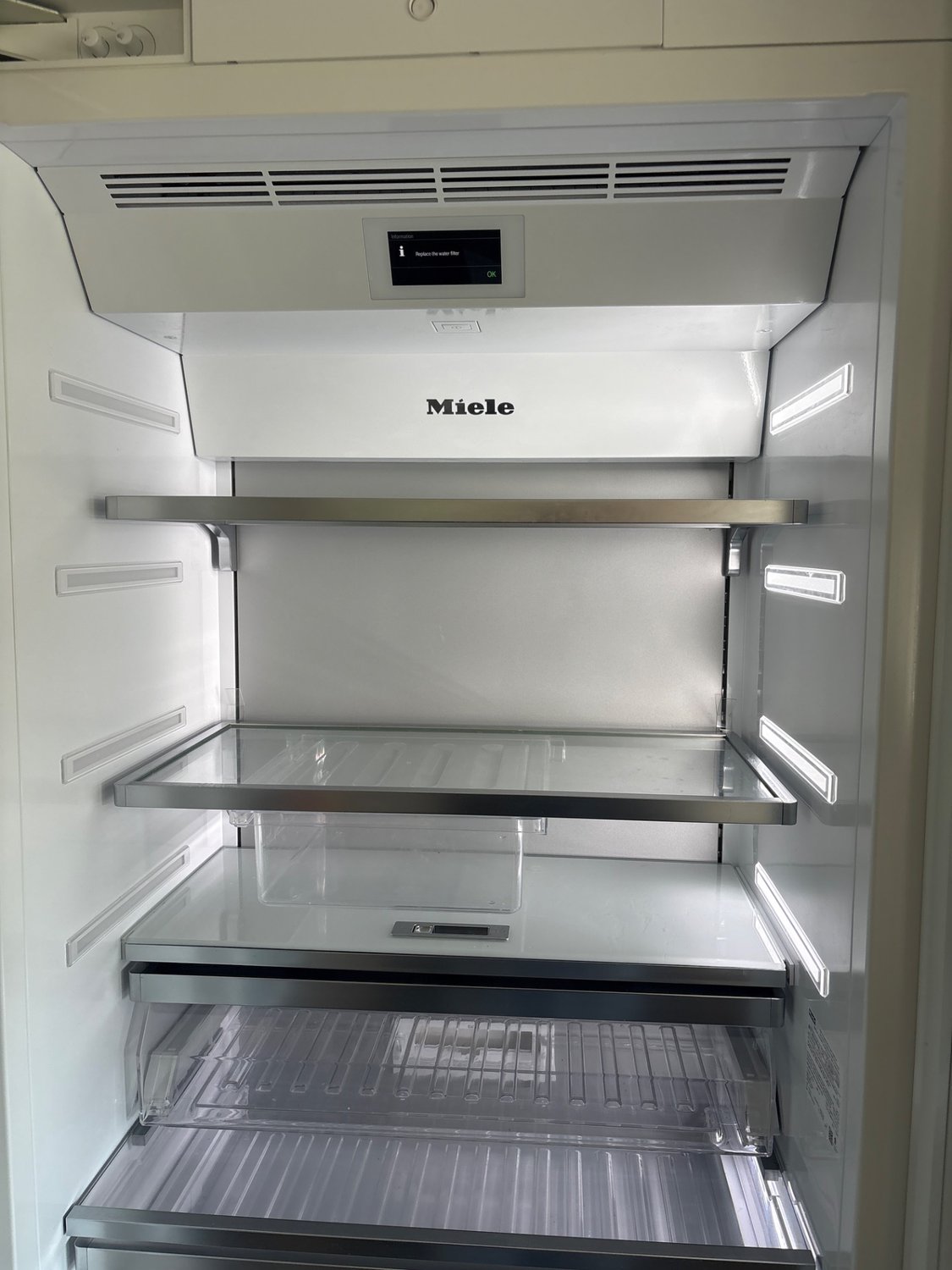



A power outage drops a Calgary block for an hour. Lights come back on. Microwaves come back on. The fridge, however, sits silent — or running warm, with the cabinet not pulling temperature down. The conclusion from the homeowner side, almost every time, is that the surge killed the compressor.
It almost never did.
The compressor is the most expensive single component in any refrigerator, and it is the part that homeowners reach for first when cooling stops – one of the most common misreads our Calgary fridge repair technicians correct. Surge events do not target it. They target a much smaller, much cheaper component that sits in front of the compressor in the start circuit — the start relay — and then leave the compressor itself completely intact behind it.
That distinction is worth real money on a service call — and it is one of the most frequent misdiagnosis patterns our Calgary appliance repair team corrects after power events.
Why a surge picks the relay, not the compressor
The start relay is a small electromechanical or PTC component whose job is to bring the compressor’s start winding online for the first second or two of every thermostat call. Once the compressor is spinning, the relay drops the start winding out of the circuit and the compressor runs on its run winding alone. That sequence happens dozens of times a day on a normal duty cycle.
The relay is electrically vulnerable in a way the compressor is not. Its contacts (or its PTC element) handle inrush currents that already sit at the upper end of their design envelope. A voltage transient on top of that inrush — the kind a power surge produces — pushes the relay past its margin while leaving the compressor windings, which are massive and inductive, comparatively unaffected. The relay fails. The compressor, never having received the start signal, simply does not turn on. From outside the cabinet, it presents identically to compressor failure.
What the misdiagnosis costs
Replacing a refrigerator compressor is not a parts-and-labour swap. It is sealed-system work: refrigerant recovery, brazing on the high and low side, a deep vacuum pull, refrigerant recharge to manufacturer specification. The full job — parts, labour, and the equipment time on the sealed side — runs an order of magnitude higher than a start relay replacement, and it requires the cabinet to be out of service for considerably longer.
If the start relay was the actual failure, none of that work needed to happen. The cabinet had a healthy compressor sitting behind a small failed component.
How to test which one it actually is, in five minutes
Three measurements separate relay failure from compressor failure cleanly. They are not improvised — they are the standard diagnostic protocol.
Compressor housing temperature. A failed compressor running against a stuck mechanical fault will be hot. A compressor that never received a start signal will be cold. On a “fridge isn’t cooling” call, this is the first read.
Run capacitor capacitance. Most start circuits include a run capacitor that supports the run winding. Measuring it on a capacitance tester takes seconds and confirms whether the capacitor is in spec or has drifted out of tolerance. A capacitor that reads correctly tells you one of three start-circuit components is healthy.
Compressor winding resistance. Resistance across the start, run, and common terminals on the compressor itself, measured with a multimeter, tells you whether the compressor windings are intact. Correct readings clear the compressor by elimination.
What is left, when those three measurements come back clean, is the relay.
In this Killarney/Glengarry kitchen
The unit on this call was a Whirlpool WRF540CWHZ02 French door refrigerator. The cabinet had stopped cooling after a power outage. TechVill technician Amin walked the protocol. The compressor housing was cold to the touch — already pointing away from compressor failure. The run capacitor measured 11.22 microfarads, comfortably inside the rated tolerance for the unit. Compressor winding resistance was within Whirlpool’s published values.
By elimination, the start relay had taken the surge — a textbook outcome on Whirlpool appliance repair in Calgary after grid events.

The choice between a like-for-like relay and a 3-in-1 starter
Once the failure is isolated, the question is what to install in its place. The original PTC relay is the component that just took the surge. Replacing it with the same design puts the new part in the path of the next surge, on the same Calgary grid, in the same building, behind the same upstream wiring.
A universal 3-in-1 starter is the surge-tolerant alternative. It integrates the start relay, run capacitor, and overload protector into a single solid-state assembly engineered specifically for hard-start conditions and transient voltage events.
- Universal 3-in-1 Starter (part #URCO410) — integrates start relay, run capacitor, and overload protector in one solid-state assembly; provides a hard-start boost on each thermostat call and tolerates surge events better than the original PTC relay design
After installation, the compressor engaged on the first start cycle. Amin clamp-metered the compressor leads to verify amperage draw against rated FLA — within stable operating limits. The cabinet pulled temperature down within minutes, on the original Whirlpool compressor that had been intact all along.
What this case is meant to teach
The takeaway is not “always start at the relay.” It is the prior step: walk the start circuit before agreeing with the customer’s compressor hypothesis. Most “fridge isn’t cooling after a power outage” calls clear up at the relay or in the start circuit upstream of it. The compressor is rarely the first part to fail in a surge event, and when it actually does, the diagnostic protocol confirms it within minutes rather than guessing it on the customer’s behalf. That protocol is how every post-outage fridge repair in Calgary through TechVill starts.